


Bowfront Wooden Credenza
A bowfront wooden credenza provides grand storage and graceful curves, uniting functional dining room cabinetry with classic cabinet-making.
Bowfront Wooden Credenza
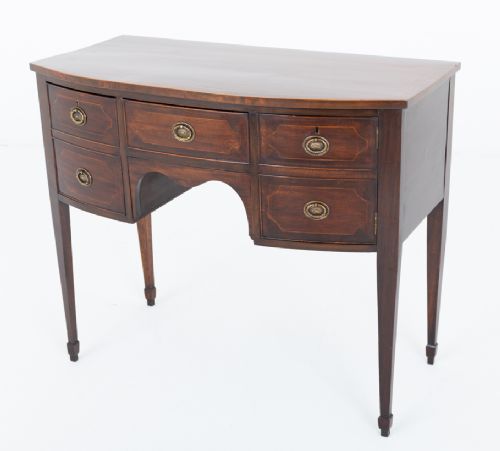
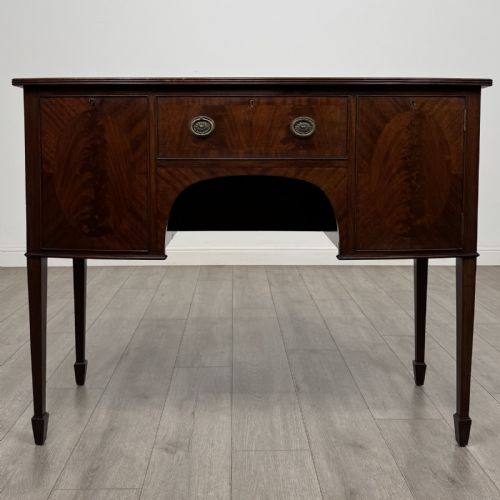
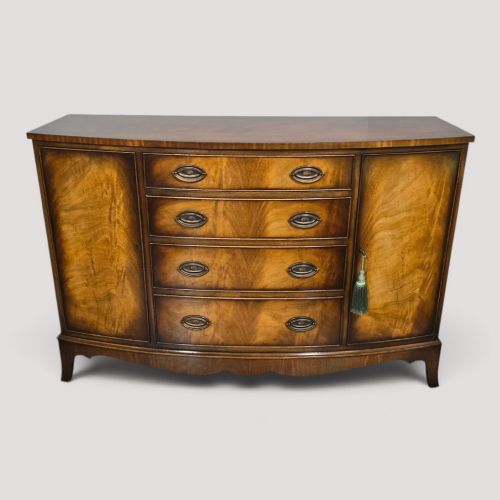
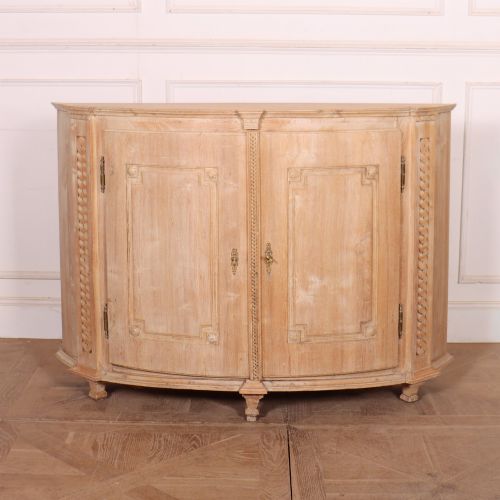
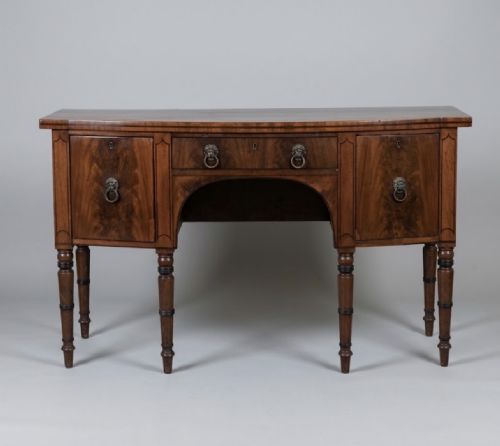
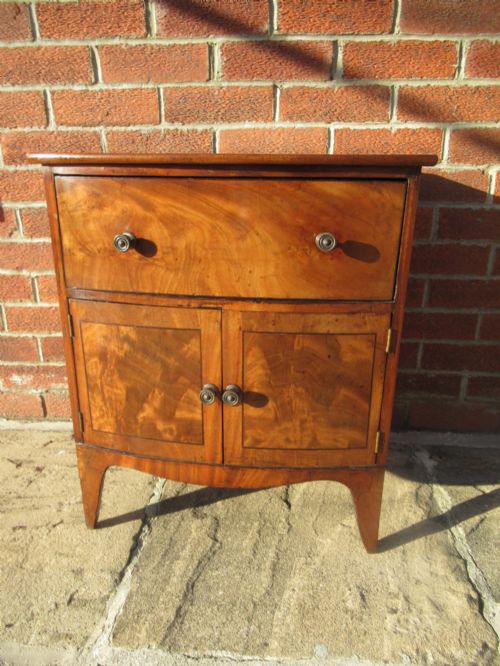
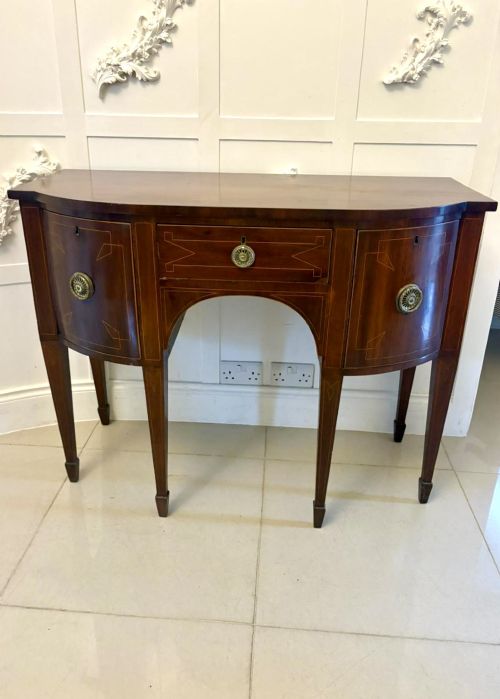
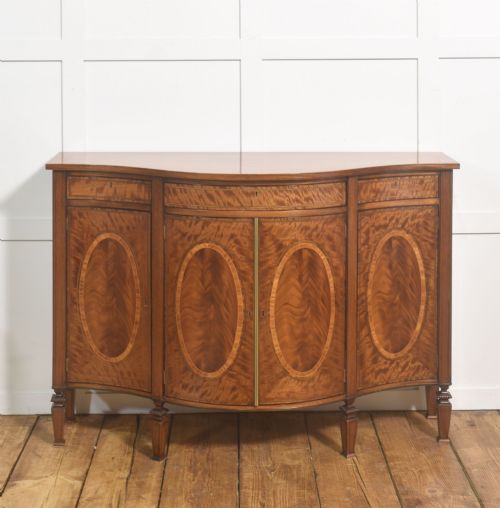
A bowfront wooden credenza or sideboard brings curved fronts and ample storage into domestic spaces, emerging primarily through Georgian, Regency, and Edwardian periods. Buyers searching for a bowfront wooden credenza encounter primarily mahogany pieces shaped with a convex curve across the front elevation.
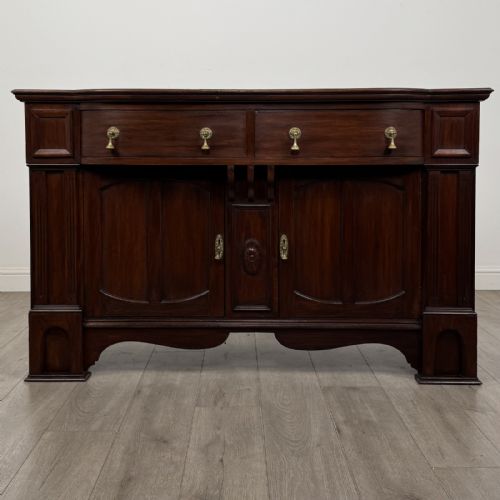
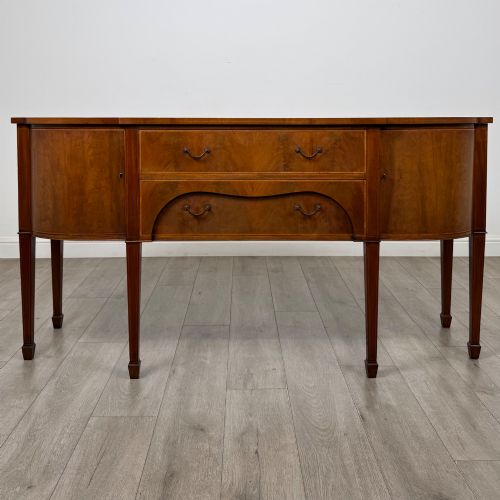
The assortment spans formal George III dining room servers alongside later Sheraton Revival and Edwardian interpretations. These items function traditionally as sideboards, side cabinets, and storage cupboards for dining rooms and large reception spaces.
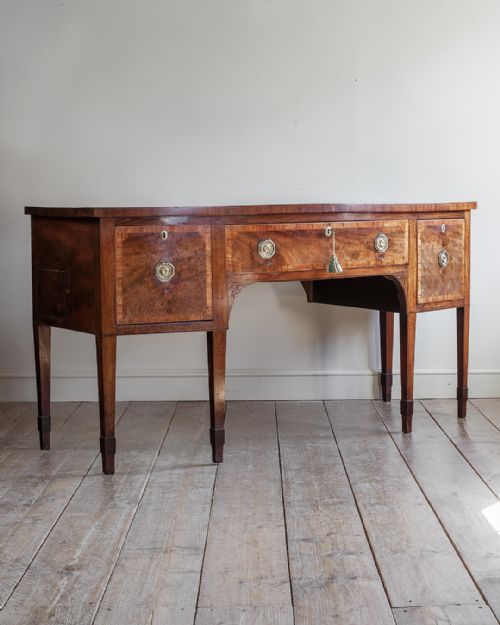
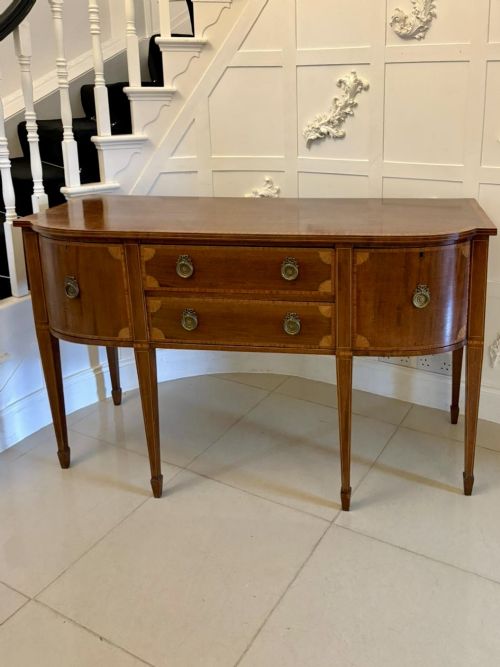
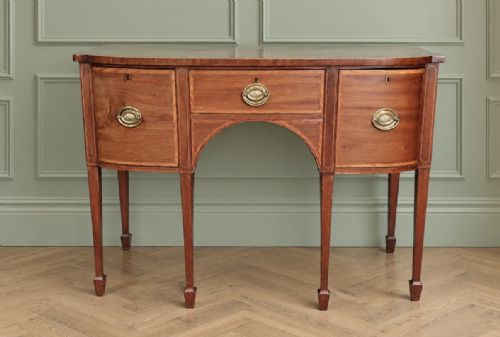
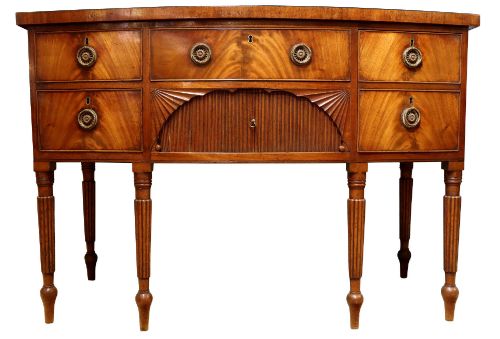
Originating heavily from Georgian and 19th Century workshops, these furniture forms rely on substantial timber frames designed to anchor a room. The most common iteration met on this page is the mahogany bowfront sideboard featuring inlaid detailing and brass hardware.
Materials and Technique
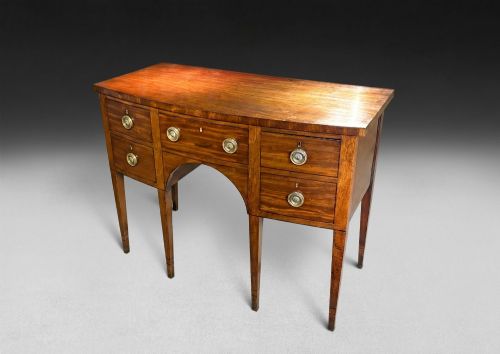
Cabinet-makers relied on solid mahogany and flame mahogany veneer applied over sturdy secondary timbers to create rich, dark surfaces. Flame mahogany veneer provides striking figuring across the curved doors and drawers, matched with meticulous boxwood and satinwood inlay or stringing.
Makers utilised contrasting light woods like boxwood and satinwood for delicate stringing lines, geometric crossbanding, and marquetry motifs. Brass hardware, including handles and escutcheons, finishes the construction, accompanied by structural support ranging from four to six legs.
Bowfront Wooden Credenza Retail Price Guide 2026
Typical asking prices for bowfront wooden credenza among the pieces listed under this phrase on Sellingantiques today, from the lower quarter to the upper quarter. They describe what is for sale here now, not the wider market.
Some larger Georgian sideboards required six legs simply to support the weight of heavy silver platters and enthusiastic dining room hospitality.
Standards of Craftsmanship
Quality rests upon the selection of timber figures, particularly the grain matching on flame mahogany drawer fronts and curved doors. Superior examples display crisp boxwood and satinwood inlay work executed with exact precision rather than simple painted lines.
Proportion and structural integrity dictate the upper tier of these pieces, distinguishing finer cabinet work from utilitarian storage. Subtle details like ebony stringing, well-turned legs, and original brass fittings elevate a piece significantly above standard production.
The Bowfront Wooden Credenza Glossary
- Bowfront
- A convex curved front cabinet design popular in Georgian and Regency furniture. This shape softens the room and maximises internal storage capacity.
- Crossbanding
- A narrow strip of veneer applied perpendicularly to the main grain around the border of a drawer or top. This technique creates a neat framing effect using contrasting timber.
- Stringing
- Inlaid lines of contrasting light or dark wood set flush into the surface. It outlines panels and drawers with subtle linear definition.
- Flame mahogany
- Highly figured mahogany timber displaying a distinctive flame-like pattern. Cabinet-makers reserved this prized veneer for prominent exterior surfaces.
- Marquetry
- Decorative patterns formed by fitting together small pieces of veneer. It introduces pictorial or geometric designs onto cabinet doors and tabletops.
Bowfront Wooden Credenza: Frequently Asked Questions
Where did they place bowfront sideboards?
These large storage units stood principally in dining rooms to hold silverware, linen, and serving dishes.
They served as practical preparation surfaces during large household meals before moving into general living spaces as decorative display storage.
How do I distinguish George III from Edwardian pieces?
George III pieces date from the late 18th century, displaying heavy solid timber construction, hand-cut dovetails, and subtle boxwood stringing.
Edwardian items from the early 20th century often reproduce these earlier Sheraton styles using brighter satinwood inlay and lighter secondary woods.
What is the difference between a sideboard and a credenza?
Sideboards historically functioned in dining rooms specifically for serving food and storing dining accessories.
Credenzas and side cabinets generally offer enclosed cupboard storage without the traditional cutlery drawers found on standard sideboards.
How do I care for antique mahogany surfaces?
Maintain the timber by applying natural beeswax occasionally and buffing it gently with a soft cloth.
Keep wooden furniture away from direct sunlight and radiators to prevent the flame mahogany veneers from drying and cracking.