


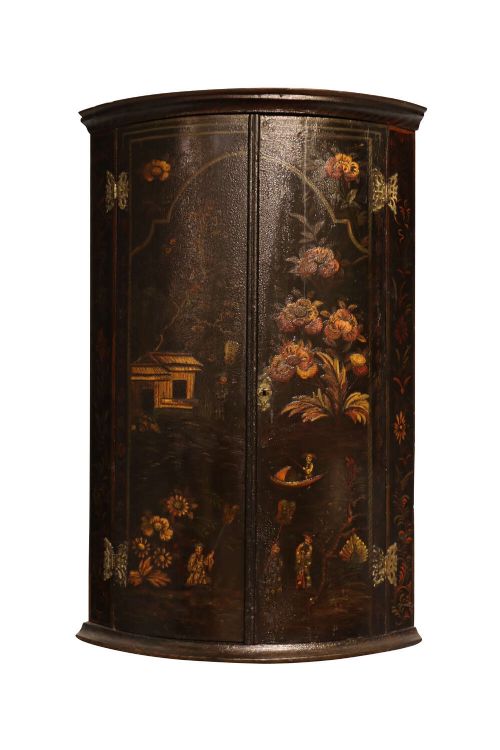
Bowfront Hanging Cupboard
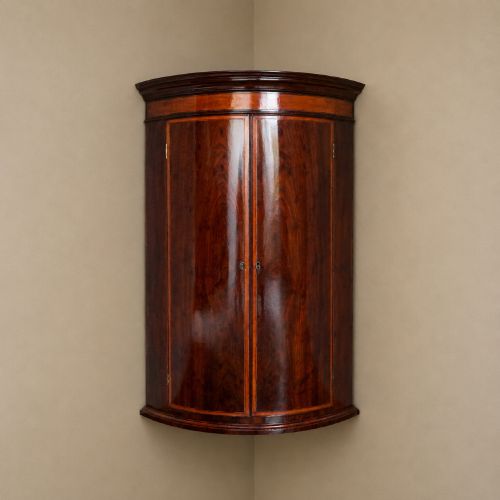
These bowfront hanging cupboards bring a curved Georgian profile to vertical walls, saving floor space while displaying fitted shelving behind hinged doors.
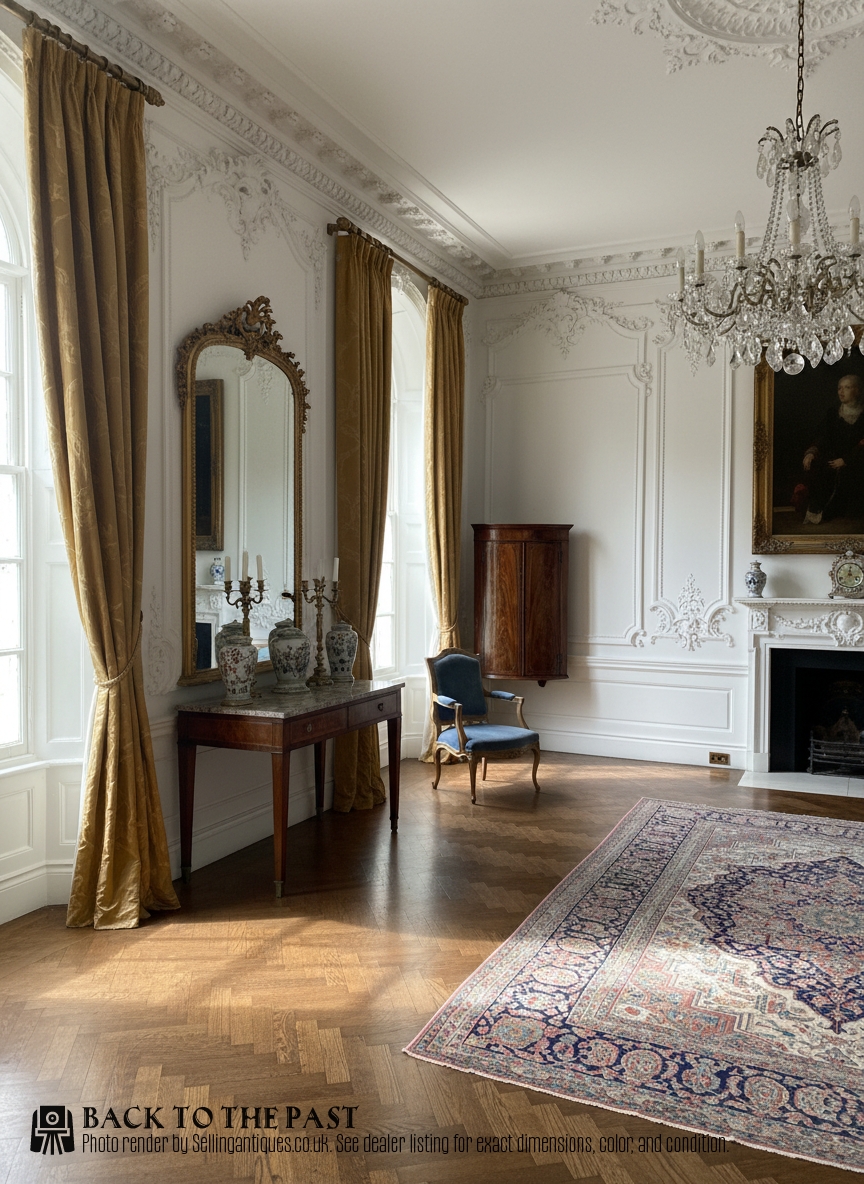
Bowfront Hanging Cupboard
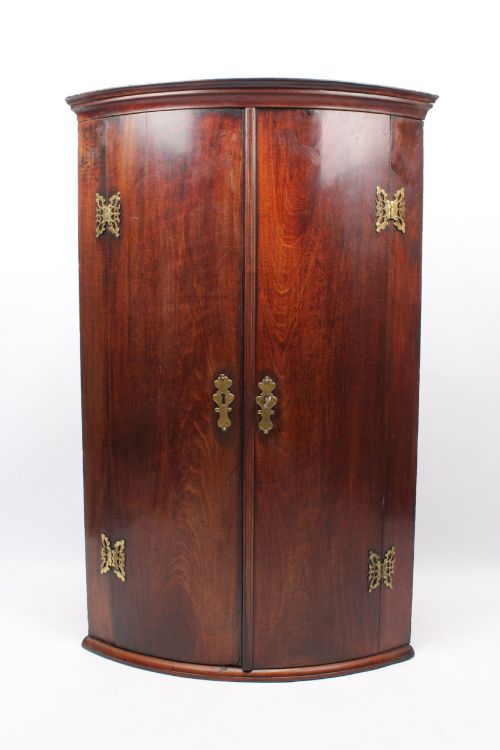
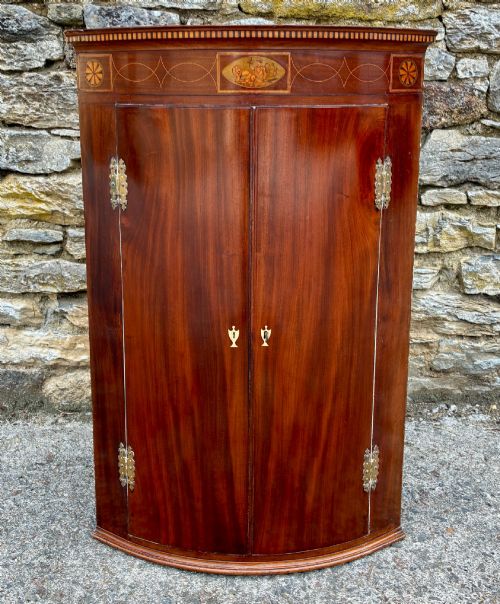
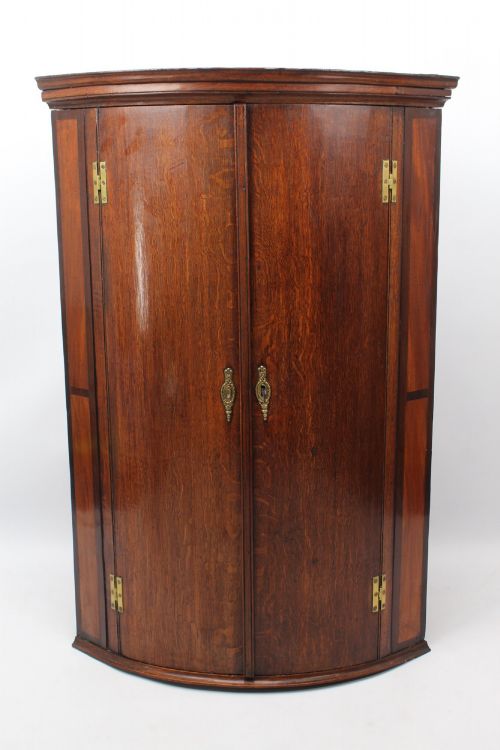
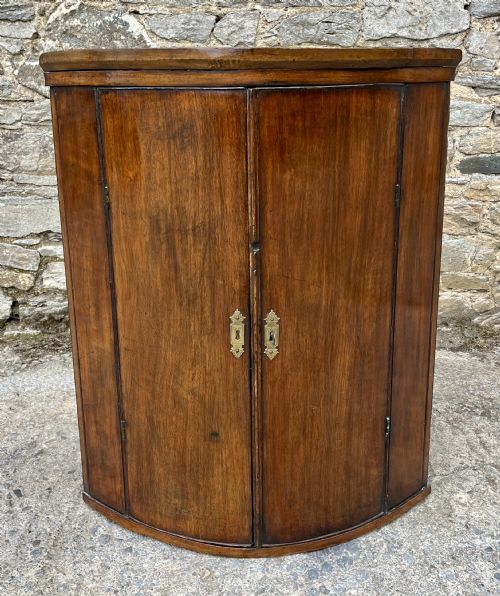
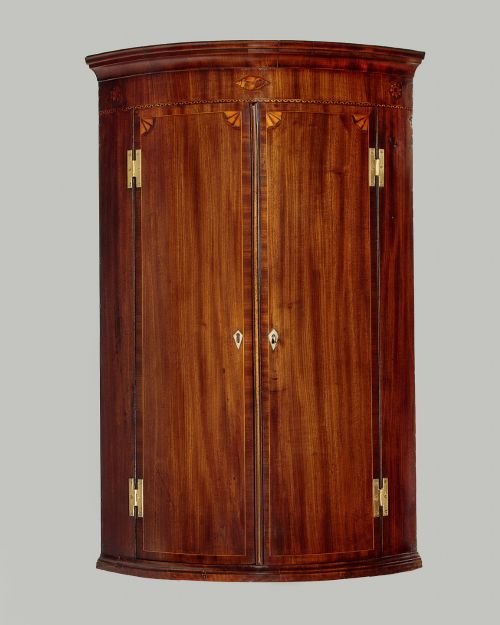
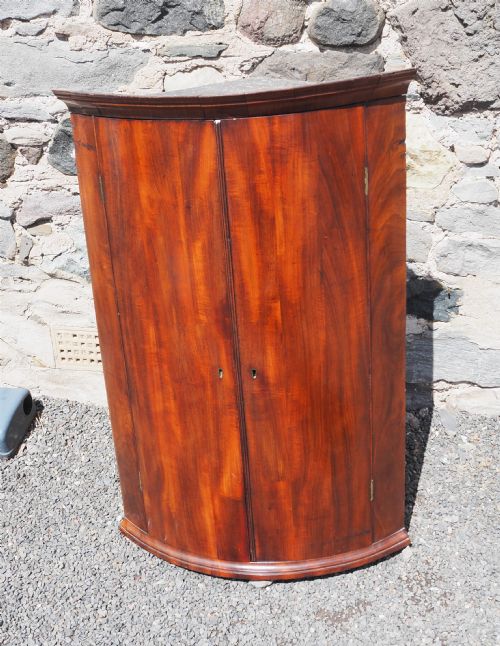
A bowfront hanging cupboard positions a rounded cabinet onto a room corner, utilising timber construction designed to mount securely above floor level. The pieces on this page emerge primarily from Georgian, 18th Century, and Victorian periods, taking the form of corner cabinets, wall cabinets, and wall shelves.
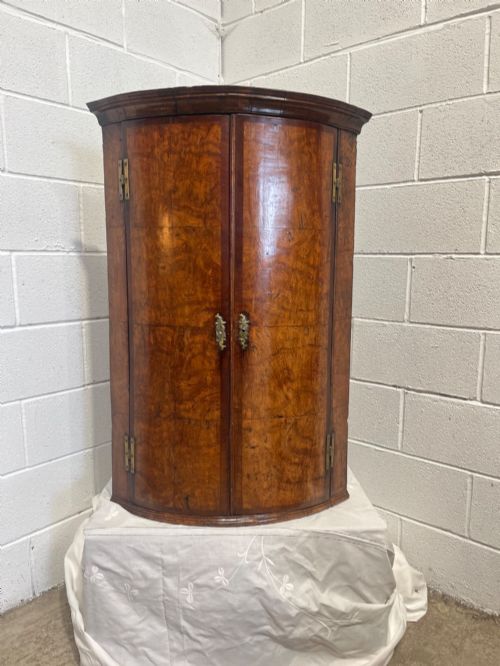
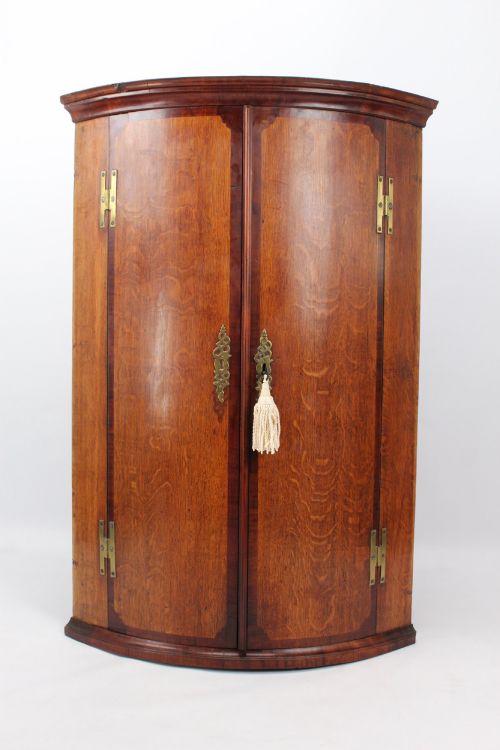
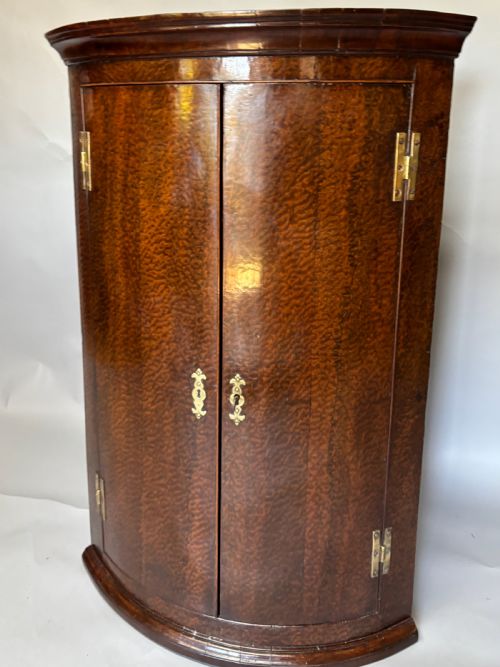
Mahogany and oak dominate the timber choices, frequently enhanced with inlaid boxwood or structural elements in burr oak, plum pudding mahogany, walnut, and elm. Makers fashioned these wall-mounted units with single or double doors, sometimes incorporating glazed panels for display purposes.
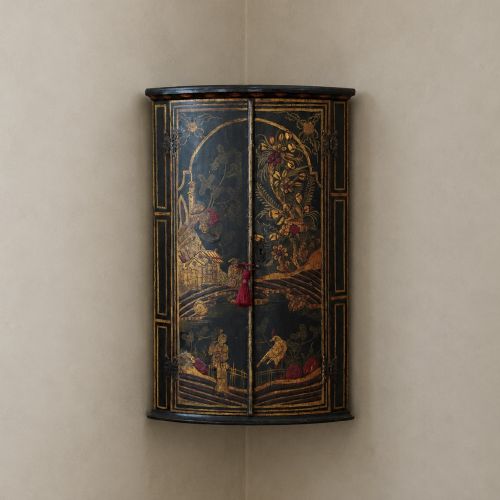
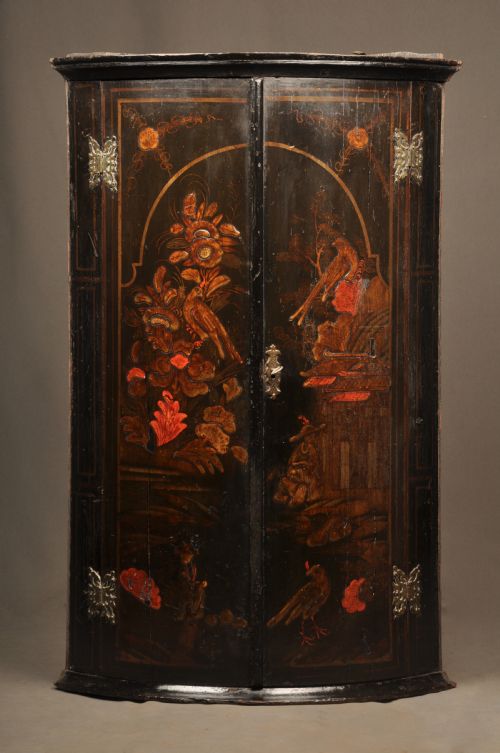
Chinoiserie finishes appear alongside painted, japanned, and black lacquer surfaces, reflecting taste across the 18th and 19th centuries. Alongside standard corner cupboards, the selection includes barrel front variations and hanging shelves designed for domestic storage.
How they were made
Cabinet makers built these pieces using solid timbers like mahogany and oak, shaping the curved front panels through steam bending or careful sawing from thick stock. Internal corner blocks and dovetailed joints provide the structural strength needed for wall-mounted hanging units.
Surface decoration involved elaborate techniques including japanning, black lacquer, and painted Chinoiserie scenes heightened with gilt. Artisans also applied delicate stringing and banding in boxwood and lighter woods to accentuate the curved mahogany surfaces.
Brass hardware such as H-hinges and escutcheons secured the doors while adding functional contrast to the dark timber grains. Glazed doors utilised wooden glazing bars to hold individual panes securely within the curved framework.
Some doors curve so sharply they hide secret little drawers inside, perfect for stashing keys or lost earrings.
What varies in quality
The sophistication of the timber selection dictates the visual impact, separating plain boards from richly figured plum pudding mahogany, burr oak, or flame mahogany. Grain matching across the curved door panels requires high skill from the maker.
Decorative execution separates standard functional cupboards from high-status artistic examples. Hand-applied Chinoiserie lacquer and delicate boxwood inlay demand precise craftsmanship that elevates the cabinet from basic storage to decorative art.
The Bowfront Hanging Cupboard Glossary
- Bowfront
- A convex curved front profile that projects outward, common in corner cabinets to soften harsh angles. This shape requires specialised joinery to maintain structural integrity along the curve.
- Japanning
- A European imitation of East Asian lacquerwork involving layered varnishes and raised metallic decoration. It appears frequently on 18th-century Chinoiserie pieces.
- Plum pudding mahogany
- A highly prized timber figure featuring dense, circular markings resembling the fruit in a Christmas pudding. It indicates a luxury specification on Georgian cabinets.
- Stringing
- Thin lines of contrasting wood inlaid into grooves on cabinet surfaces to create geometric borders. Boxwood is commonly used against darker mahogany backgrounds.
- H-hinge
- A traditional hardware fixing shaped like the letter H, surface-mounted onto cabinet doors. They are typical of earlier Georgian and 18th-century hanging cupboards.
Bowfront Hanging Cupboard: Frequently Asked Questions
How do I hang a heavy corner cupboard?
These cabinets attach to walls using robust internal brackets or through-fixing holes in the backboards that anchor directly into wall studs or masonry.
Professional installation is essential because solid mahogany and oak units carry significant weight, particularly when filled with heavy porcelain or glassware.
Are these cabinets meant for corners?
Yes, the ninety-degree back panels allow these cupboards to fit snugly into room corners, utilising space that usually remains empty. The curved bowfront projects outward into the room.
This design keeps floor areas clear while providing enclosed storage at eye level.
How do I identify a Georgian piece?
Georgian pieces display construction traits such as hand-cut dovetails, solid oak carcass backs, and traditional timber framing without modern plywood. Stylistic cues include mahogany or oak surfaces with optional boxwood inlay.
Many examples feature original brass H-hinges and candle slides or shaped interior shelving typical of the 18th century.