
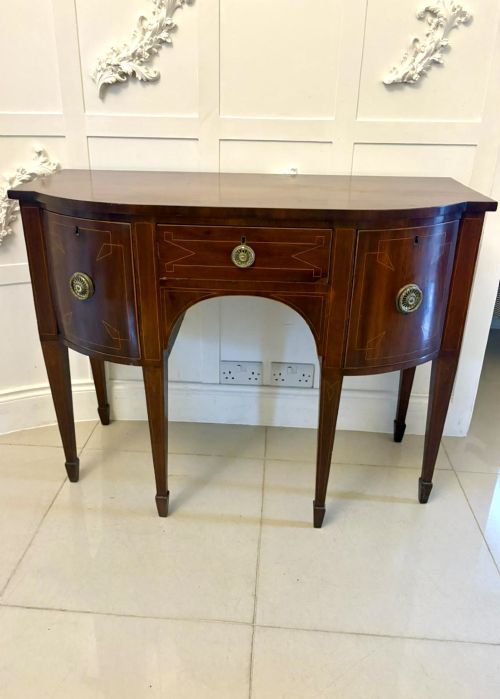
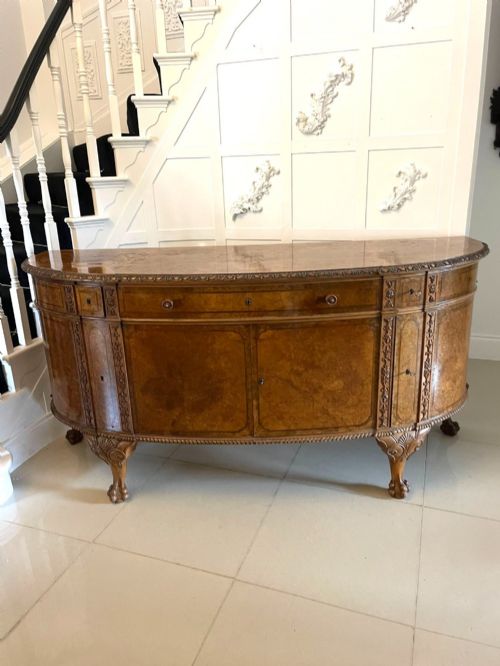
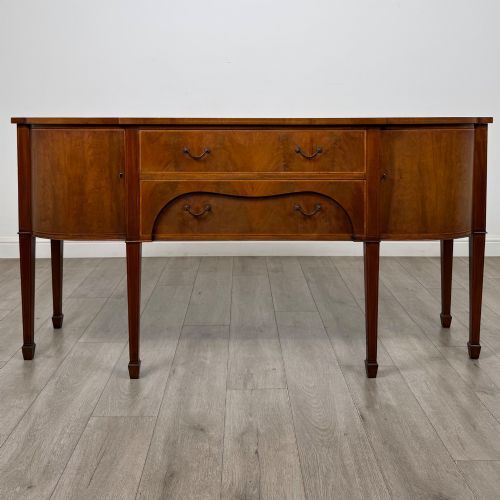
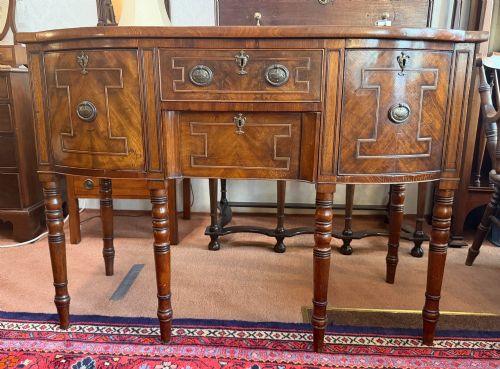
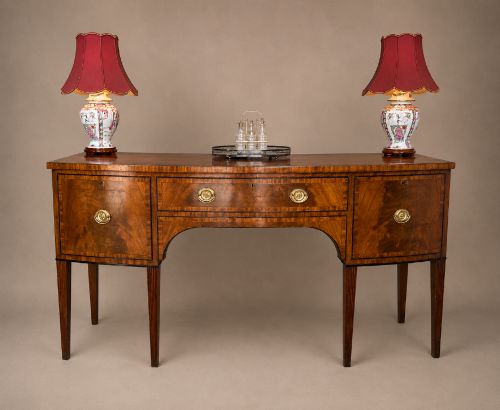
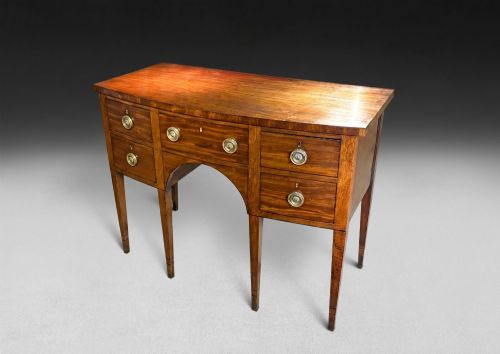
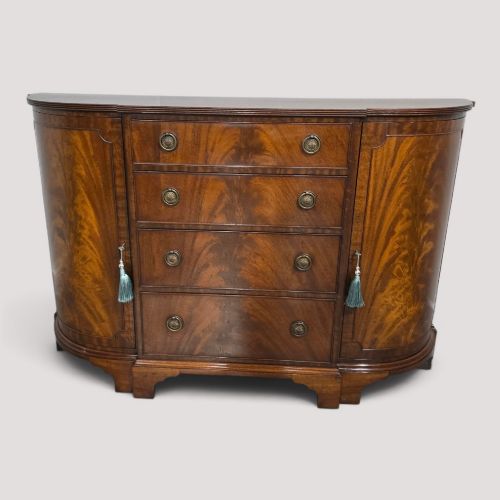
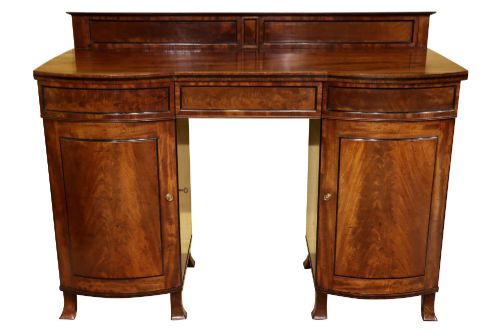
Bowfront Dining Buffet
A bowfront dining buffet anchors the room with curved mahogany and brass, offering stately storage for silver and linen.
Bowfront Dining Buffet
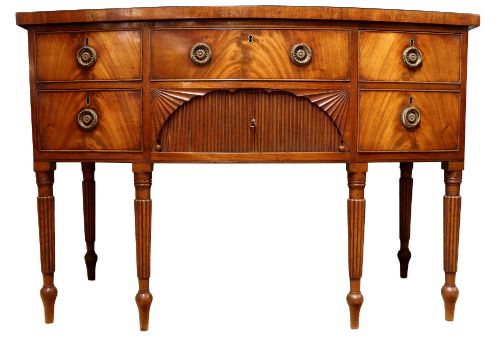
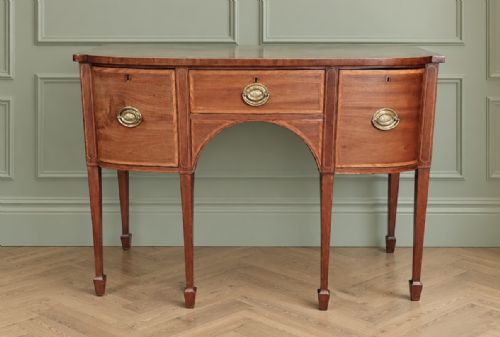
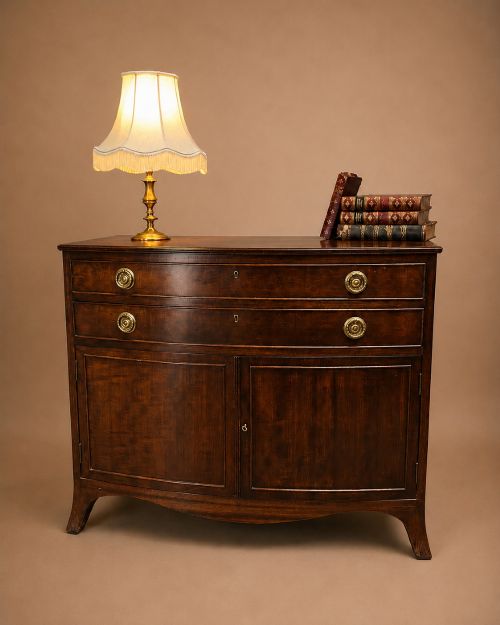
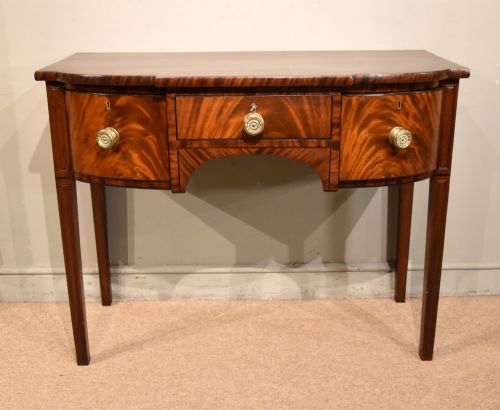
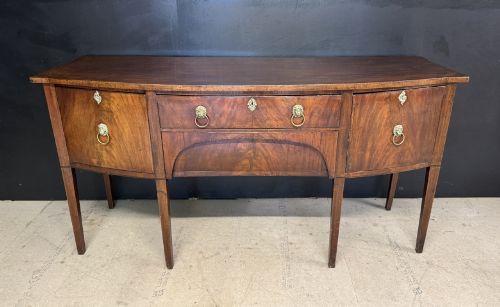
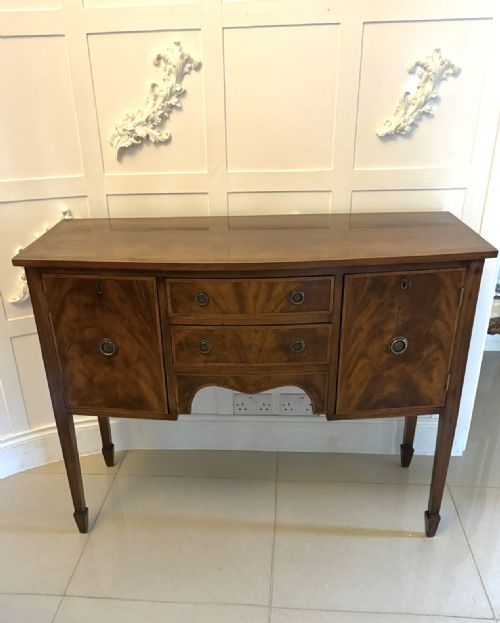
A bowfront dining buffet stands as a substantial piece of dining room furniture designed for serving and storage, defined by its characteristic convex curved front. When you search for a bowfront dining buffet, you encounter forms rooted primarily in the Georgian, Regency, and Edwardian periods.
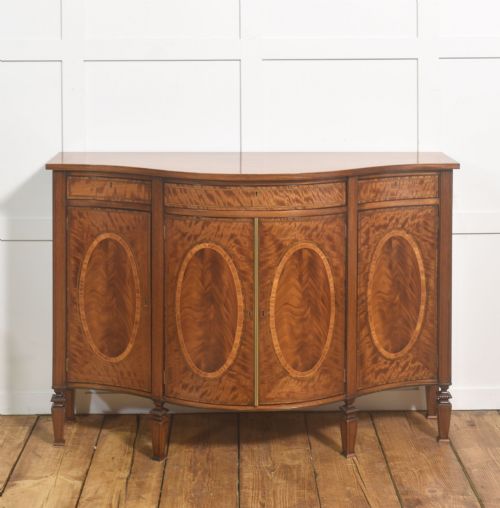
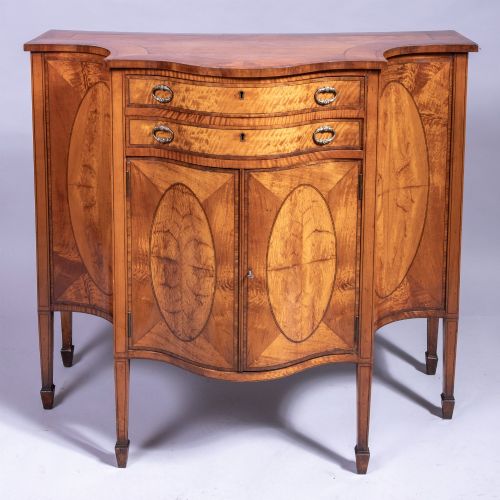
The pieces appearing here range from late eighteenth-century George III originals to early twentieth-century Sheraton Revival interpretations. Sideboards and side cabinets dominate the selection, bringing formal utility to modern dining spaces through cupboards and servers.
Materials and Construction
Cabinet makers built these pieces using solid mahogany and flame mahogany veneer, often laying fine timber over sturdy secondary woods to create deep grain patterns. Details relied on contrasting timbers, utilising satinwood and boxwood inlay or crossbanding to frame the drawer fronts and borders.
Hardware played a functional and decorative role, incorporating brass handles and mounts that complemented the dark timber tones. Joinery followed traditional cabinet-making methods, aligning curved fronts with precision to ensure smooth operation of doors and drawers.
Several pieces include secret cellarette drawers designed to keep wine bottles cool against the damp floorboards of historic dining rooms.
Evaluating the Pieces
The distinction between ordinary and exceptional pieces rests upon the choice of timber and the crispness of the inlay work. Finer examples display symmetrical flame mahogany veneers and intricate boxwood stringing executed with exact alignment.
Proportion and execution define the higher tier of these items, where the sweep of the bowfront integrates seamlessly with the leg or pedestal structure. Secondary elements, including original brass hardware and well-fitted internal drawers, separate workshops of high skill from mass production.
The Bowfront Dining Buffet Glossary
- Bowfront
- A convex curved cabinet front that swells outward in the centre. This shape gained popularity during the Georgian period to soften rigid room corners.
- Crossbanding
- A strip of veneer applied to the border of a panel or drawer front with the grain running perpendicular to the core timber. It creates a contrasting visual frame.
- Inlay
- A technique where pieces of contrasting timber, such as satinwood or boxwood, are inserted into recesses cut into the primary surface to form decorative patterns.
- Flame mahogany
- A distinct veneer figure displaying a flickering, flame-like pattern caused by cutting across the branch junctions of the tree.
Bowfront Dining Buffet: Frequently Asked Questions
How do I style a bowfront buffet?
Place the piece against a principal dining room wall where the curved front can catch the ambient light and command attention without blocking walkways.
Complement the dark timber and brass hardware with simple ceramics, silver serving pieces, or a low floral arrangement on top.
What is the difference between a sideboard and buffet?
These terms often overlap in historic furniture, though sideboards historically emphasised serving food while buffets leaned toward storage.
Both forms serve identical functions in contemporary dining rooms for holding tableware and linens.
How do I tell Georgian from Edwardian pieces?
Georgian pieces date from the eighteenth and early nineteenth centuries, displaying hand-cut joinery and aged patination acquired through centuries of use.
Edwardian items from the early twentieth century often draw on Sheraton Revival styles, showing lighter satinwood use and machine-assisted precision.
Can I use a buffet in a hallway?
The shallow ends of a bowfront shape make these cabinets useful in wide hallways or entrance spaces where deep rectangular furniture protrudes too far.
They provide convenient surface space for keys and post while offering concealed storage inside.