
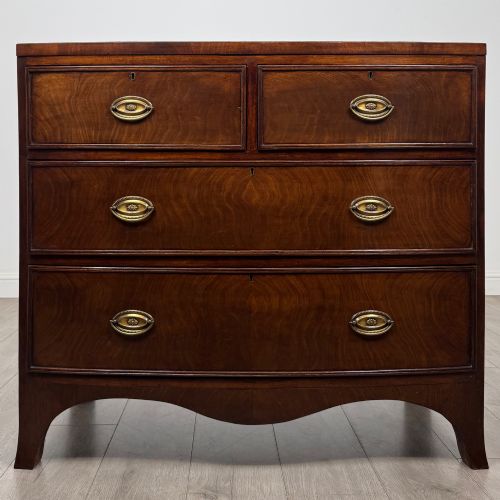
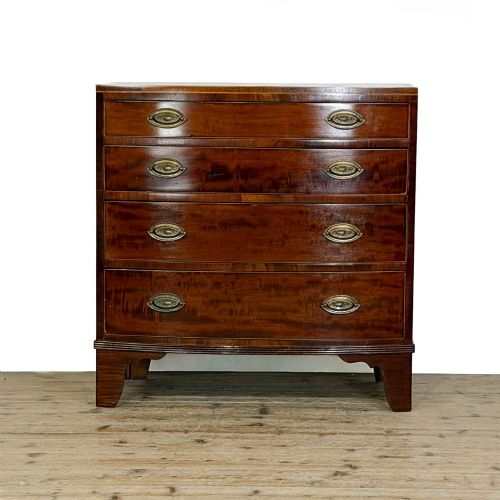
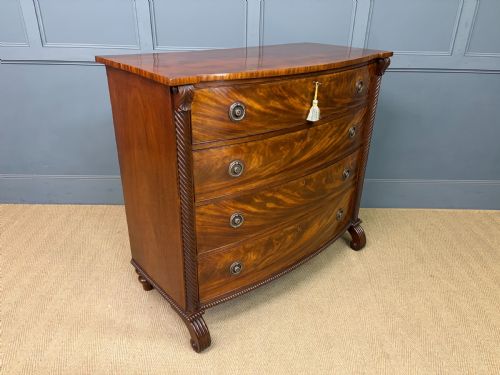
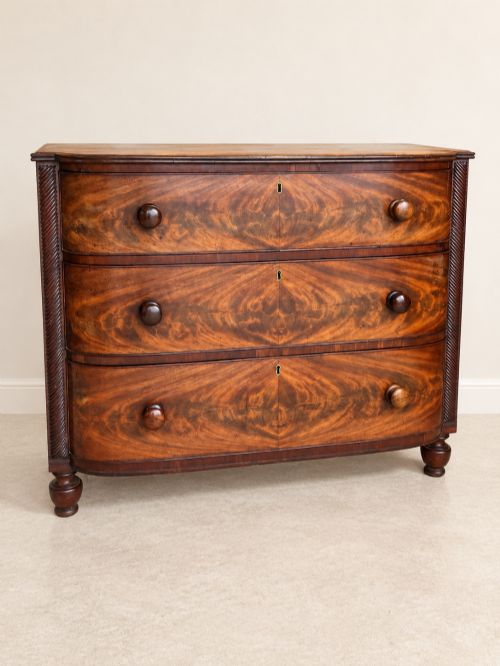

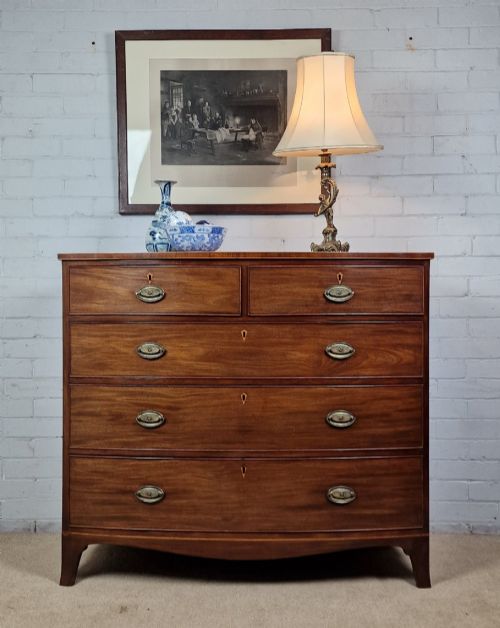
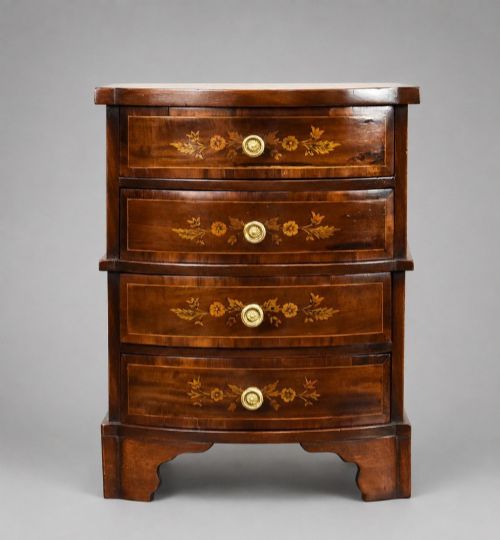
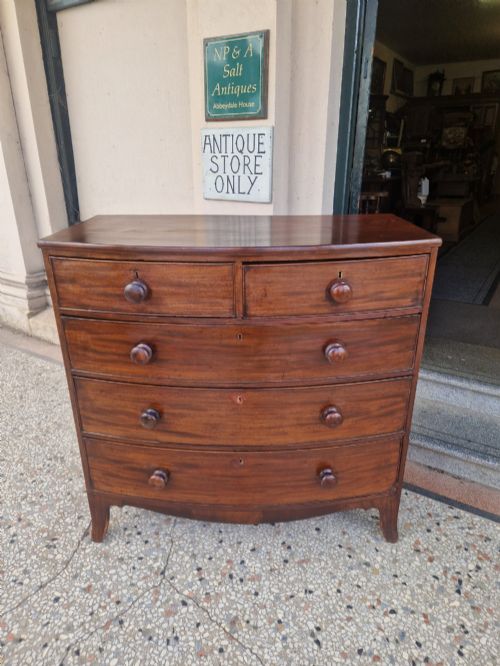
Bow Fronted Wooden Chest
A bow fronted wooden chest combines generous storage with a sweeping curved facade that softens the geometry of a room.
Bow Fronted Wooden Chest
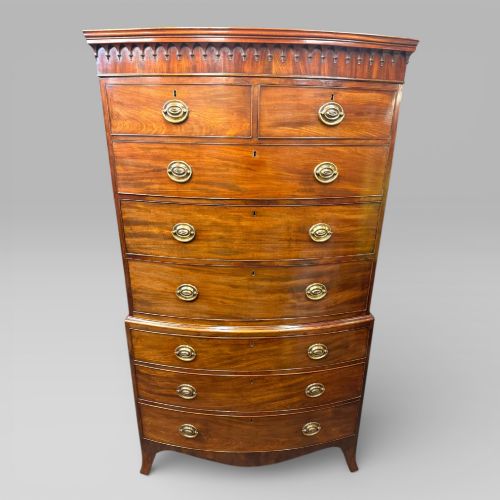
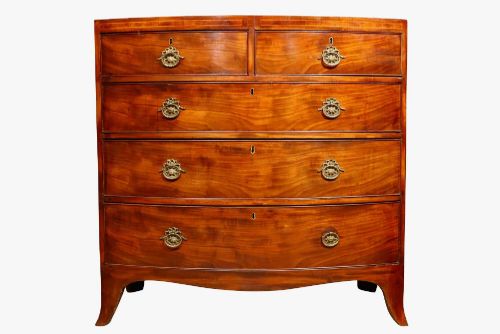
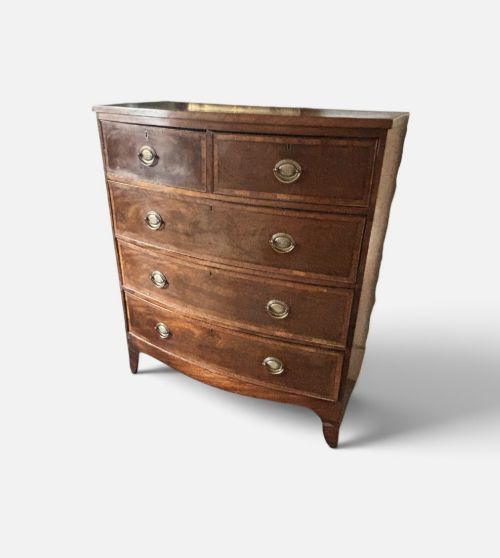
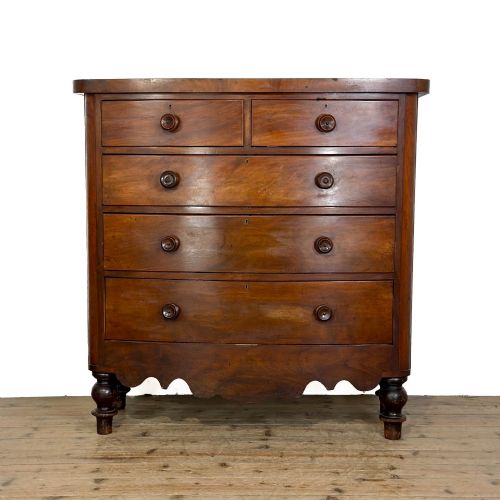
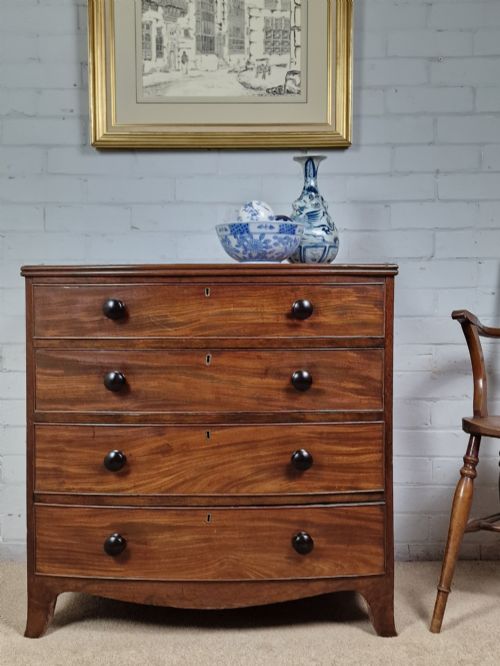
A bow fronted wooden chest stands as a primary storage piece defined by its convex projecting front, offering deeper internal drawers than a standard flat fronted cabinet. These pieces appear frequently across Georgian, Regency and Victorian eras, alongside later revival examples.
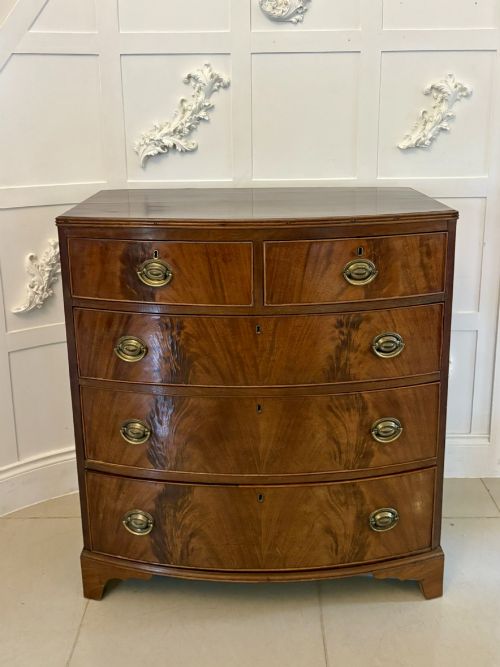
The standard configuration encountered on this page consists of a rectangular carcase raised on short feet or brackets, containing graduated horizontal drawers beneath a rectangular top. Mahogany remains the dominant timber, often enhanced with flame veneers or satinwood crossbanding.
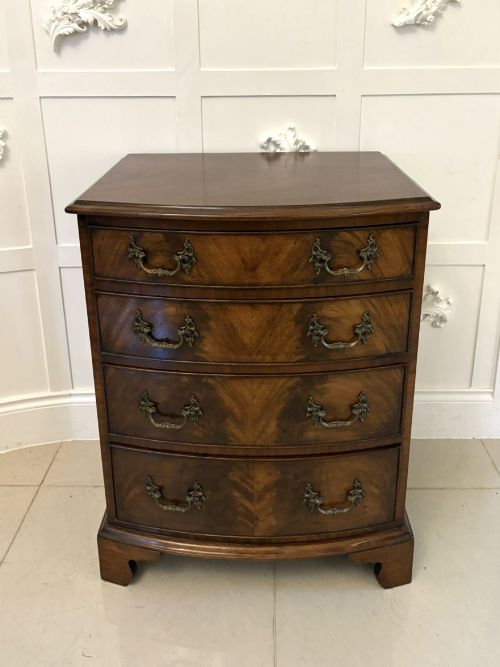
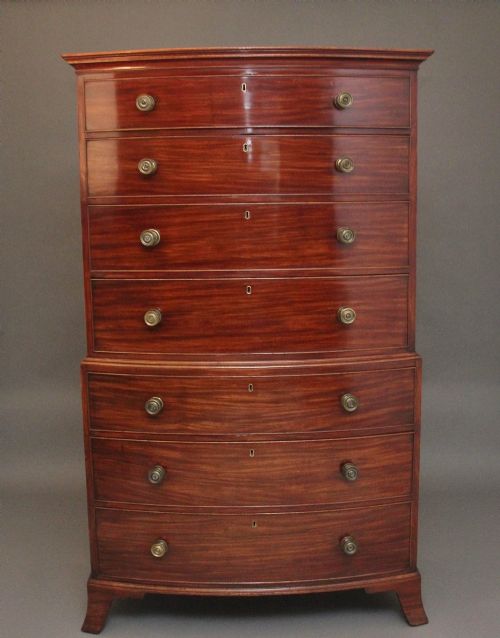
Beyond standard chests of drawers, the selection encompasses chests on chests, tallboys, miniature furniture, and sideboards, demonstrating the versatility of the curved silhouette across different scales and domestic functions.
Materials and construction
Cabinetmakers constructed the carcase using solid foundational woods like pine, applying carefully selected veneers across the primary surfaces to achieve striking grain patterns. Flame mahogany and burr walnut veneers required exceptional skill in sawing and laying to maintain symmetry across the curved drawer fronts.
The characteristic convex curve was achieved either by building up the drawer fronts from solid timber blocks or by bending laminated layers around a wooden core. Fine construction details include hand cut dovetails on the drawer sides and the integration of brass handles or turned wooden knobs.
Secondary timbers such as oak or pine appear on drawer linings and back panels, while decorative stringing lines in contrasting woods like satinwood often define the perimeter of the top and drawer faces.
Current listings feature pieces spanning the Georgian, Regency, Victorian, and Edwardian periods, constructed predominantly in mahogany with accents of satinwood and brass.
Distinguishing quality
The grade of a piece rests heavily on the selection of timber figures and the precision of the veneer matching across the curved drawers. Highly figured flame mahogany or carefully chosen burr walnut elevates the visual weight, whereas plain or heavily restored surfaces alter the presence.
Proportion and scale dictate the success of the design, with smaller bedside proportions and well balanced Georgian or Regency examples commanding greater attention than later mass produced variants. The crispness of the cockbeading around the drawers and the integration of original brass hardware further separate standard utility pieces from finer cabinet work.
The Bow Fronted Wooden Chest Glossary
- Bow front
- A convex curved front profile that projects outward from the centre, designed to increase internal drawer capacity while softening room angles.
- Flame mahogany
- A decorative veneer cut from timber fork sections that produces a flamed, feather like pattern across the surface.
- Crossbanding
- A narrow strip of veneer applied perpendicularly to the grain of the main surface, framing the perimeter of a drawer or top.
- Cockbeading
- A small projecting moulding fitted around the edges of drawer openings to protect the veneer edges and mask joinery lines.
- Graduated drawers
- A vertical sequence of drawers that decrease in depth from the bottom to the top of the chest.
- Tallboy
- A tall chest of drawers constructed in two stacked sections, providing elevated vertical storage.
Bow Fronted Wooden Chest: Frequently Asked Questions
Where did people place these chests?
These pieces served primarily in bedrooms and dressing rooms for storing linens and garments.
Larger variations also stood in entrance halls and reception rooms to hold household accessories and papers.
How do I date a chest?
Dating relies on examining the construction methods of the drawer linings, the style of the brass handles, and the overall proportions.
Georgian and Regency examples typically exhibit hand cut dovetails and specific bracket or feet designs distinct from later Victorian or Edwardian production.
Are all these chests made of mahogany?
Mahogany represents the vast majority of the timber used across the available periods, often featured in solid boards or striking veneer selections.
Alternative woods such as walnut, pine, and painted finishes also appear in specific regional or period examples.
What is a chest on chest?
A chest on chest, or tallboy, is a vertically stacked storage unit where a smaller upper chest rests upon a wider lower section.
This form maximises storage capacity while maintaining a manageable footprint on the floor.