
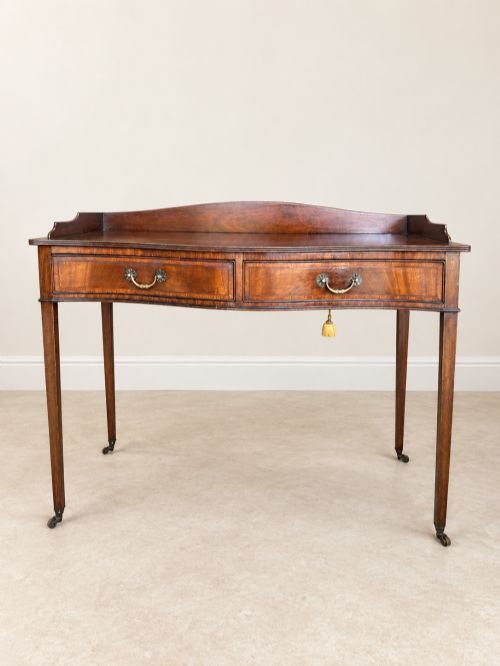
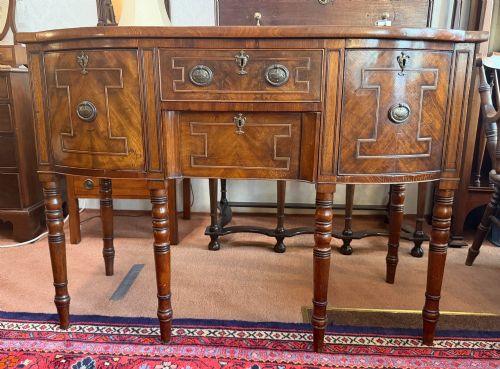
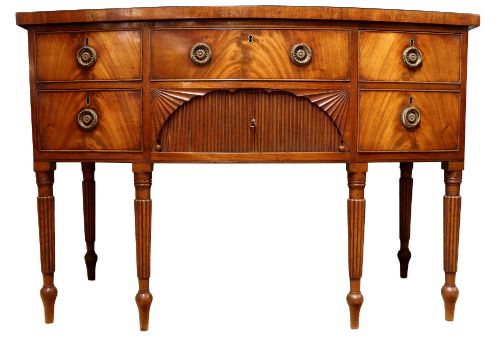
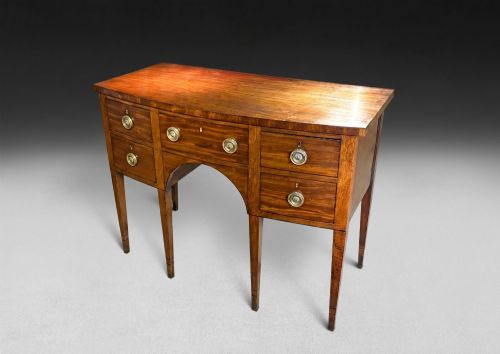
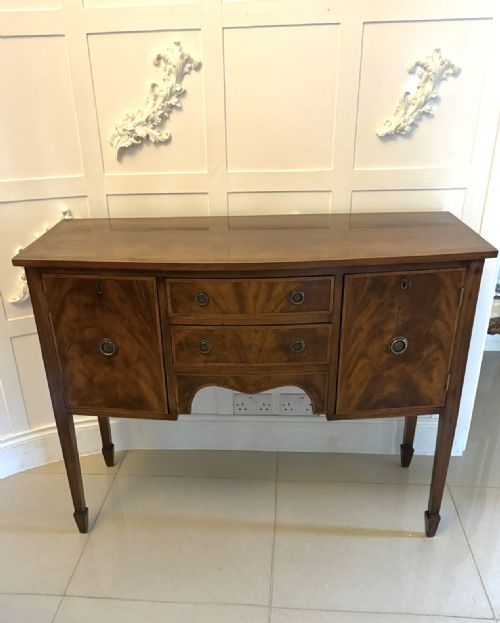
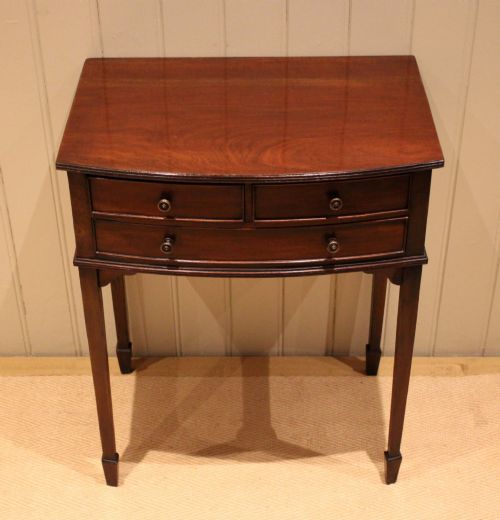
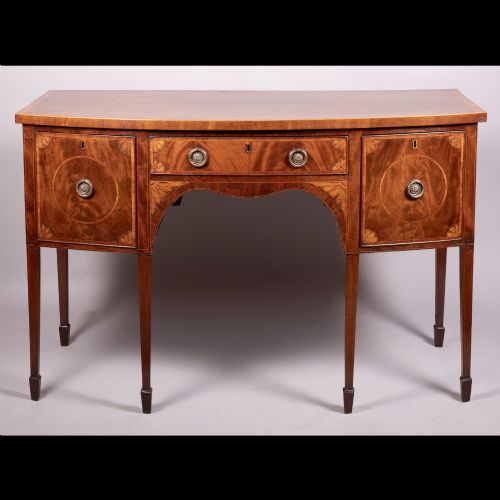
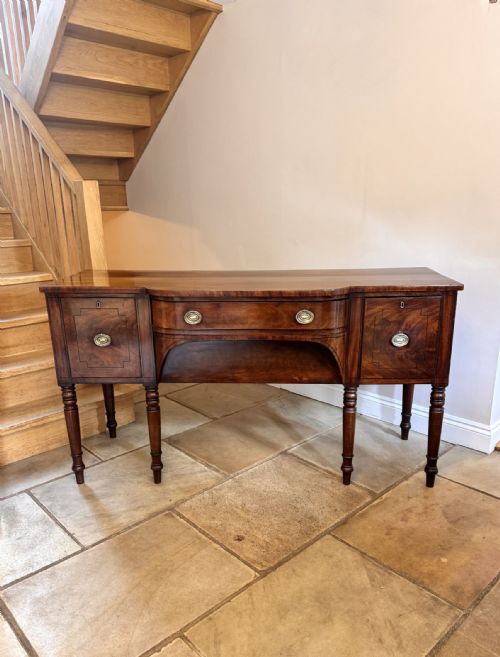


Bow Front Server Table
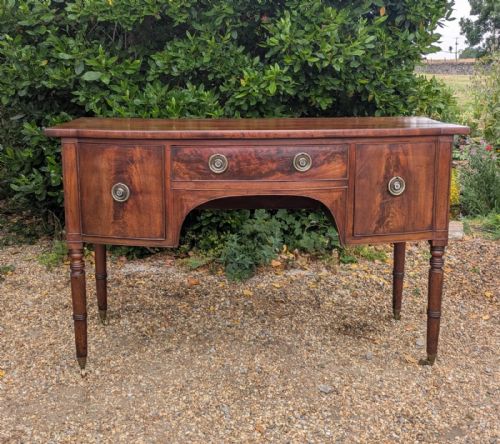
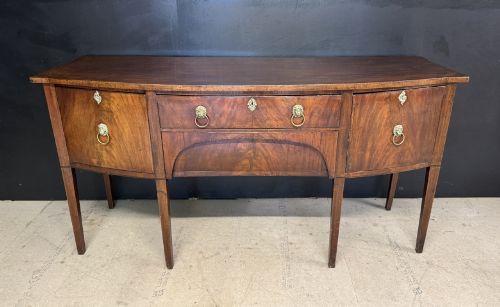
A bow front server table brings curved elegance and ample storage to a dining room or hall, offering a classic surface for serving.
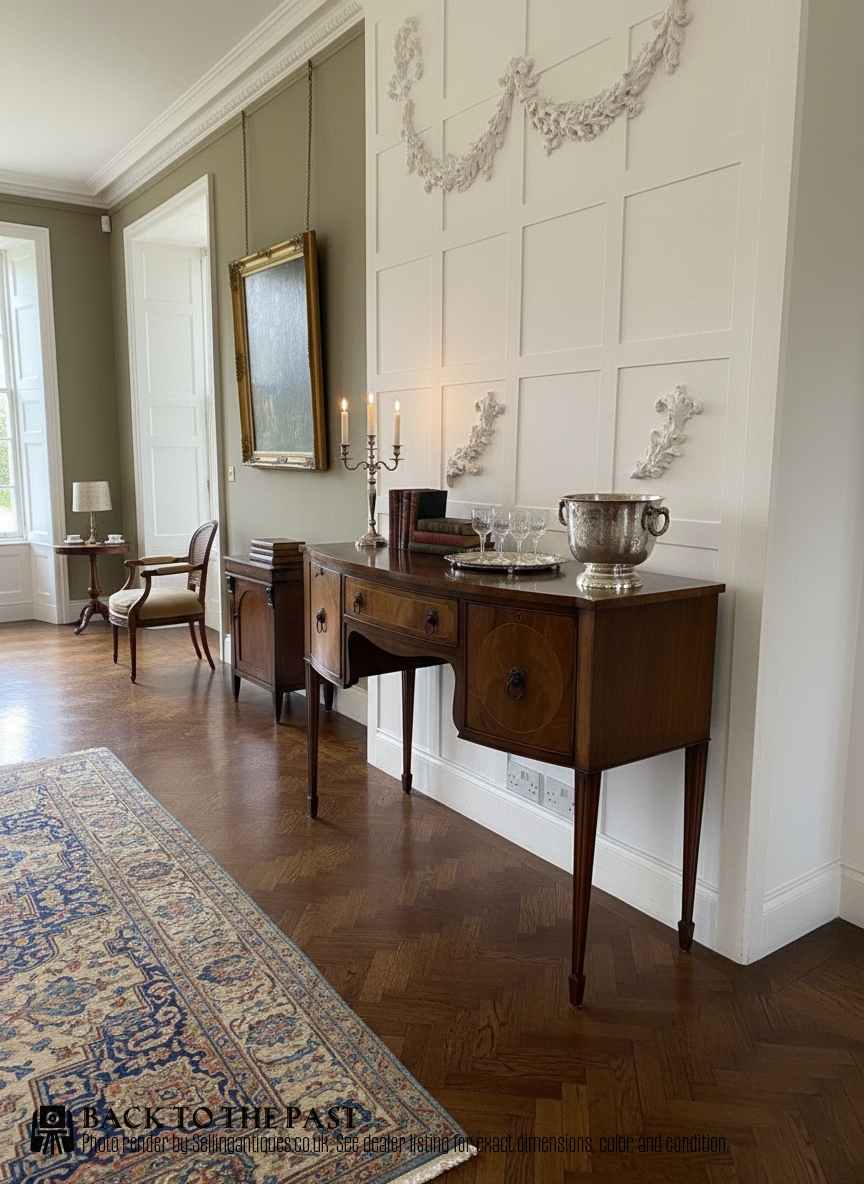
Bow Front Server Table
A bow front server table combines the curved front of a sideboard with the proportions of a serving or console table. These items emerge chiefly from Georgian, Regency, and Edwardian periods, stretching into the early twentieth century.
Makers designed these objects as sideboards, buffets, and servers to hold dining silver and food. Mahogany remains the dominant wood, frequently paired with inlaid details.
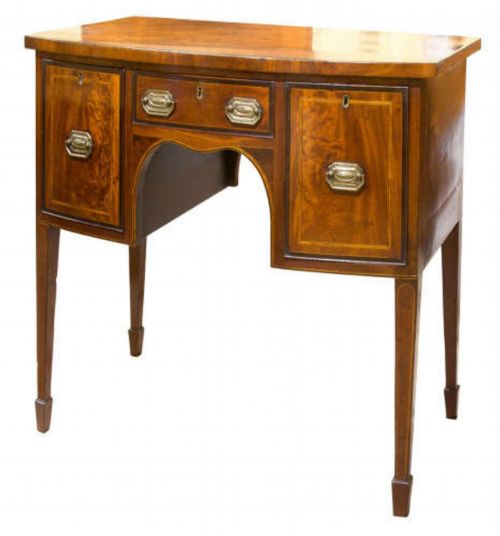
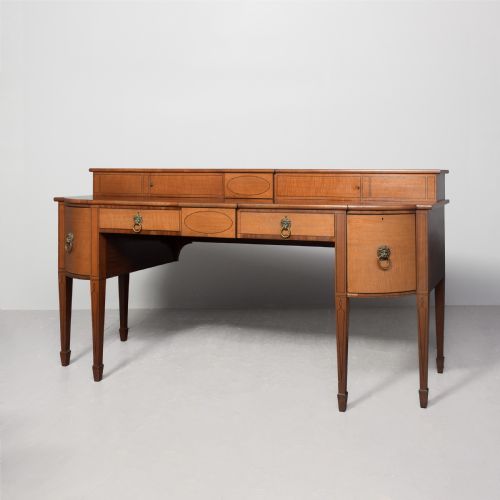
Pieces span various scales, from large Scottish stage-back sideboards to small three-drawer side tables. The curved silhouette softens the geometry of a room while providing functional surface space.
How they were made
Cabinetmakers constructed the main bodies using solid mahogany and flame mahogany veneer over secondary timbers such as oak. They shaped the curved front framework carefully to maintain structural integrity along the bow.
Craftsmen applied contrasting veneers and stringing in satinwood, boxwood, and purpleheart to accentuate the bowed drawer fronts. Brass hardware, including handles and pulls, completed the functional facade of drawers and cupboards.
Listings span Georgian, Regency, and Edwardian periods, utilising mahogany, walnut, oak, brass, and satinwood inlay.
What varies in quality
The refinement of the timber selection dictates much of the visual distinction. Figured flame mahogany and intricate boxwood or satinwood stringing elevate a piece above plain surfaces.
Proportion and scale influence value, particularly in smaller examples or large stage-back variations. Crispness in the execution of the curved drawers and the integration of secondary woods like oak reveal the maker's hand.
The Bow Front Server Table Glossary
- Bow front
- A convex curved front contour typical of these sideboards and serving tables. This shape softens rigid room lines and showcases figured wood grains.
- Flame mahogany
- A veneer cut from timber where the grain creates a flame-like pattern. Cabinetmakers used this on drawer fronts for striking visual depth.
- Stringing
- Thin inlaid lines of contrasting timber such as boxwood or satinwood. Craftsmen set these into the mahogany to frame panels and drawers.
- Stage-back
- A raised tier at the rear surface of certain large sideboards. This feature provided extra display space for platters and serving vessels.
- Purpleheart
- A dense timber utilised for contrasting banding and inlay details. Its distinct colour added decorative definition to Georgian surfaces.
Bow Front Server Table: Frequently Asked Questions
Where should I place a bow front server table?
These pieces suit dining rooms, grand hallways, or living spaces where surface area and storage matter. Their curved profiles allow them to project into a room without sharp corners.
They function well against long walls, serving meals or displaying decorative objects while maintaining a manageable footprint.
How do I distinguish a Georgian piece from an Edwardian copy?
Examining the secondary timbers, construction methods, and hardware reveals the age of the item. Georgian pieces often utilise hand-cut dovetails and oak linings.
Later Edwardian revivals employ machine precision and different internal framing techniques, even when utilising older wood styles like flame mahogany.
What is the difference between a sideboard and a server?
Sideboards usually include a combination of deep cupboards and drawers designed for extensive dining storage. Servers and console tables often feature lighter frames with fewer cupboards.
Some server tables rely solely on drawers beneath the surface, offering a leaner silhouette suited to smaller spaces.
How do I care for mahogany veneer surfaces?
Maintain the finish by keeping the wood away from direct sunlight and sudden temperature shifts. Dust regularly with a dry cloth and apply occasional wax suitable for antique timber.
Avoid liquid polishes containing silicone, which can penetrate damaged areas of the veneer and degrade the polish over time.