

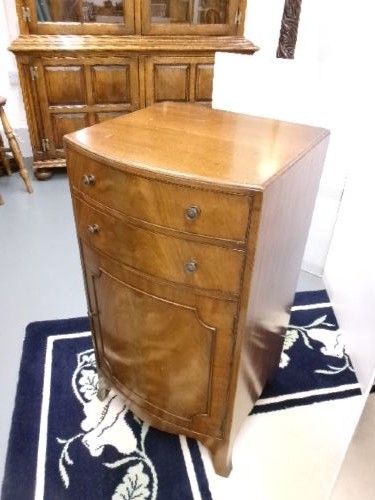
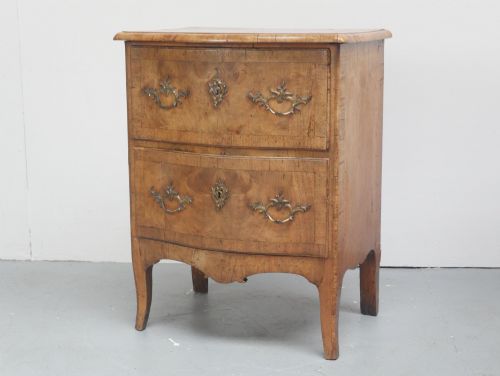
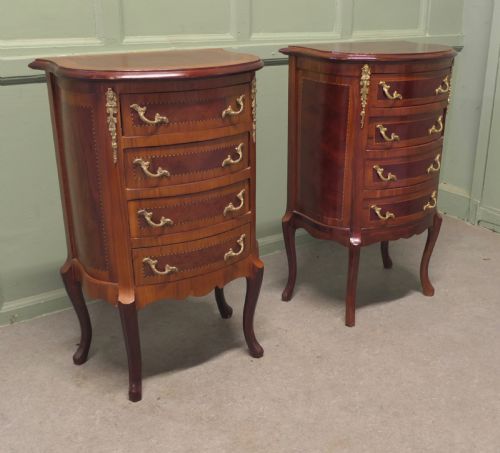
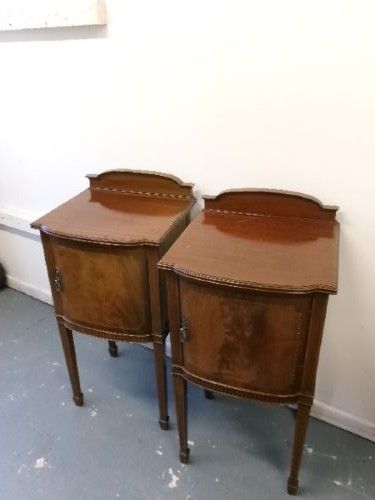
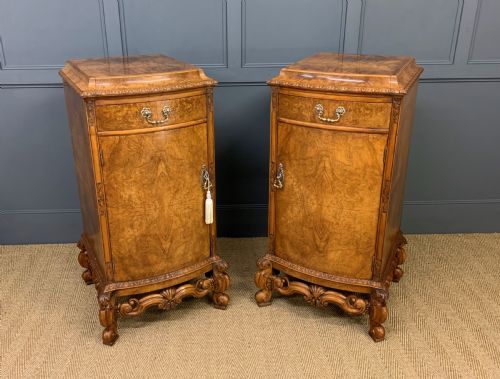
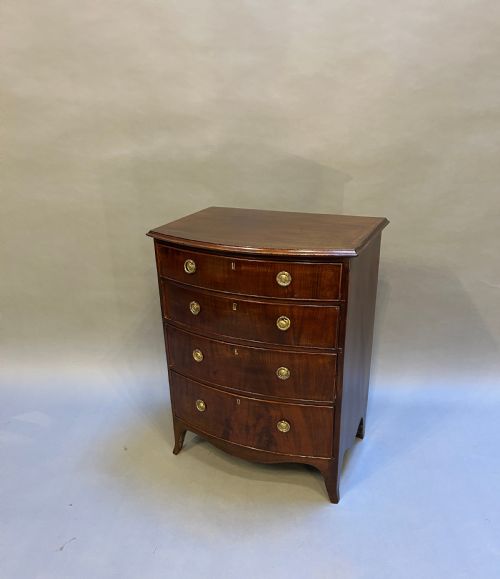


Bow Front Nightstand
A bow front nightstand brings a graceful curve and hidden storage to the bedside.

Bow Front Nightstand
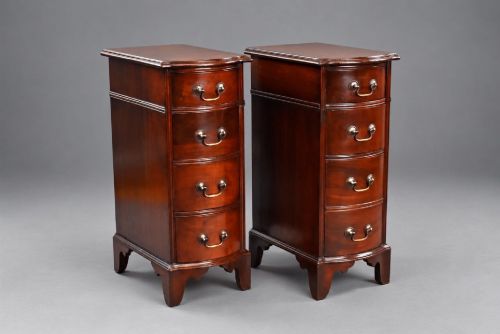
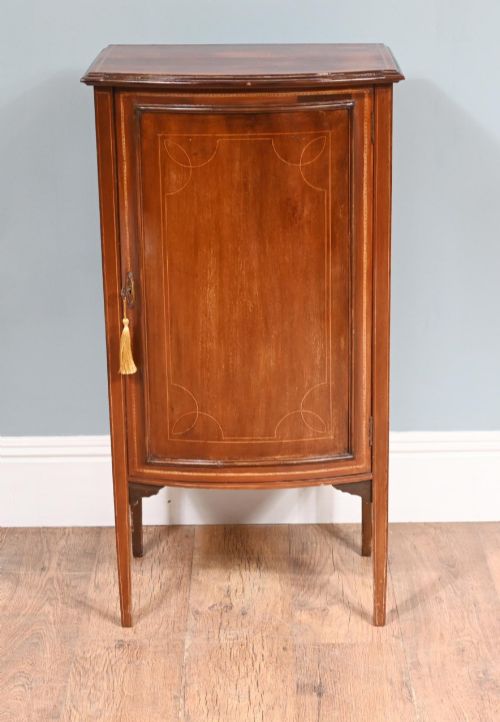
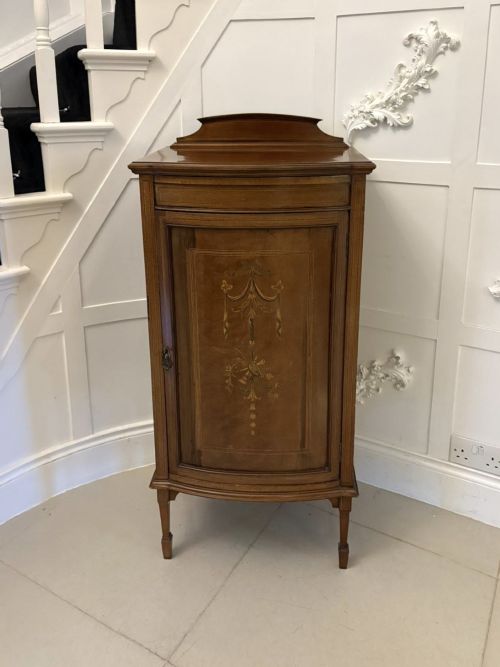
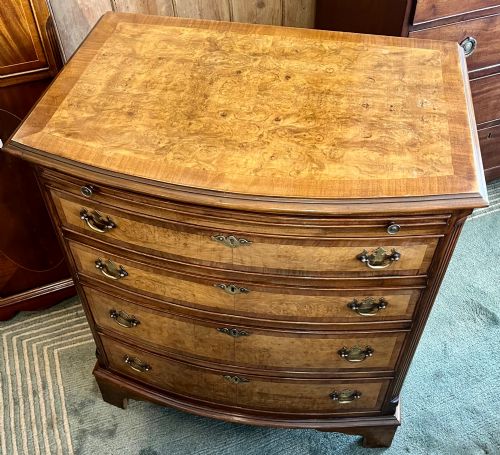
A bow front nightstand takes the form of a compact bedside cabinet, commode, or small chest of drawers featuring a rounded projecting front. These pieces appear across the Georgian, Victorian, and Edwardian periods, alongside later twentieth-century interpretations.
The most common examples met on this page are mahogany or burr walnut bedside cupboards and small chests dating from the Georgian and Edwardian eras. They serve practical needs beside a bed while offering distinct period character through figured veneers and inlaid details.
Materials and construction
Cabinetmakers constructed these pieces primarily using solid pine carcases faced with expensive decorative veneers such as mahogany, burr walnut, and satinwood. Crossbanding and stringing in boxwood frequently define the curved drawer fronts and top edges.
Curved front drawers require specialised joinery to shape solid timber or bend multi-ply cores before applying fine face veneers. Original hardware typically consists of cast brass drop handles or small knobs appropriate to each stylistic period.
Bow Front Nightstand Retail Price Guide 2026
Typical asking prices for bow front nightstand among the pieces listed under this phrase on Sellingantiques today, from the lower quarter to the upper quarter. They describe what is for sale here now, not the wider market.
Listings feature mahogany, burr walnut, and satinwood pieces spanning the Georgian, Victorian, Edwardian, and Art Deco periods.
Quality variations
The distinction between standard examples and the finest pieces lies in the choice of timber figure and the precision of the marquetry or inlay. Highly figured flame mahogany or richly patterned burr walnut elevate the visual impact of the curved facade.
Subtle details such as hand-cut dovetails on drawer linings, secondary woods like oak, and the crisp execution of edge stringing separate master workshop production from more utilitarian cabinet work.
The Bow Front Nightstand Glossary
- Bow front
- A convex curved front that projects outward in a smooth arc. This shape softens the profile of a bedside cabinet.
- Pot cupboard
- A small enclosed bedside cabinet originally designed to house a chamber pot. Many survive adapted for general bedside storage.
- Commode
- A low enclosed cabinet with drawers or doors, often fitted with a pull-out shelf. In Georgian usage, the term frequently describes bedside pieces with concealed interiors.
- Crossbanding
- A strip of veneer applied to the border of a panel or drawer front with the grain running perpendicular to the centre. It creates a neat framing effect.
- Marquetry
- Elaborate patterns formed by fitting together thin veneers of various coloured woods. This decorative technique often adorns Edwardian and later tops.
Bow Front Nightstand: Frequently Asked Questions
What is a bow front nightstand?
A bow front nightstand is a small bedside cabinet or chest featuring a convex curved front facade. These pieces provide compact surface space and enclosed storage next to a bed.
They appear in various historic styles from the Georgian period through the Edwardian era and Art Deco years.
How were they used historically?
These cabinets served multiple functions in period bedrooms, often acting as night storage or housing chamber pots behind closed doors. Some incorporated pull-out slides for holding candlesticks or water jugs.
Today they function primarily as bedside tables for lamps, books, and small personal items.
How do I identify a Georgian piece?
Georgian pieces typically display solid mahogany or flame mahogany timbers with subtle hand-cut joinery and minimal veneer work. Look for traditional proportions, oak drawer linings, and period-appropriate brass hardware.
Later revival pieces often employ lighter satinwood or distinct inlay motifs characteristic of Edwardian production.
Are pairs common for these cabinets?
Matched pairs appear frequently alongside single examples, having been made originally to flank a bed. Finding matching pairs in woods like burr walnut or inlaid mahogany represents a traditional configuration.
Single cabinets work well as standalone accent tables in smaller bedrooms.