




Bow Front Console
A bow front console brings a curved, room-softening presence to a hallway or sitting room, offering useful surface space without blocking the flow.
Bow Front Console
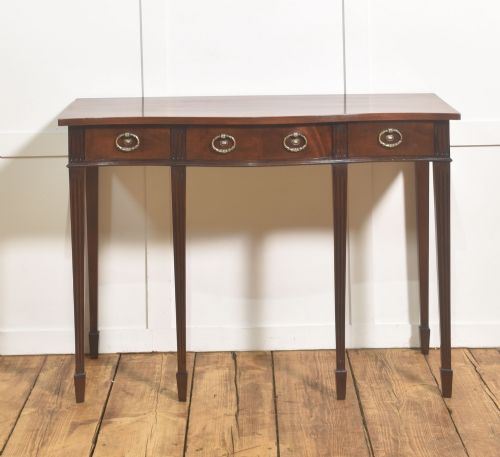
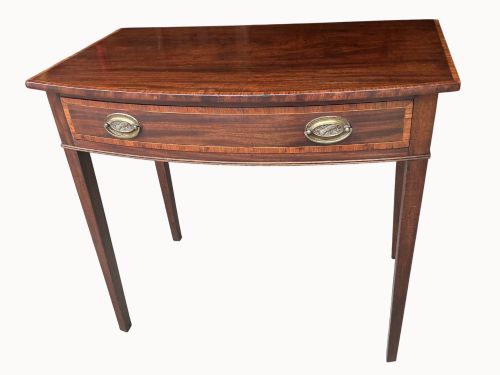
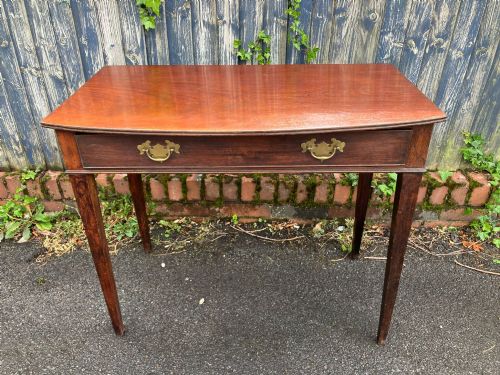
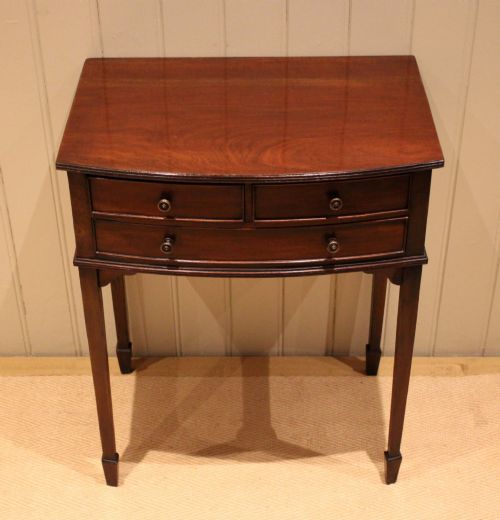
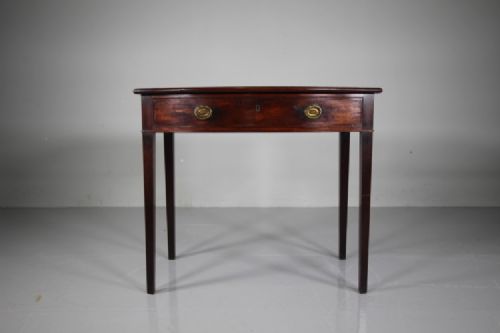
A bow front console combines a curved projecting front with a shallow profile designed to stand neatly against a wall. The search phrase covers side tables, serving tables and smaller sideboards sharing this characteristic bowed shape.
Most examples found here date from the Georgian and Victorian periods, with mahogany serving as the principal timber alongside occasional walnut, satinwood and pitch pine.
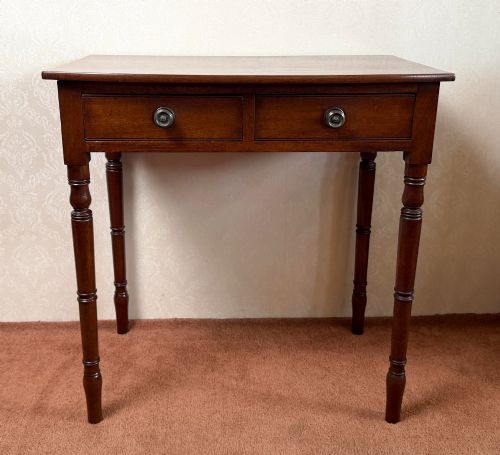
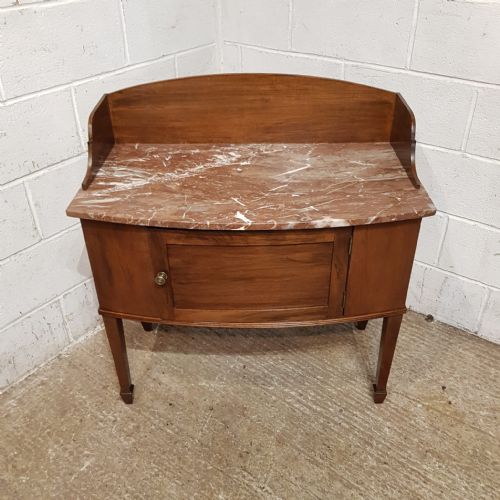
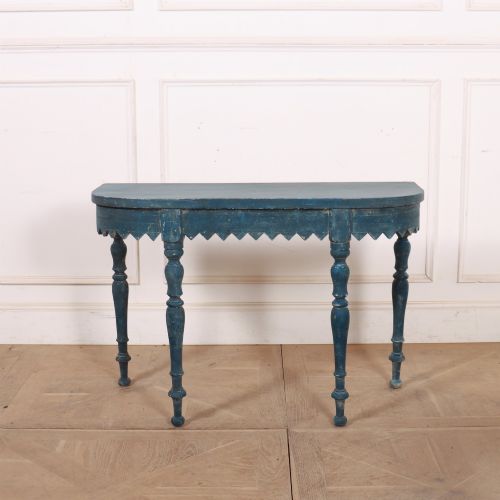
Forms range from simple single-drawer side tables to grander serving pieces, demi-lune hall tables and marble-topped washstands.
Materials and Construction
Cabinet makers built these tables primarily in solid and veneered mahogany, often incorporating secondary timbers such as oak for drawer linings.
Decoration relied on contrasting veneers, boxwood stringing and delicate wood inlay rather than heavy carving, preserving the clean curve of the frontage.
Selected pieces integrate inset marble tops or painted finishes, reflecting the changing tastes from the eighteenth century into the Edwardian era.
Listings feature mahogany as the dominant wood, alongside walnut, satinwood and pitch pine across Georgian and Victorian periods.
Craftsmanship and Proportion
Quality rests in the precision of the curved drawer fronts and the tightness of the joinery where the bowed frame meets the straight sides.
Better pieces display refined timber selection with matched grain patterns across the front drawers, complemented by original brass hardware.
Proportion dictates utility; finer examples maintain slender legs and balanced dimensions that avoid appearing heavy in a narrow space.
Maples
The Bow Front Console Glossary
- Bow front
- A convex curved cabinet front that projects outward in a smooth arc. This shape softens room lines and maximises internal depth.
- Demi-lune
- A half-moon shape used for console tables and cabinets designed to stand flat against a wall. The curved front mirrors the bow front aesthetic.
- Stringing
- Thin inlaid lines of contrasting timber, such as boxwood, used to outline drawers and tabletops. It defines geometric panels on cabinet doors.
- Inlay
- A technique where pieces of contrasting wood or other materials are fitted into a recessed surface to form a decorative pattern.
- Serving table
- A large side table used in dining rooms for holding food and dishes before service. Many examples share the shallow profile of a console.
Bow Front Console: Frequently Asked Questions
Where should I place a bow front console?
These tables suit narrow circulation spaces like hallways or landings because their curved fronts reduce sharp corners while offering surface depth in the centre.
They also function effectively in sitting rooms beneath a mirror or as serving pieces in a dining room.
How do I distinguish a Georgian piece from a later copy?
Examine the drawer construction and timber choice inside the carcass, looking for hand-cut dovetails and secondary woods like oak.
Later Victorian and Edwardian revivals often employ machine-cut joints and different interior lining materials.
What is the difference between a console and a side table?
A console traditionally fastens to a wall or stands with support designed specifically for display against a vertical surface.
Side tables are typically freestanding pieces with four legs finished on all sides, though the terms overlap frequently in antique furniture.
Can these tables hold a lamp or heavy objects?
Standard timber tops easily support table lamps, books and decorative objects provided the leg joints remain firm.
Marble-topped variants offer extra weight and durability for heavier display items.