
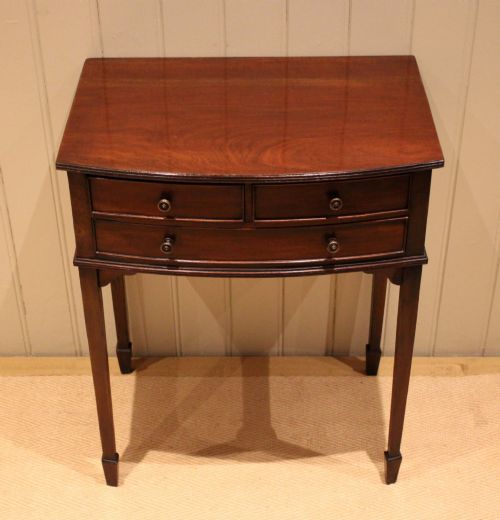
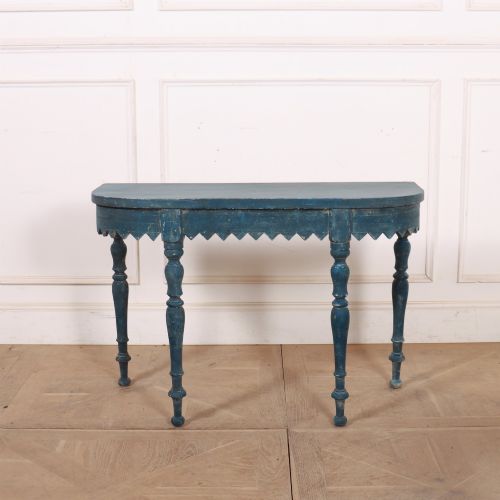


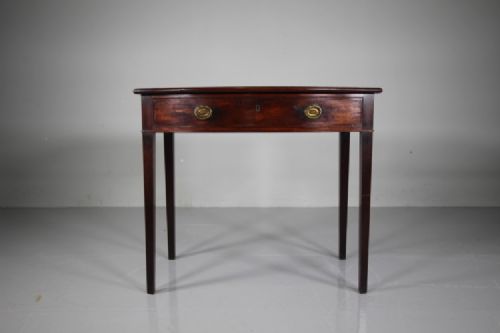


Bow Front Console Table
A bow front console table brings gentle curves and practical depth to a hallway or drawing room.
Bow Front Console Table
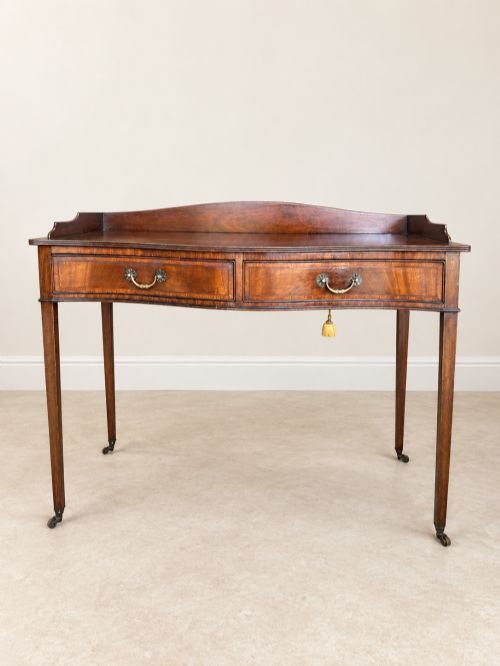
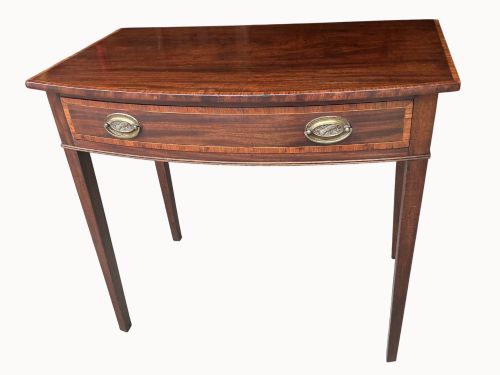
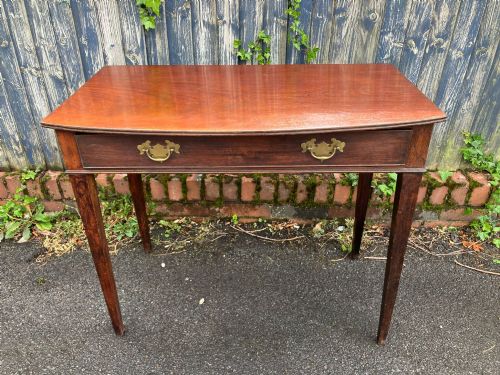
A bow front console table presents a curved, convex facade that softens the straight lines of a room while occupying minimal floor space. Buyers seek these pieces for entryways, halls and reception rooms where a standard rectangular table projects too far into the walkway.
The pieces appearing on this page span several centuries and design movements, with Georgian, Regency and Victorian examples forming the core of the selection alongside later revival pieces. Mahogany is the predominant wood, accompanied by burr walnut, pitch pine and occasional painted finishes.
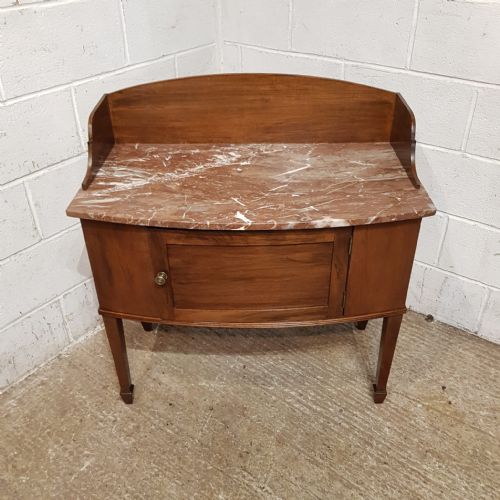
While many listings describe straightforward side tables or serving tables with bowed fronts, others encompass card tables, washstands and small sideboards adapted for similar display purposes. The curved front profile unites these varied forms, offering both surface area and discreet proportion.
How They Were Made
Cabinet makers built these frames primarily from solid mahogany or laid rich mahogany veneers over supportive secondary timbers such as oak, employing sturdy dovetail joints for the drawers. The curved front required careful steam bending or segmented construction to achieve the smooth, unbroken sweep of the bow.
Inlaid decoration relied on contrasting timbers like boxwood and satinwood, creating delicate stringing or geometric banding along the edges and drawer fronts. Certain pieces incorporate heavy white or grey marble tops set directly into the wooden framework, adding weight and a cool, smooth surface resistant to water and wear.
Some Victorian examples include hidden lift-up lids on pitch pine demi-lune frames, turning a simple hallway stand into a secret repository.
What Varies in Quality
Quality reveals itself in the handling of the curved timber and the crispness of the secondary details, such as hand-cut dovetails within the drawers and the precise alignment of inlaid stringing. Superior examples maintain a smooth, even radius along the bow without visible warping or patching in the veneer.
The choice of secondary woods and the weight of the brass hardware also separate standard production from finer cabinet work. Better pieces display thoughtful grain matching across the front drawers and stable, well-joined framing that withstands decades of daily use.
Maples
The Bow Front Console Table Glossary
- Bow front
- A convex, outward-curving front facade characteristic of certain tables, chests and sideboards. This shape softens the corners of furniture and fits neatly into narrow circulation spaces.
- Console table
- A table designed to stand against a wall, traditionally supported by brackets or legs at the front. These pieces serve primarily for display or as surface space in entrance halls.
- Stringing
- A narrow strip of contrasting wood inlaid into the surface of a piece to create linear decorative borders. Makers often used boxwood against a dark mahogany background.
- Demi-lune
- A half-moon shape with a curved front and a straight back edge designed to sit flush against a wall. Such tables offer compact proportions while providing a useful top surface.
Bow Front Console Table: Frequently Asked Questions
Where should I place a bow front console table?
These tables find a natural home in entrance halls, narrow corridors or behind sofas where a standard rectangular table would obstruct foot traffic. Their curved profile allows them to project less into the room while still providing a useful surface for lamps, mirrors or post.
In dining rooms or sitting rooms, they work well against blank wall spaces as serving tables or display surfaces for decorative objects.
How do I tell an 18th century table from a later revival piece?
Examining the construction methods inside the drawers and beneath the top offers the clearest clues to age. Hand-cut dovetails, timber shrinkage patterns and the type of secondary wood used for linings point directly to the period of manufacture.
Revival pieces from the Edwardian era or the 1920s often display machine-tooled elements, cleaner interior surfaces and standardised fixings that differ from older workshop practices.
Are marble top console tables original?
Many console tables and washstands were manufactured with fitted marble tops to provide a durable, water-resistant surface for practical use. While some marble tops represent later replacements, others are entirely original to the piece, particularly on washstands and serving tables designed for heavy household duties.
Checking the fit of the stone within the wooden rebate helps determine whether the top belongs to the original frame.
How do I care for a polished mahogany surface?
Polished mahogany benefits from regular dusting with a soft, dry cloth to prevent airborne grit from scratching the finish. Applying a traditional beeswax polish occasionally helps nourish the timber and maintain a deep, natural sheen without building up heavy chemical layers.
Keeping the table away from direct sunlight and strong heat sources protects the wood from drying out and prevents the veneers from lifting.