
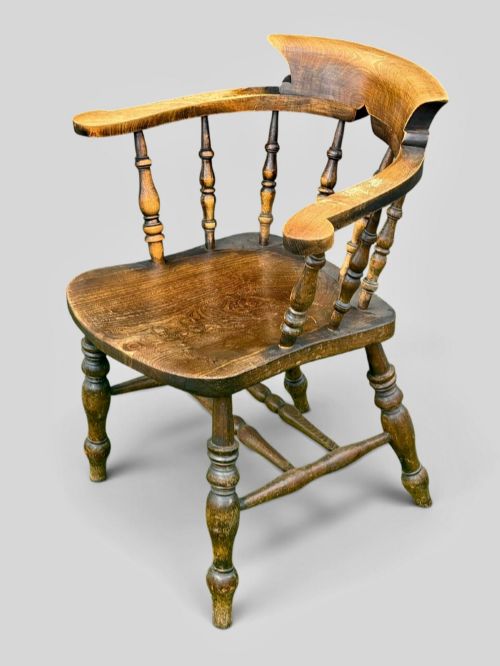
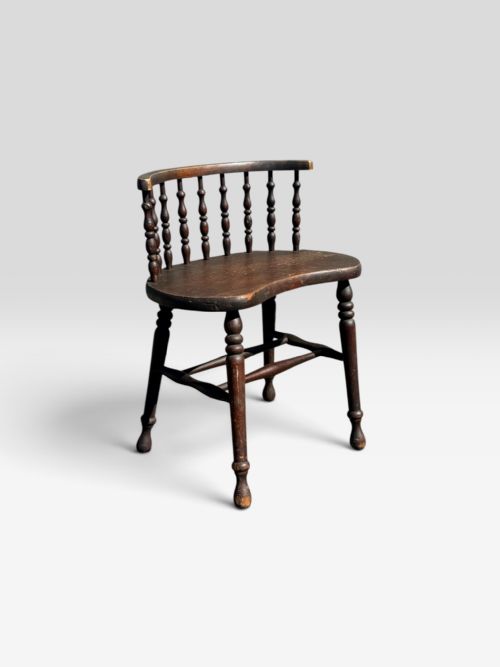
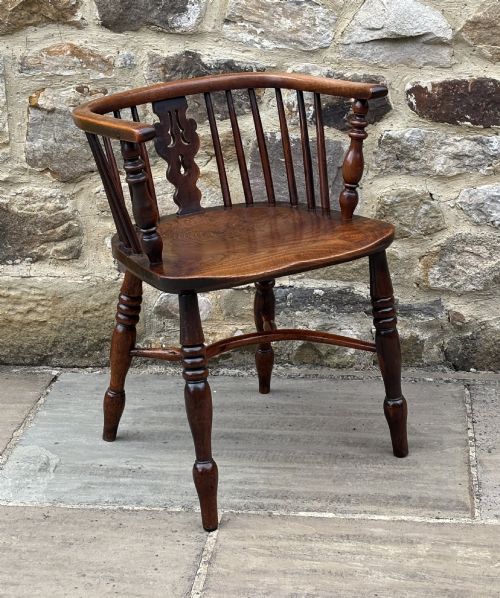
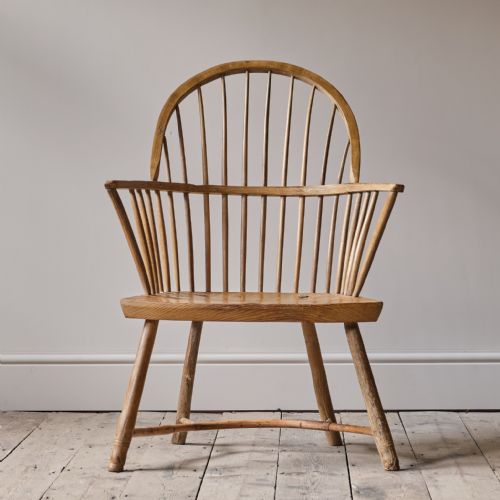
Bow Back Windsor
When you search for a bow back windsor, you are looking at traditional wooden seating built for strength and comfort in English country houses and kitchens.
Bow Back Windsor
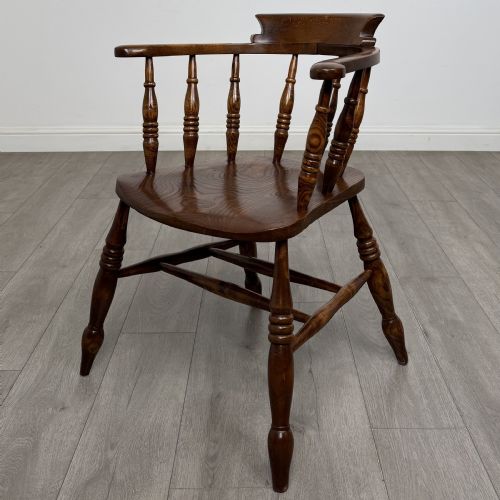
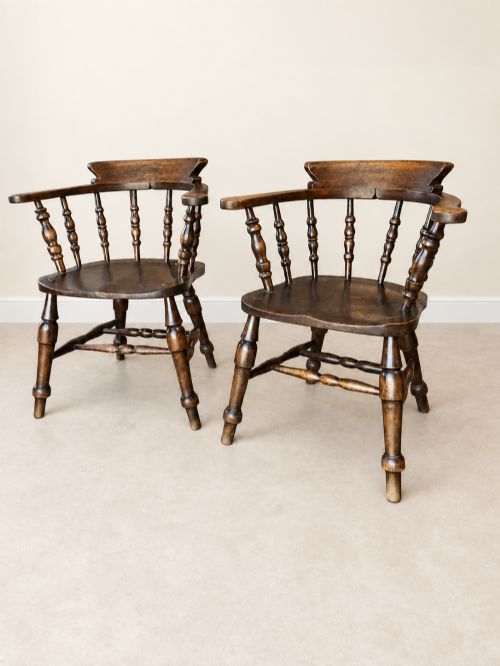
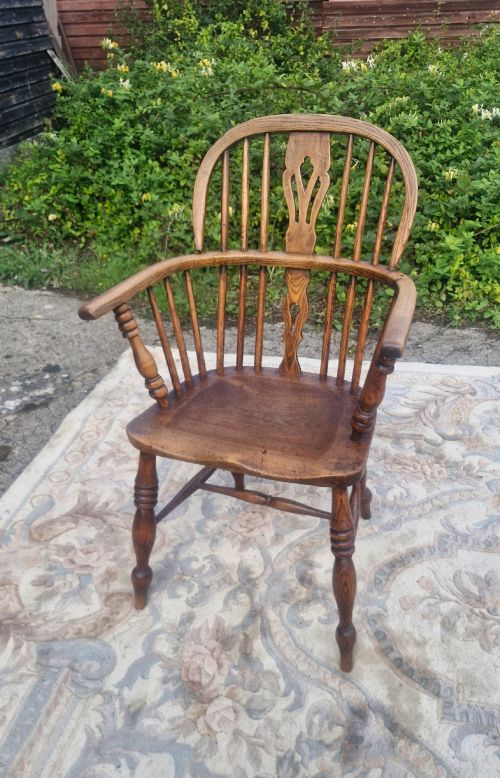
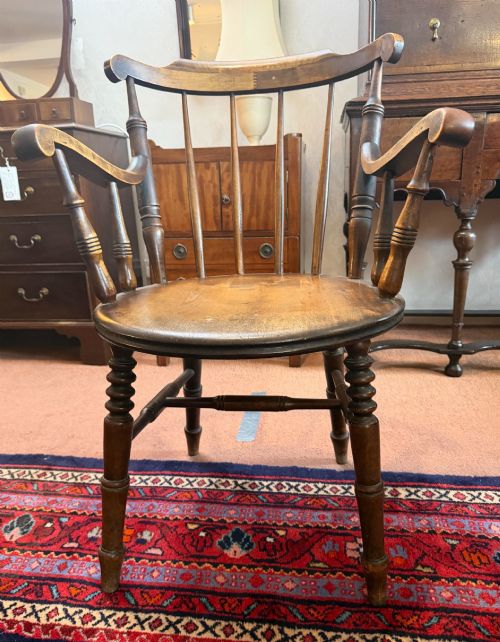
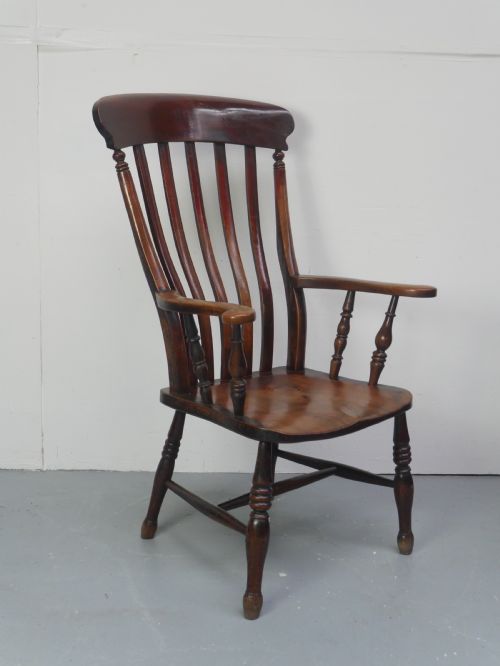
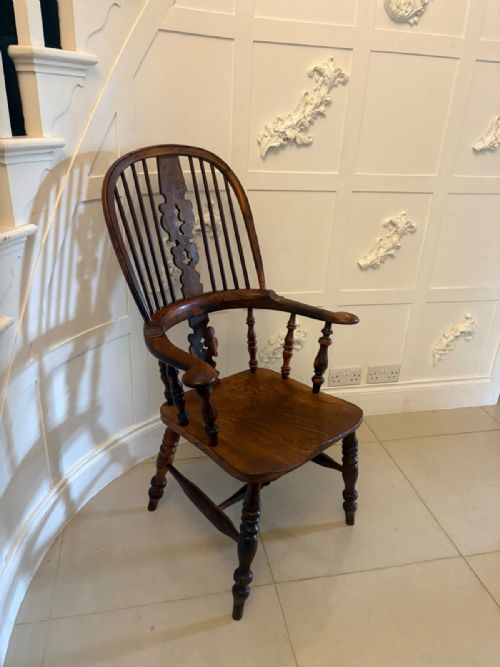
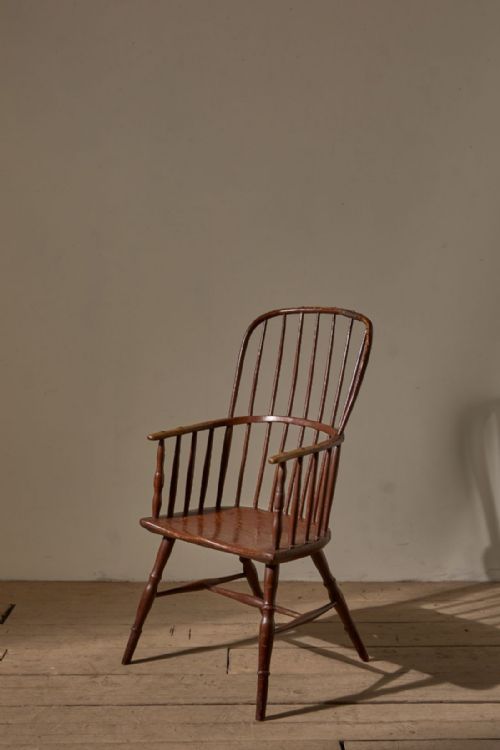
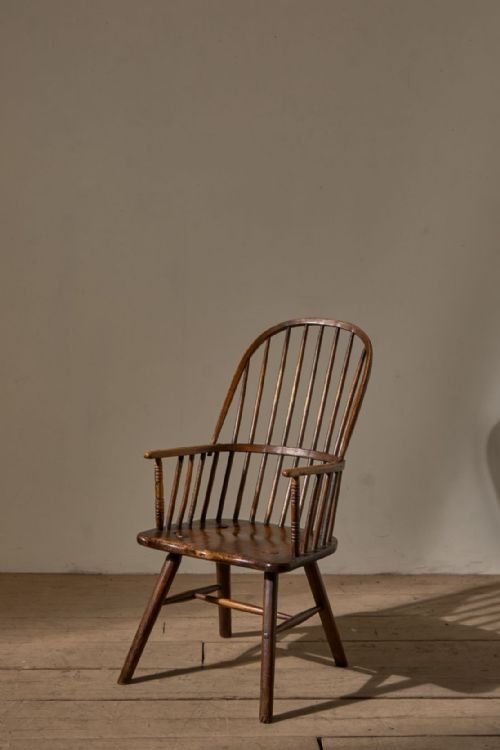
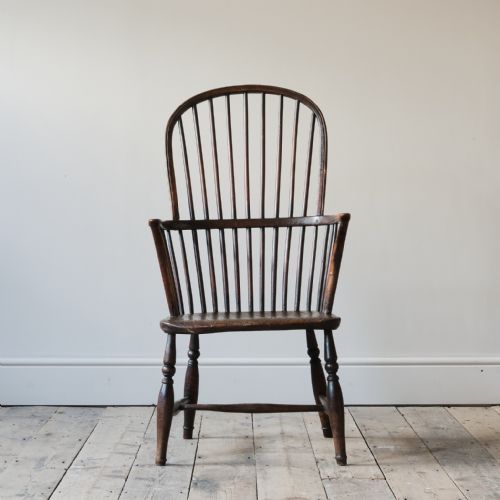
A bow back windsor is a form of wooden seating defined by a continuous bentwood bow that forms the back and arm rail, supported by vertical spindles fitted into a solid timber seat. These pieces emerge primarily from the eighteenth and nineteenth centuries, spanning Georgian and Victorian periods in English provincial workshops.
You will most commonly meet nineteenth-century examples on this page, often built as armchairs, desk chairs, or smokers bows in kitchen and farmhouse settings. The records show frequent combinations of elm seats with ash or beech frames, alongside occasional examples rendered in yew wood.
How They Were Made
Makers utilised contrasting timbers to balance structural needs, pairing dense elm for carved saddle seats with flexible ash, beech, or yew for steam-bent bows and slender turned spindles. This construction method distributed weight effectively while keeping the overall frame resilient.
The components were joined using traditional wedged tenons and through-joints, often finished with plain surfaces or historical painted coats that developed patination over centuries of domestic use.
Listings feature eighteenth-century, Victorian, and Edwardian periods, constructed in elm, ash, beech, yew, and painted wood.
What Varies in Quality
Quality rests upon the selection of timber and the depth of the sculpted saddle seat, where thicker, deeply dished elm boards demonstrate superior craftsmanship. The grace of the bentwood bow and the precision of the turned spindle work further separate standard utility chairs from finer regional examples.
Proportion and stance dictate the visual success of the piece, with well-balanced arm sweeps and retained original surfaces holding greater distinction among surviving country furniture.
John Brand of Sleaford
The Bow Back Windsor Glossary
- Bow back
- A continuous piece of steam-bent wood forming the upper rail and arm supports of the chair. It provides structural continuity and ergonomic support.
- Saddle seat
- A solid wooden seat carved into a concave, ergonomic shape resembling a horse saddle. This shaping enhanced comfort during long hours of sitting.
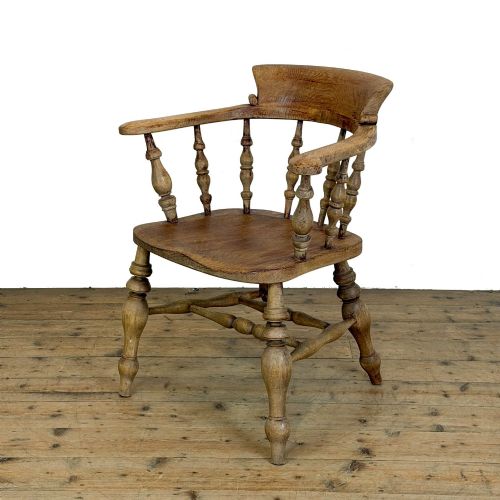
- Smokers bow
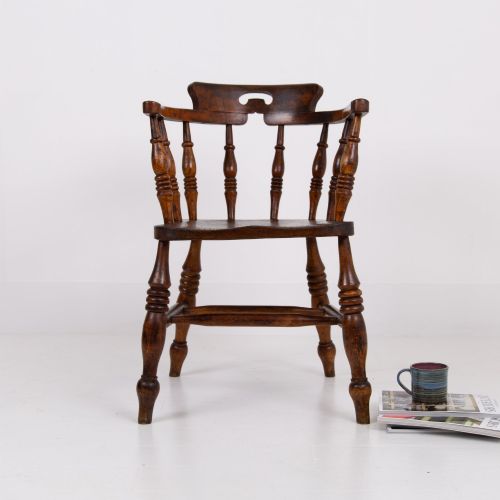
- A low-backed Windsor armchair variant featuring a rounded spindle rail above the arms. These chairs were common in nineteenth-century smoking rooms and parlours.
- Yew wood
- A dense, highly figured timber prized by provincial makers for its rich grain and warmth. It appears frequently in better-quality eighteenth and nineteenth-century examples.
- Stick back
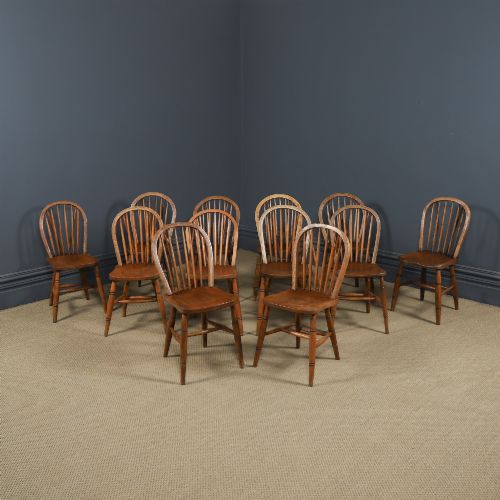
- A chair construction method utilising numerous plain or shaped vertical spindles rather than a solid splat. This technique ensures resilience and light weight.
Bow Back Windsor: Frequently Asked Questions
What is a bow back windsor?
A bow back windsor is a traditional wooden chair featuring a bentwood rail above vertical spindles and a solid sculpted seat. These chairs originated in rural English workshops for domestic and kitchen use.
They combine vernacular design with robust joinery, utilising mixed timbers like elm, ash, and yew to achieve both comfort and structural durability.
How do I date a windsor chair?
Dating relies on observing construction traits, tool marks, timber selection, and overall wear patterns. Eighteenth-century examples often display simpler primitive lines and wider saddle seats.
Victorian pieces introduce more standardised turning techniques and frequent use of beech alongside elm and ash. Documentary evidence or maker stamps further clarify exact periods.
Where were these chairs used?
These chairs served primarily in English country houses, farmhouses, and provincial kitchens as practical everyday seating. Their sturdy construction made them suitable for dining, desk work, and general domestic tasks.
Low-back variants and smokers bows also found places in reading rooms and commercial establishments throughout the nineteenth century.
How should I care for antique wood?
Maintain antique wood by keeping pieces away from direct heat sources and sudden humidity changes that cause timber to split. Regular dusting with a dry cloth preserves the historical surface.
Applying microcrystalline wax occasionally helps protect the original patinated finish without sealing moisture into the grain.