


Boudoir Slipper Chair
A boudoir slipper chair offers low-slung, intimate seating designed for the bedroom, bringing compact charm and period elegance to dressing rooms.
Boudoir Slipper Chair
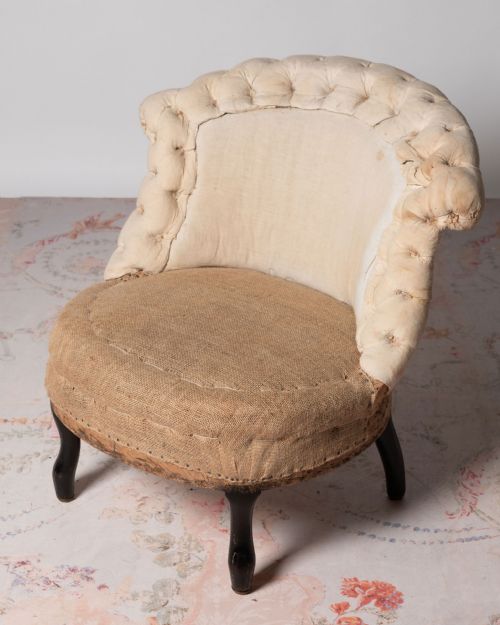
A boudoir slipper chair is a low-seated armchair designed historically for bedrooms and dressing rooms, providing comfortable seating close to the floor for putting on shoes or garments. These pieces appear in forms such as slipper chairs, bedroom chairs, and accent chairs.
The selections available here span the nineteenth century through the early twentieth century, taking in Victorian, Edwardian, and Art Deco periods. French Napoleon III and Chateau styles frequently emerge alongside British nineteenth-century examples.
Makers such as Howard and Sons and Hindley and Sons appear among the nineteenth-century pieces. Many listings also feature pairs of chairs and examples offered in calico, hessian, or stripped frames for reupholstery.
Materials and construction
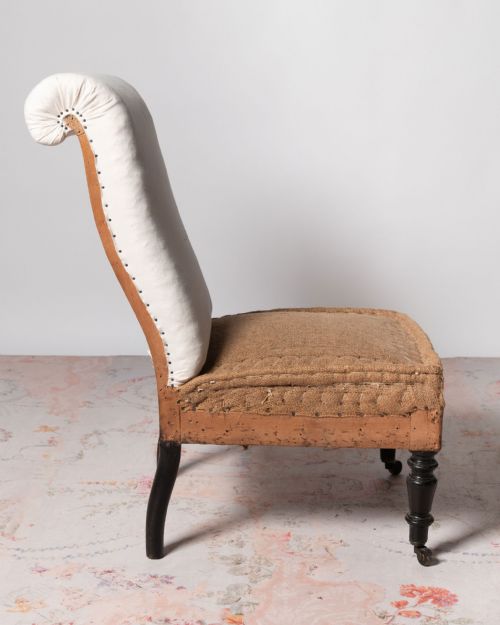
Frames are constructed from hardwoods including mahogany, beech, and general timber, providing robust support for the low-profile frames. Visible legs often incorporate brass castors or gilt finishes.
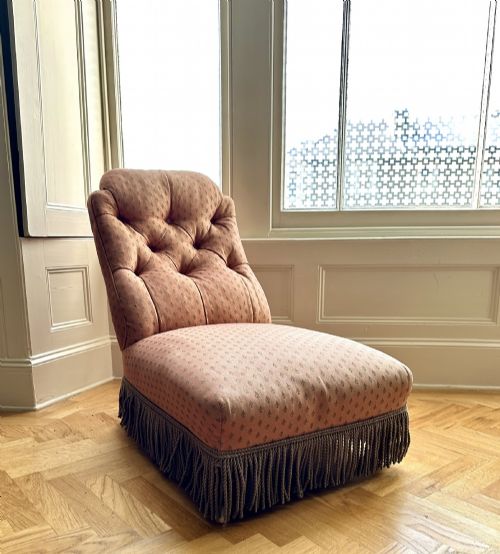
Upholstery materials range from historic calico and hessian foundations to decorative velvet with piping and fringe. Many nineteenth-century French and English pieces survive ready for new fabric or retaining period textile coverings.
Listings feature 19th Century, Edwardian, and Art Deco periods, utilising materials such as mahogany, beech, velvet, and brass.
Distinctions in quality
Quality rests in the original frame construction, particularly the integrity of turned or carved wooden legs and the survival of makers' stamps. Pieces bearing signatures from established workshops demonstrate superior cabinetmaking.
The condition of the internal webbing, springs, and upholstery foundation dictates whether a chair requires total restoration or simple surface reupholstery. Original brass castors and intact fringe trimming elevate the character of period examples.
Howard and Sons·Hindley and Sons
The Boudoir Slipper Chair Glossary
- Slipper chair
- A low-seated upholstered chair traditionally used in bedrooms for changing shoes. These compact seats lack arms to accommodate bulky nineteenth-century garments.
- Napoleon III
- A French design style spanning the mid to late nineteenth century, characterised by ornate scroll backs and eclectic revival influences. Pieces in this style often feature exposed carved wood and deep buttoning.
- Calico
- A plain-woven cotton fabric used historically as an initial upholstery layer beneath decorative textiles. Many antique frames survive covered strictly in this foundational material.
- Fringe
- A decorative border of hanging threads or tassels attached to the lower base of upholstery. This textile trim frequently finishes the bottom edge of Victorian and Edwardian chairs.
- Scroll back
- A chair back featuring an outward curving top rail reminiscent of a scroll. This profile appears commonly on French nineteenth-century boudoir seating.
Boudoir Slipper Chair: Frequently Asked Questions
Why are boudoir slipper chairs so low?
These chairs were traditionally kept in bedrooms or dressing rooms to allow women to sit comfortably while putting on footwear or adjusting heavy undergarments. The shortened legs placed the sitter closer to the floor for convenience during the morning routine.
Over time, this practical height evolved into a distinct aesthetic choice, making them ideal for modern spaces with lower ceilings or smaller proportions.
How do I identify a Victorian slipper chair?
Victorian examples typically feature heavily padded low seats, turned wooden legs often set on brass castors, and sometimes elaborate fringe trim along the base. They were built for comfort in private chambers.
Makers from this era occasionally stamped their wooden frames, though many survive simply attributed through construction methods and stylistic markers.
What does for upholstery mean?
When a chair is sold for upholstery, it means the outer decorative fabric has degraded or been removed, leaving the structural frame and sometimes the foundational calico or webbing exposed. This allows a buyer to select their own modern or period-appropriate textile.
It provides a blank canvas for restoration while ensuring the underlying woodwork remains authentic to the nineteenth century.
Where should I place a boudoir chair at home?
Their compact scale makes these chairs well-suited for bedrooms, dressing areas, or small reading corners where standard armchairs would overwhelm the floor plan. They also function effectively as occasional seating in living rooms.
Because they lack arms, they tuck easily beneath windows or beside dressing tables without blocking light or views.