
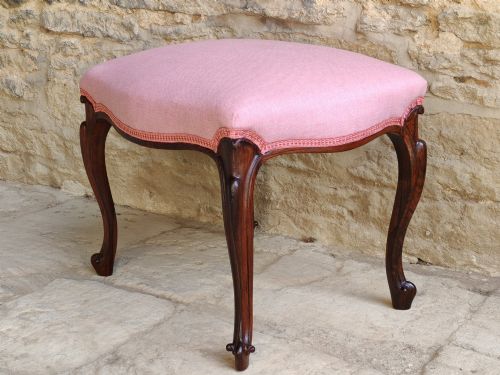
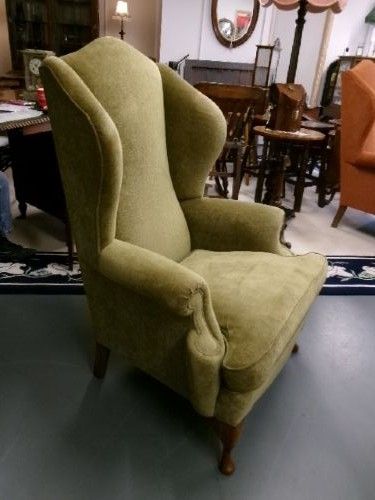
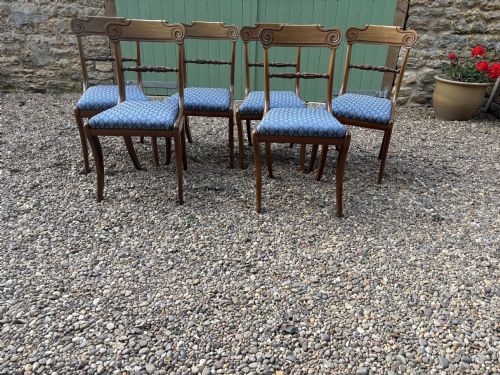
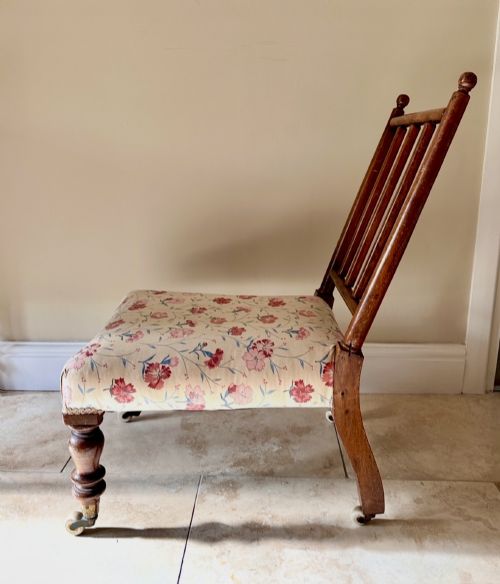
Vintage Upholstered Seat
These vintage upholstered seat options span dining chairs, armchairs, and stools across Victorian, Edwardian, and Art Deco periods, bringing period character and comfort to any interior.
Vintage Upholstered Seat
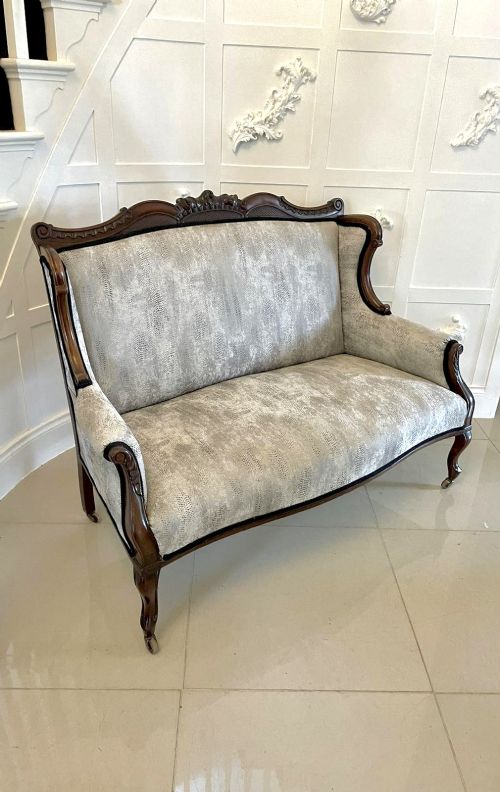
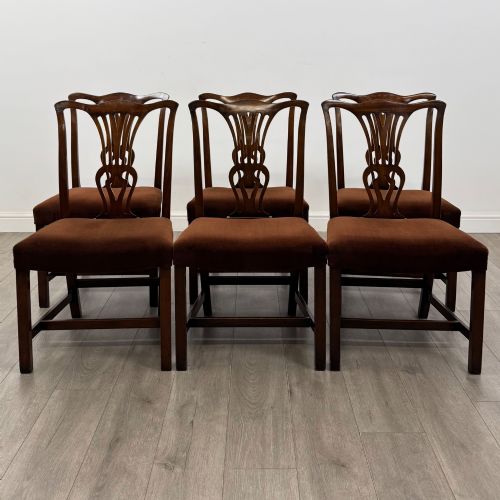
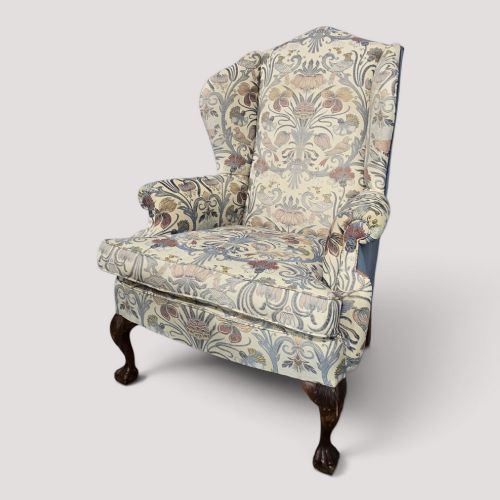
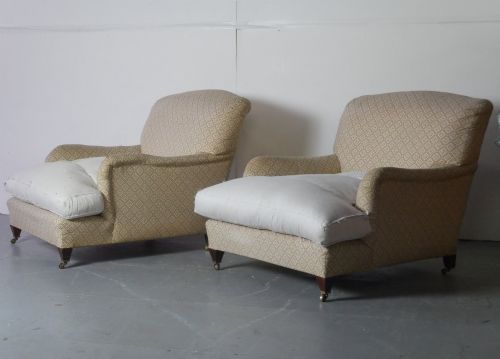
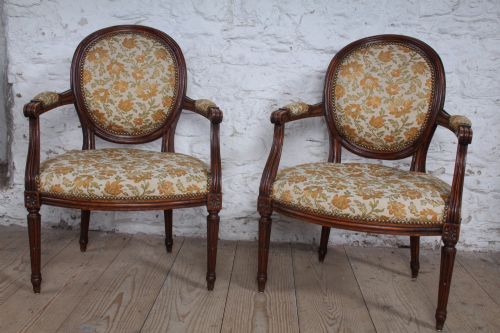
A vintage upholstered seat covers a broad selection of antique furniture forms designed for resting, sitting, and lounging. Buyers searching for a vintage upholstered seat will encounter everything from single footstools to full sets of dining chairs and deep-seated country house sofas.
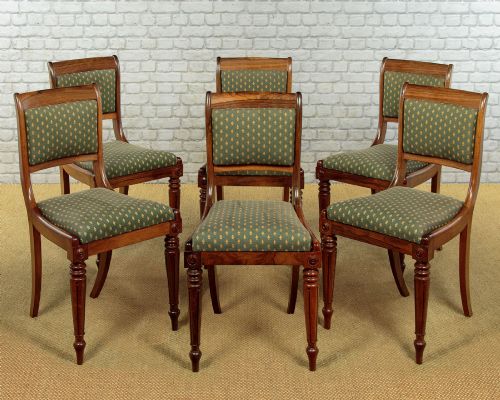
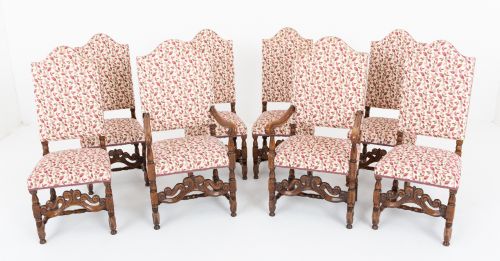
The selection spans multiple centuries and aesthetics, incorporating formal dining chairs in mahogany and walnut alongside relaxed bedroom chairs, library armchairs, and ottomans. Among these, dining chairs and individual armchairs appear most frequently across the inventory.
How they were made
Construction relies heavily on traditional hardwoods such as mahogany, oak, walnut, and rosewood, often shaped into carved frames, shield backs, or balloon backs. Joinery techniques reflect the period of origin, supporting sturdy timber skeletons designed to endure decades of daily use.
Upholstery methods utilise traditional materials including fabric, velvet, leather, and calico linen, sometimes accented with brass details or inlaid woodwork. Frames frequently receive decorative finishes such as original paint, parcel gilt, or polished wood surfaces.
Some nineteenth-century footstools secretly double as conversation pit warmers.
What varies in quality
The standard of a vintage upholstered seat depends on the integrity of the timber frame, the depth of the carving, and the fidelity of the period style. Pieces featuring substantial hardwoods, refined proportions, and intact structural joinery sit at the higher end of the range.
The sophistication of the upholstery and the retention of original surface treatments, such as early paint or patinated leather, also influence distinction. Simpler secondary woods and heavily altered frames generally indicate a more utilitarian origin.
HOWARD AND SONS·Maple and Co
The Vintage Upholstered Seat Glossary
- Bergere
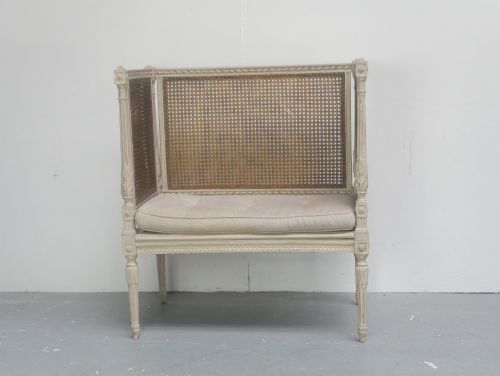
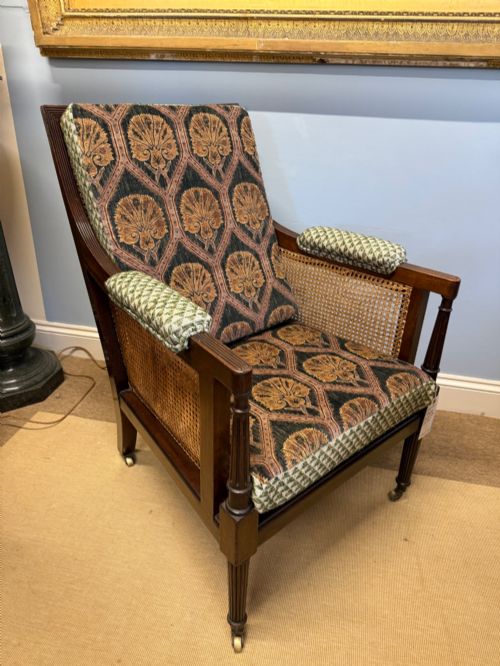
- An enclosed upholstered armchair with wooden frames, often featuring cane work on the sides or back. This French form gained popularity during the eighteenth century and returned in later revival periods.
- Chesterfield
- A large sofa characterised by deep buttoned upholstery, rolled arms, and a uniform back and arm height. This traditional seating form provides formal structure and generous proportions.
- Balloon back
- A dining chair design with a rounded, oval-shaped backrest resembling a balloon. This style emerged prominently during the Victorian era in mahogany and walnut.
- Shield back
- A chair back shaped in the outline of a heraldic shield, popularised in the Georgian period by designers like Hepplewhite. Makers revived this refined outline in later Edwardian dining sets.
- Ottoman
- A low, upholstered seat or bench without arms or a back, frequently utilised at the end of a bed or as a footrest. These pieces often incorporate hinged lids for interior storage.
Vintage Upholstered Seat: Frequently Asked Questions
What is a vintage upholstered seat?
A vintage upholstered seat is any historic chair, stool, or sofa featuring padded or covered resting surfaces. These items originate from periods ranging from the eighteenth century through the twentieth century.
They encompass diverse functional forms, including dining chairs, library armchairs, footstools, and deep lounge sofas designed for domestic comfort.
How do I identify Victorian seating?
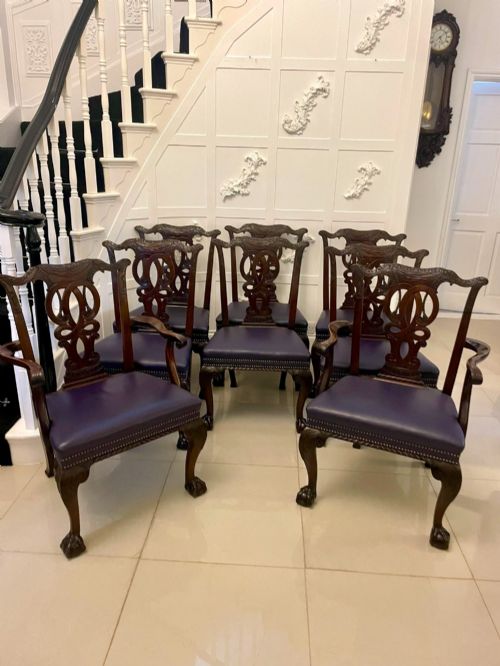
Victorian seating typically utilises dense timbers like mahogany and walnut, often displaying deep carvings, balloon backs, or heavy upholstery. These pieces reflect the industrial production methods and revivalist tastes of the nineteenth century.
Examining the underside, joinery methods, and secondary woods helps confirm the nineteenth-century origin of the piece.
Where should I place an ottoman?
An ottoman suits bedrooms, living rooms, and hallways, functioning as a practical seat or a surface for resting feet. Pieces placed at the end of a bed provide convenient seating during dressing.
Selecting a version with needlework or leather upholstery adds texture and contrast to an existing interior scheme.
How do Art Deco armchairs differ?
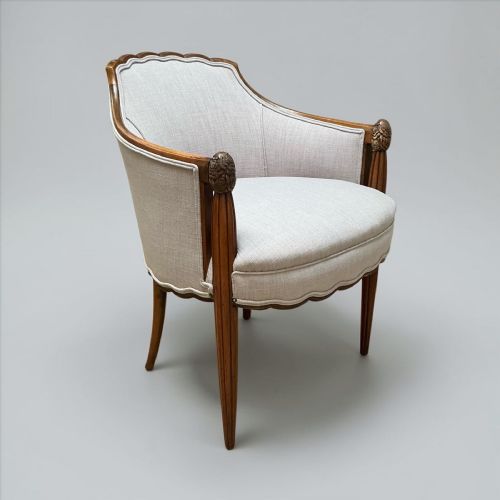
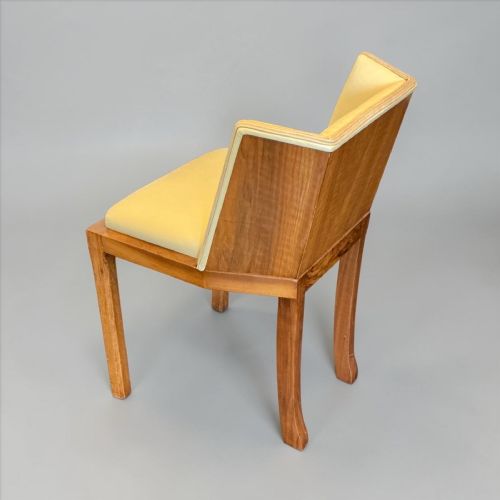
Art Deco armchairs from the twentieth century favour streamlined silhouettes, geometric lines, and exotic materials like satin birch or burr walnut. They depart from heavily carved Victorian forms in favour of modern elegance.
These chairs often pair polished wood frames with smooth leather or patterned fabric upholstery suited to jazz-age interiors.