


Boteh Pattern Persian Rug
A boteh pattern persian rug brings centuries of tribal weaving tradition and botanical motifs directly to your floor.

Boteh Pattern Persian Rug
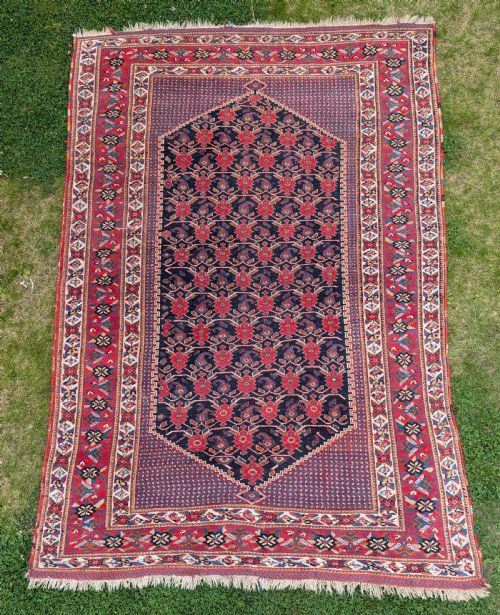
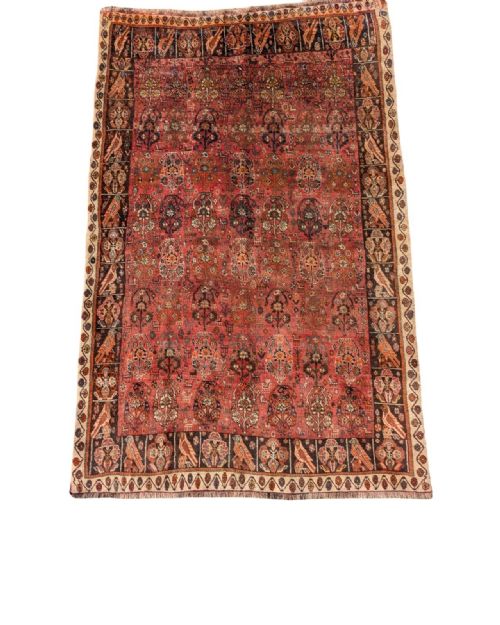
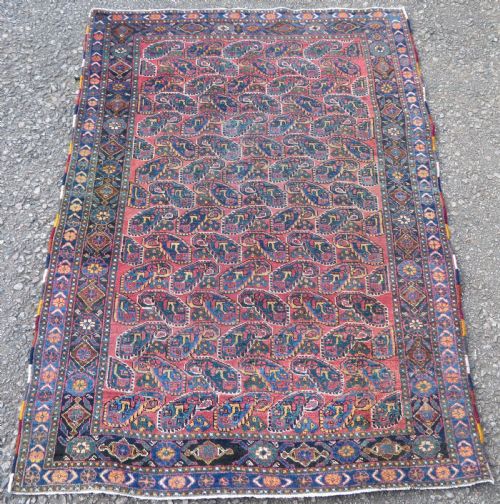
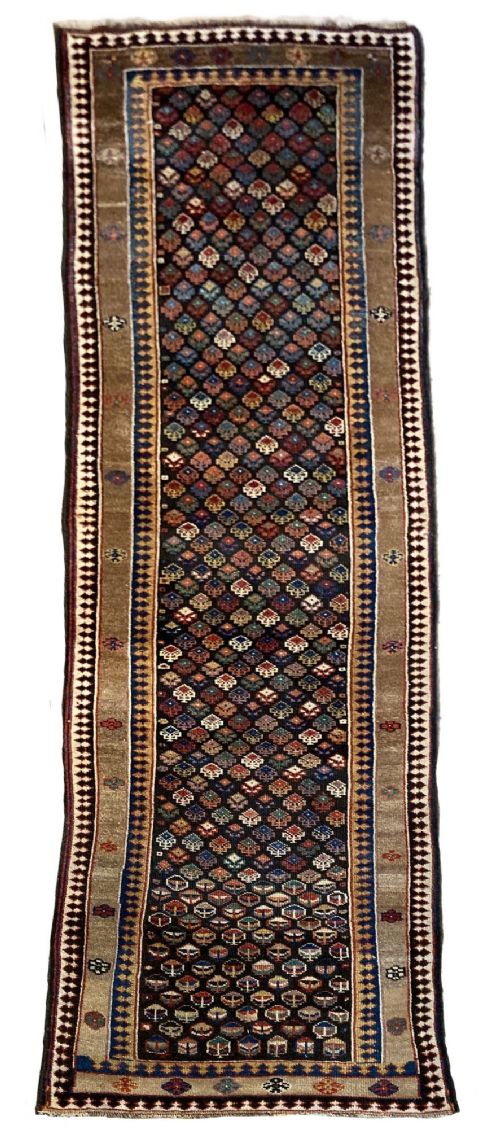
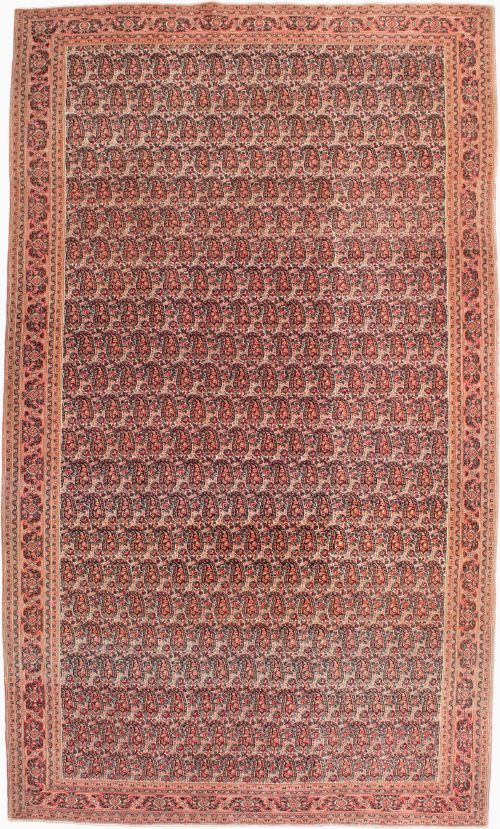
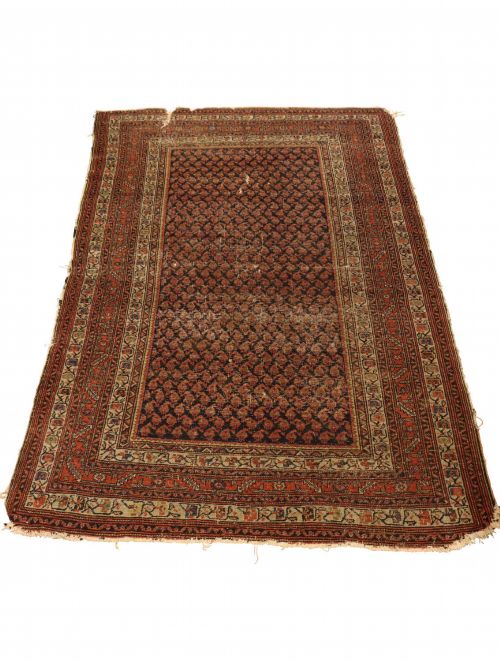
A boteh pattern persian rug showcases the iconic almond-shaped motif representing a floral spray or cypress tree, appearing across runner rugs, area rugs, and tribal bags. These pieces emerge from regions such as Kerman, Kurdistan, and South Persia, created during the nineteenth and early twentieth centuries.
Buyers often encounter room-size carpets alongside smaller tribal formats including Afshar, Kurdish, and Qashqai works. The boteh motif repeats across the field in structured rows or all-over scatter arrangements.
Village and nomadic workshops produced these floor coverings using traditional looms set up in homes and regional centres. The resulting textiles range from compact tribal room pieces to elongated gallery runners.
How they were made
Weavers constructed these rugs using wool, cotton, and silk foundations and pile, knotted by hand row by row. Wool provided durable pile for daily use, while cotton served primarily for warp and weft threads.
Dyers utilised natural materials to colour the wool, creating deep reds, blues, and neutrals that develop a rich patina over decades of wear. The dense knotting technique secured the intricate floral and geometric contours of each boteh element.
The listings show pieces constructed from wool, cotton, and silk across periods spanning the nineteenth and early twentieth centuries.
What varies in quality
Knot density and structural tightness dictate the precision of the boteh outlines and the resilience of the pile. Finer examples display meticulous drawing where individual motifs maintain crisp geometric edges.
The complexity of the dye palette and the consistency of the wool spinning separate ordinary village output from master weaver productions. Superior balance in colour distribution ensures the central field harmonises with the surrounding borders.
The Boteh Pattern Persian Rug Glossary
- Boteh
- A stylised motif resembling a curved almond, pear, or flame. This ancient symbol appears frequently in oriental textiles.
- Warp
- The vertical threads stretched lengthwise on the loom before weaving begins. Weavers tie the knots directly onto these parallel strings.
- Weft
- The horizontal threads passed across the warp strands between rows of knots to secure the structure. These lines give the rug its lateral stability.
- Pile
- The upright yarn surface formed by the ends of knotted threads. The height and density of this layer determine the texture underfoot.
- Kilim
- A flat-woven textile produced without a knotted pile. These pieces rely on interlocking weft techniques to create geometric patterns.
Boteh Pattern Persian Rug: Frequently Asked Questions
How do I identify a genuine boteh motif?
The boteh appears as a curved, flame-like or pear-shaped figure with a pointed top. It represents a traditional Persian symbol often interpreted as a floral spray or cypress tree.
In older pieces, the contour of each boteh shows subtle variations because weavers worked from memory rather than rigid printed paper templates.
Where were these tribal rugs woven?
Nomadic and village groups produced these textiles across various Persian provinces, including Kerman, Shiraz, and Kurdistan. Tribal confederations such as the Afshar and Qashqai maintained distinct design vocabularies.
Local access to specific dye plants and sheep breeds influenced the distinct colour saturation and wool texture of each regional group.
Can I place a runner rug in a hallway?
Long runner formats suit high-traffic corridors and entryways where narrow floor spaces require directional floor coverings. Their robust wool construction handles regular foot movement effectively.
Using an appropriate underlay keeps the rug stable on hard flooring and reduces friction against the wool foundation.
What distinguishes village rugs from city carpets?
Village and nomadic pieces often feature asymmetric, expressive designs tied on wool foundations with thicker pile. City workshops tended toward symmetrical precision using cotton foundations.
Makers in rural districts relied on local tribal traditions, whereas urban looms followed master cartoons drawn by professional designers.