




Antique Paisley Motif Rug
An antique paisley motif rug brings rich Persian and tribal weaving tradition into a room through enduring floral and teardrop patterns.
Antique Paisley Motif Rug
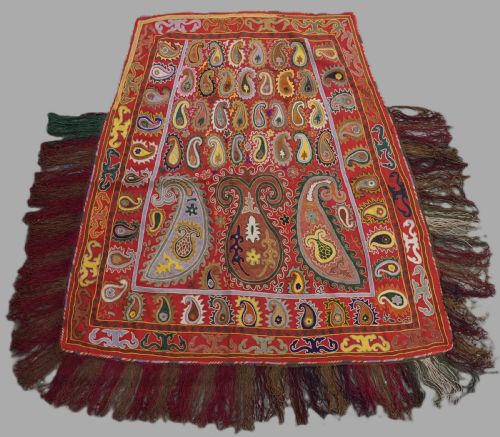
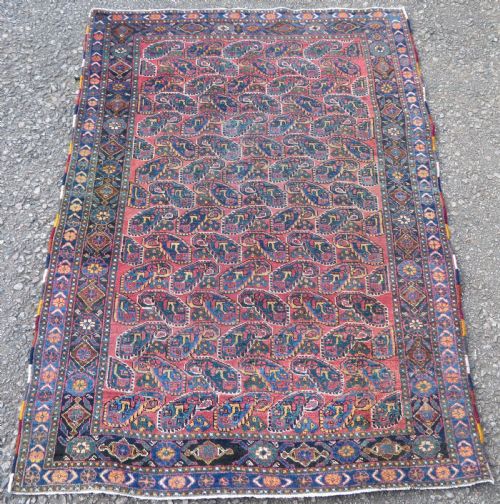
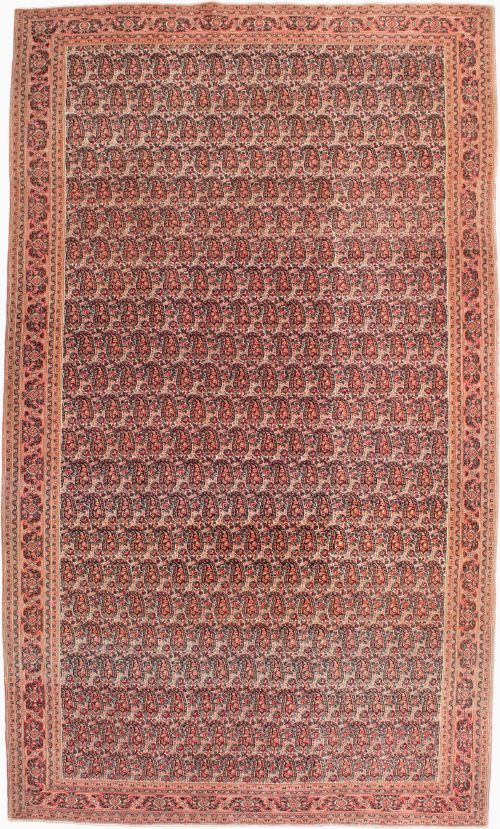
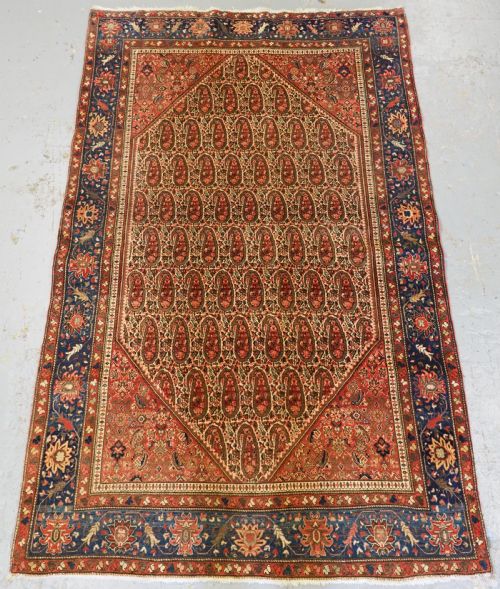
When you search for an antique paisley motif rug, you encounter hand-knotted and embroidered floor coverings and textiles featuring the classic boteh or teardrop design. The pieces available span from the nineteenth century into the early twentieth century, originating primarily from Persian, Caucasian, and Uzbek weaving traditions.
You find these items presented in various formats, including standard area rugs, long runners, gallery carpets, and even ceremonial horse covers. Regional variations display distinct structural traits, from the geometric fields of Afshar and Kurdish pieces to the refined floral compositions of Kirman and Serapi workshops.
The boteh motif itself appears in multiple guises across the inventory, rendered as repeat patterns, mother and child arrangements, or flaming designs. These textiles served both functional floor-covering roles and decorative or ceremonial purposes within nomadic, village, and urban settings.
Materials and construction
The construction of these textiles relies predominantly on wool, cotton, and silk foundations and piles. Weavers utilised natural fibres spun by hand to build durable structures capable of withstanding generations of daily use.
Nomadic and village workshops such as the Afshar, Kurdish, and Lakai tribes employed local wool for its resilience and lanolin content. Urban centres like Qum and Kirman integrated finer cotton and silk elements to achieve greater detail in their complex boteh layouts.
Listings span the nineteenth century and early twentieth century, incorporating wool, cotton, and silk across Persian, Caucasian, and Uzbek origins.
Distinctions in quality and execution
Quality in these rugs reveals itself through the precision of the knotting and the complexity of the design execution. Tightly woven village and city carpets demonstrate superior structural integrity compared to looser utility weaves.
The nuance and depth of the palette also separate standard pieces from exceptional examples. Skilled dyers achieved harmonious colour variations that elevate the definition of the repeating boteh motifs across the field.
The Antique Paisley Motif Rug Glossary
- Boteh
- A stylised floral or almond-shaped motif resembling a curved teardrop. This ancient symbol forms the primary design element found across Persian and tribal rugs.
- Serapi
- A distinct style of large-scale geometric Persian carpet originating from the Heris region. These pieces are known for bold, architectural medallions and wide borders.
- Afshar
- A tribal weaving group originating from south-west Persia. Their rugs typically feature geometric formats, bold indigo grounds, and stylised animal or floral motifs.
- Kelleh
- A large, elongated format of Persian rug traditionally used alongside larger carpets in a room layout. These runners provide substantial length while maintaining narrower proportions.
- Marasali
- A specific attribution for Caucasian Shirvan rugs noted for intricate niche designs and detailed border work. They represent a high point of nineteenth-century Caucasian weaving.
Antique Paisley Motif Rug: Frequently Asked Questions
How do I identify a boteh design?
The boteh appears as a curved teardrop or almond shape with a pointed top. It represents a stylised cypress tree or floral spray.
In these antique rugs, the motif may be arranged in orderly rows, scattered across the field, or nested in pairs known as mother and child boteh.
Where were these rugs made?
The pieces originate from various regions including Persia, the Caucasus, and Uzbekistan. Village and tribal groups such as the Afshar, Kurdish, and Lakai produced distinct regional variants.
At the same time, urban centres like Kirman and Serapi turned out larger, more formally planned gallery carpets.
What materials make up the pile?
Wool serves as the primary material for the pile across the majority of these tribal and village rugs. It offers natural durability and rich texture.
Selected urban pieces incorporate cotton foundations and occasional silk highlights to allow for finer knot densities and sharper pattern definition.
How should I care for an antique rug?
Protect the textile by placing it in areas with moderate foot traffic and avoiding direct, harsh sunlight. Regular gentle vacuuming without a beater bar removes trapped grit.
Professional cleaning tailored to antique wool and silk ensures the natural fibres and dyes remain stable over time.
Can I distinguish tribal rugs from city rugs?
Tribal rugs typically display more geometric interpretations of the boteh motif, stiffer wool, and asymmetric layouts. They reflect the nomadic traditions of makers from regions like Kurdistan and south-west Persia.
City carpets feature balanced floral compositions, smoother cotton foundations, and highly refined knotting executed in established urban workshops.