


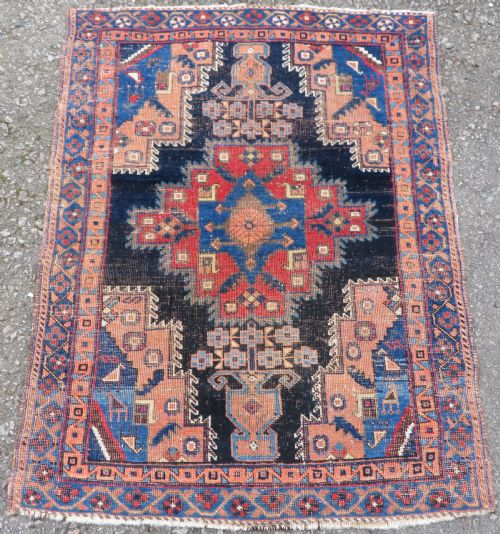


Small Persian Floor Rug
A small persian floor rug brings depth and regional character to a room through dense wool knotting and traditional village patterns.
Small Persian Floor Rug
A small persian floor rug encompasses woven floor coverings originating from various weaving traditions across nineteenth and early twentieth century Persia. These pieces arrive in formats ranging from compact hearth dimensions up to modest room-sized carpets.
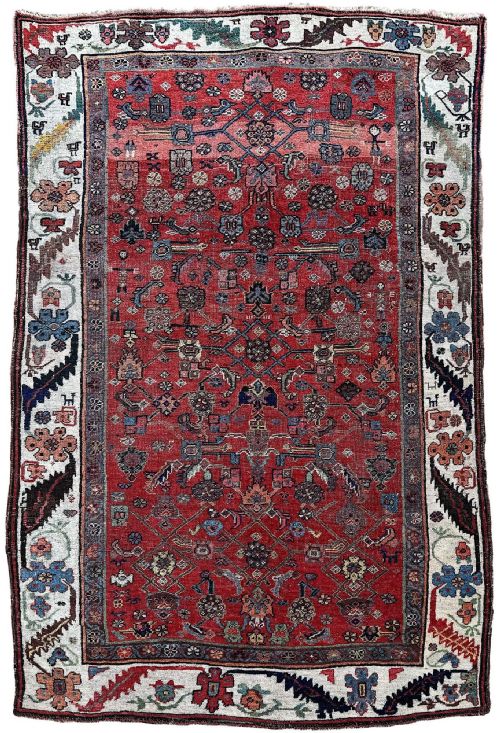
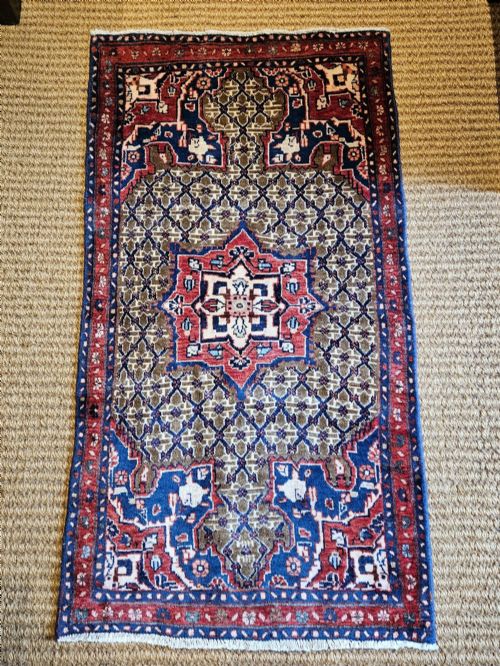
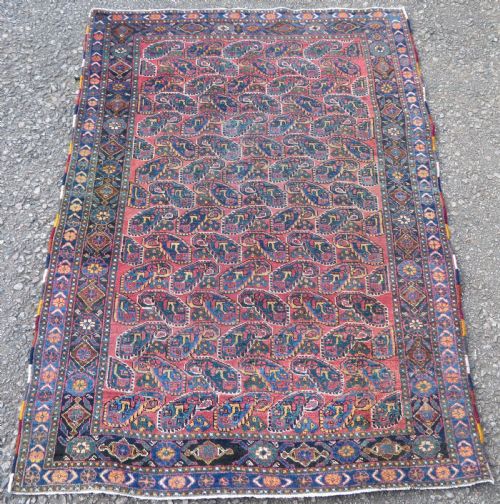
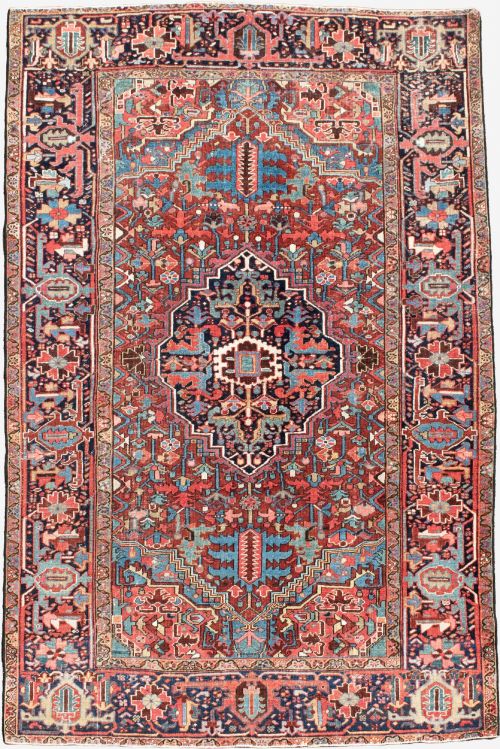
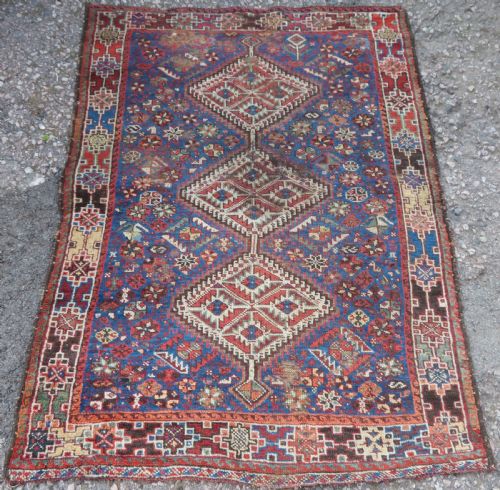
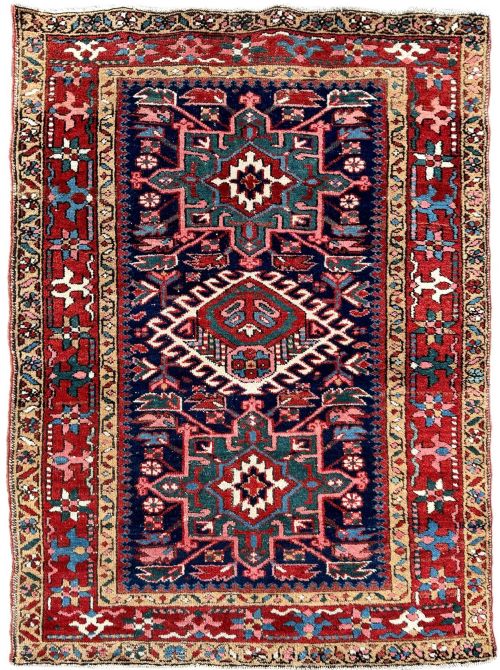
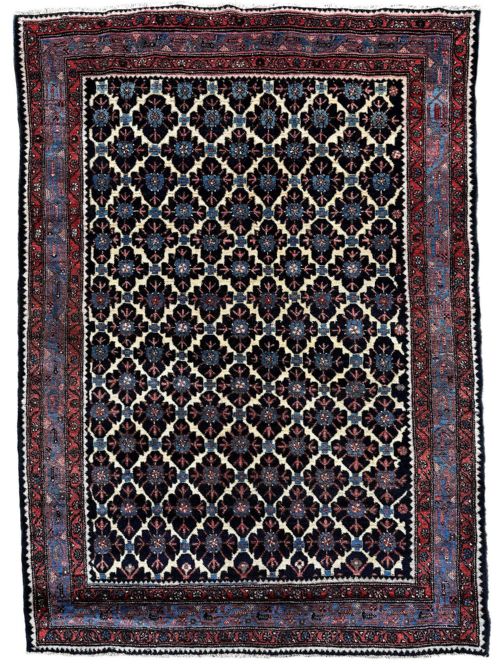
The selections available here represent diverse regional aesthetics, including geometric Heriz weaves, curvilinear Isfahan designs, and tribal pieces created by Afshar, Baluch, and Khamseh makers. Village workshops and nomadic groups contribute the majority of the examples seen in this group.
Buyers seeking a small persian floor rug will find formats that suit hallways, studies, and sitting rooms where concentrated pattern and rich wool texture anchor the interior scheme.
Materials and construction methods
These floor coverings utilise sturdy wool pile hand-knotted onto cotton foundations, creating a dense surface built to withstand foot traffic. Natural dyes provide the underlying palette, yielding weathered tones that soften with age.
Weavers employed regional knotting techniques specific to their districts, from the robust structural builds of Bidjar to the looser, expressive handling seen in tribal pieces. The interplay of wool quality and dye composition determines how each surface wears over decades of use.
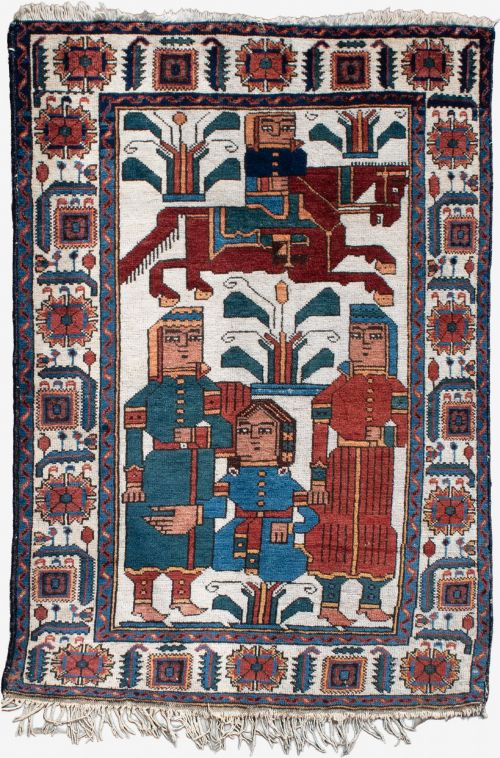
One pictorial weaving preserves an early twentieth century artisan's narrative scene rendered entirely in hand-knotted wool.
Assessing quality and character
Quality in these woven works rests upon the tightness of the knotting, the precision of the tribal or city design, and the clarity of the natural dyes. Finer knot density allows complex medallions and intricate borders to hold sharp definition.
The condition of the wool pile and the integrity of the original selvedges and ends influence the overall stability of the piece. Subtle variations in dye saturation across the field reveal the hand-spun nature of the wool and add visual movement to the surface.
The Small Persian Floor Rug Glossary
- Medallion
- A central ornamental design motif placed in the middle of the rug field. It often takes a star, diamond, or curvilinear shape.
- Selvedge
- The reinforced side cords of a rug that protect the edges from unravelling. Traditional examples feature overcast wool wrapping along these borders.
- Pile
- The vertical tufts of wool that form the usable surface of the rug. Hand-knotted pile provides the soft texture and visual depth.
- Natural Dyes
- Colourants derived from plant, root, and insect sources rather than synthetic chemicals. These dyes produce complex, harmonious secondary tones as they age.
- Foundation
- The underlying grid of warp and weft threads that support the knotted wool pile. Cotton forms the standard structural base for these pieces.
Small Persian Floor Rug: Frequently Asked Questions
How do I clean an old rug?
Surface dust should be gently removed using a suction vacuum without a rotating brush head. Professional textile cleaners who specialise in antique woven items must handle deeper washing.
Water immersion and harsh chemical detergents risk bleeding the natural dyes or weakening the wool fibres. Regular shaking outdoors helps release trapped dirt from the base of the pile.
Can I place these in high traffic areas?
Sturdy village and tribal weaves handle moderate hallway and living room use quite well. The dense wool pile provides natural resilience against daily foot traffic.
Placing a suitable underlay beneath the floor covering prevents slipping and reduces friction against hard flooring surfaces.
How do I identify a tribal design?
Tribal designs typically display geometric motifs, repeating octagons, and stylised animal or plant forms arranged from memory rather than strict paper cartoons. These patterns reflect the nomadic heritage and local surroundings of the weavers.
Irregularities in symmetry and shifting colour batches further indicate a piece made within a tribal or village setting rather than a large urban workshop.
What is the best way to stop sliding?
A breathable mesh underlay cut slightly smaller than the perimeter keeps the floor covering securely in place. This layer also protects the cotton foundation from direct abrasion against wooden floors.
Avoid rubber or plastic backings that trap moisture and damage the historic wool fibres over time.