




Boteh Pattern Hallway Rug
A boteh pattern hallway rug brings centuries of woven history to a narrow space, offering enduring tribal geometry and rich regional artistry.
Boteh Pattern Hallway Rug
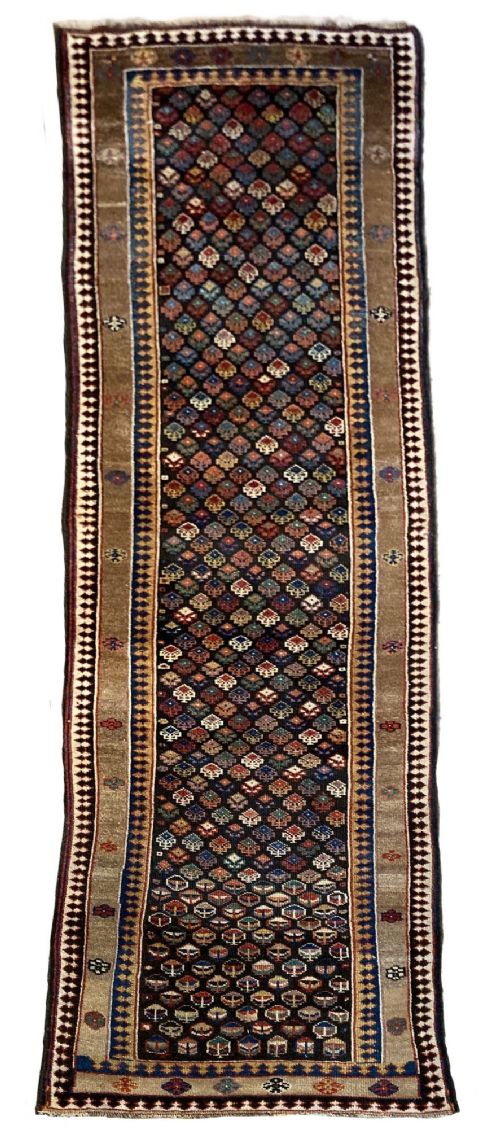
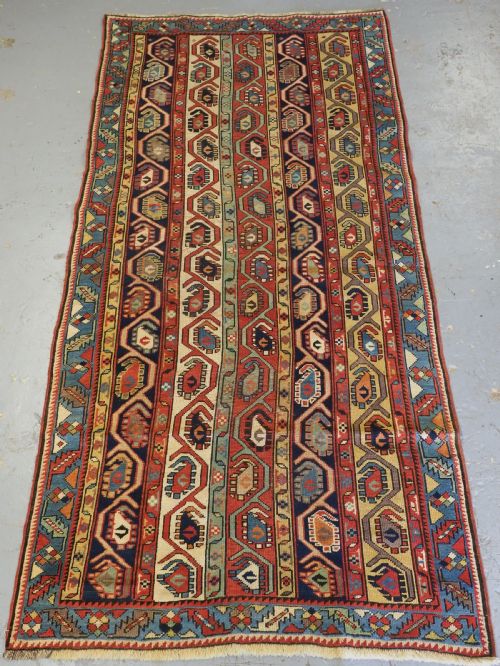
A boteh pattern hallway rug takes the form of a long runner or gallery carpet designed to fit corridors and narrow rooms. These textiles showcase the iconic curved almond motif known as the boteh, repeated in rows or diagonal arrangements down the field.
Most examples found in this selection originate from Caucasian and Persian weaving traditions, including regional styles such as Kazak, Gendje, Karabagh, Serabend, Kurdish, and Afshar. They date from the late nineteenth century up to around nineteen hundred, reflecting traditional village and tribal craftsmanship.
How they were made
These rugs are built with hand-spun wool pile foundation materials that include cotton for structural stability. Weavers utilised natural dyes to achieve deep, enduring colours across the field and borders.
The construction relies on traditional knotting techniques executed on upright looms by tribal and village artisans. This method creates a dense, hardwearing pile suited to heavy foot traffic in hallways.
Current listings feature nineteenth-century pieces spanning Caucasian and Persian tribal styles, constructed from wool and hand-spun wool with natural dyes.
What varies in quality
The sophistication of the wool preparation and the vibrancy of the natural dyes separate finer examples from simpler village work. Superior pieces display crisp definition in the boteh motifs and harmonious colour combinations across the entire field.
Proportion and scale also dictate quality, as longer gallery carpets and well-balanced runners require greater planning by the weaver. The tightness of the knotting and the handled suppleness of the foundation further distinguish exceptional rugs.
The Boteh Pattern Hallway Rug Glossary
- Boteh
- A traditional almond-shaped motif with a curved upper tip, symbolising life and eternity in eastern textiles. It appears densely packed or spaced in rows across the field of these rugs.
- Runner
- A long, narrow carpet format specifically proportioned for hallways, corridors, and bedside placement. These pieces measure significantly longer than they are wide.
- Kazak
- A style of rug originating from the Caucasus region, known for bold geometric designs and saturated primary colours. They typically feature strong tribal characteristics.
- Natural Dyes
- Colourants derived from plants, insects, and minerals rather than synthetic chemical processes. These dyes age gracefully and develop a rich patina over decades.
- Serabend
- A Persian weaving style traditionally associated with rows of small boteh patterns covering the background. The design creates an all-over texture across the textile.
Boteh Pattern Hallway Rug: Frequently Asked Questions
Where should I place a boteh pattern hallway rug?
These long runners fit naturally in entrance halls, corridors, and narrow passageways where their linear formats suit the architecture.
Their sturdy wool construction handles regular foot traffic while adding warmth and traditional pattern to transitional spaces.
How do I identify a Caucasian runner?
Caucasian runners generally display crisp geometric medallions, angular borders, and saturated primary colour palettes. Regional weaving centres such as Gendje and Karabagh produced distinct tribal interpretations.
Examining the weave structure and wool characteristics helps confirm their regional origin within the nineteenth century.
Are natural dyes used in these rugs?
Many nineteenth-century village and tribal rugs rely on natural dyes sourced from plants and minerals. These colorants produce subtle variations in tone that mature attractively over time.
Inspecting the wool under natural light reveals the characteristic depth associated with traditional dyeing methods.
How do I care for an antique runner?
Vacuum these wool rugs gently with a suction-only attachment to avoid damaging the antique pile and foundation. Professional cleaning should be undertaken periodically by specialists familiar with historic textiles.
Using a quality underlay prevents slipping and cushions the rug against hard hallway floors.