




Persian Boteh Runner Carpet
These persian boteh runner carpet examples bring enduring tribal character to a hallway through hand-knotted wool and cotton construction.
Persian Boteh Runner Carpet
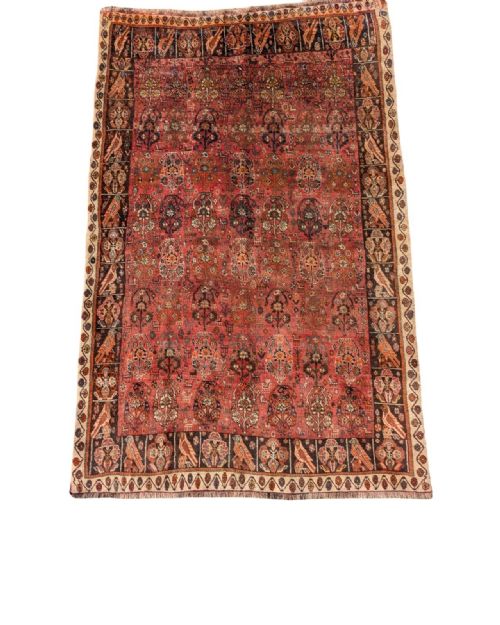
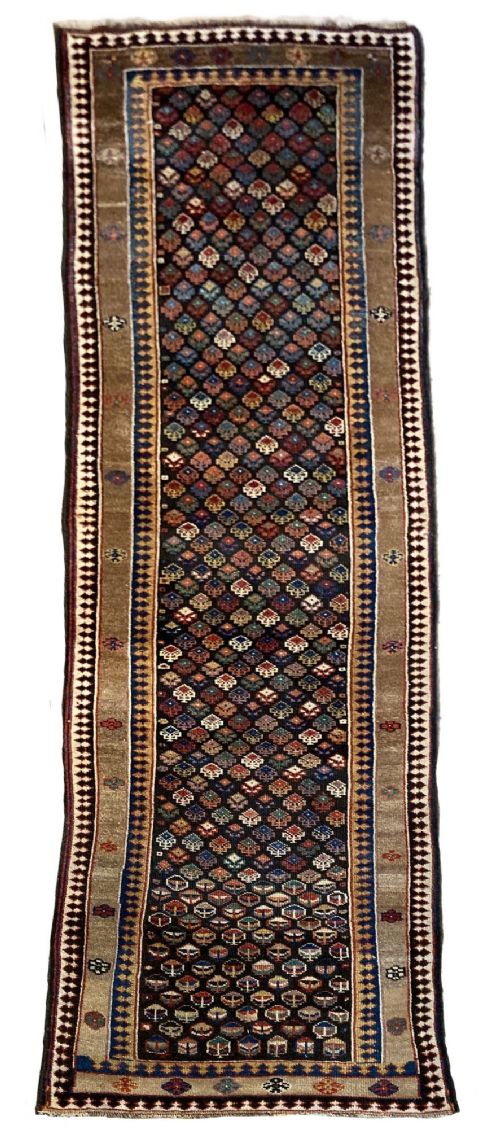
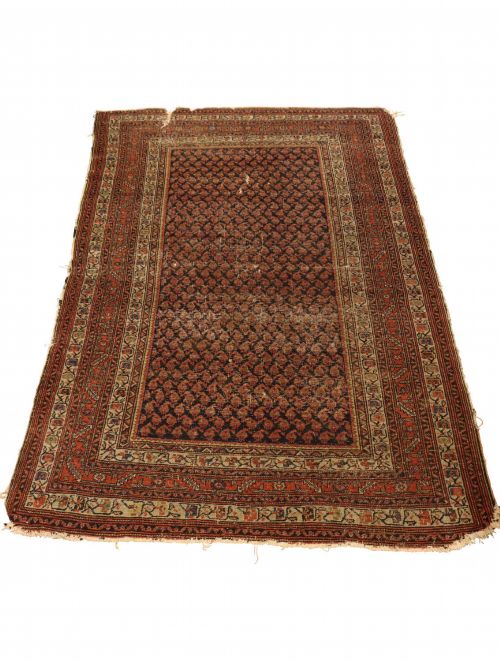
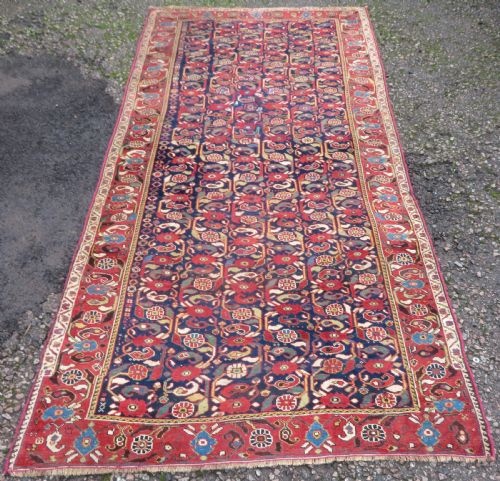
A persian boteh runner carpet is a long, narrow floor covering defined by the repeated pine-cone or almond-shaped motif known as the boteh. These pieces emerge from nineteenth and early twentieth-century workshops and tribal traditions across Persia and the Caucasus.
The selection on this page ranges from long gallery formats to narrow corridor runners originating in regions such as Kurdistan, Malayer, Serabend, and Afshar. Many examples date from around eighteen hundred and eighty up to the nineteen thirties.
Buyers encounter traditional village and tribal aesthetics, including all-over boteh patterns, ivory grounds, and rich polychrome fields. Each piece reflects the specific weaving heritage of its originating district.
Materials and construction methods
Weavers constructed these carpets using wool pile knotted onto sturdy cotton foundations. This pairing provided the structural durability required for heavy foot traffic in narrow spaces.
Hand-knotting techniques allowed artisans to delineate complex geometric and curvilinear boteh motifs with precision. Natural dye traditions supplied the varied colour palettes seen across the nineteenth-century examples.
Some nineteenth-century runners stretch to nearly thirteen metres in length, designed for exceptionally grand corridors.
Distinctions in quality
Quality in these runner carpets rests on the density of the hand-knotting and the crispness of the boteh drawing. Finer knot counts allow for sharper botanical and geometric outlines within the field.
The depth and harmony of the natural dye palette also define the superior tiers. Rich colour saturation and balanced abrasion elevate the visual impact of an antique runner.
The Persian Boteh Runner Carpet Glossary
- Boteh
- A recurring motif resembling a twisted almond, flame, or pine cone. This ancient symbol represents life and eternity in textile design.
- Runner
- A long, narrow carpet format designed specifically for corridors, hallways, and stairs. These pieces balance length with restricted width.
- Hand-knotted
- A method where individual tufts of wool are tied by hand to warp and weft threads. This traditional technique ensures structural longevity.
- Foundation
- The underlying grid of warp and weft threads that supports the wool pile. Cotton serves as the primary structural base in these pieces.
- Pile
- The raised surface of the carpet formed by the cut ends of the knotted wool yarn. Pile height influences the tactile feel underfoot.
Persian Boteh Runner Carpet: Frequently Asked Questions
Where should I place a runner carpet?
These long formats suit narrow hallways, corridors, and gallery spaces where floor coverage requires an elongated shape.
Their proportions also work effectively alongside long walls or between pieces of furniture in reception rooms.
How do I identify the regional style?
Regional attribution relies on specific structural traits, palette choices, and drawing styles within the boteh motifs. Tribal groups like the Kurds, Afshars, and Khamseh each employed distinct weaving signatures.
Comparing border arrangements and foundation materials helps narrow down the probable origin district.
Are these runners made of wool?
The surface pile consists of hand-spun wool, which provides both resilience and softness underfoot. Cotton is typically utilised for the internal foundation threads.
This combination ensures the carpet maintains its structural integrity along the narrow length.
What is a boteh motif?
The boteh is an ancient Persian design element shaped like a curved almond or stylized palm leaf. It appears frequently as a repeating overall pattern across the field.
Weavers arranged these motifs in orderly rows or staggered formations depending on the regional tradition.