
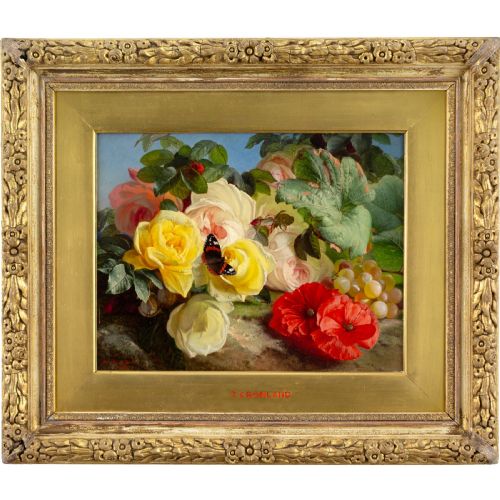
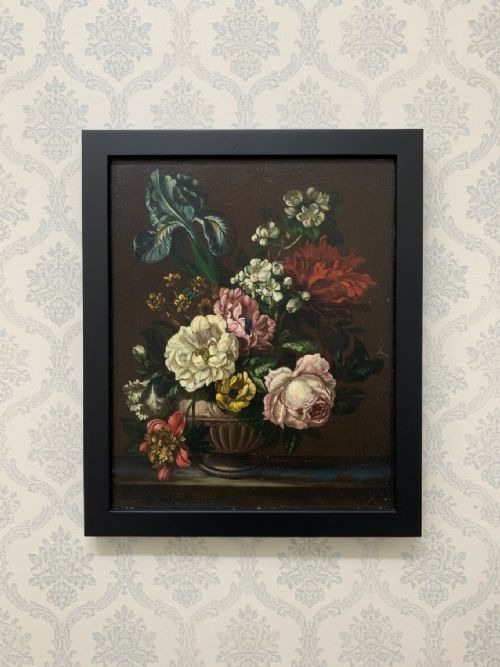
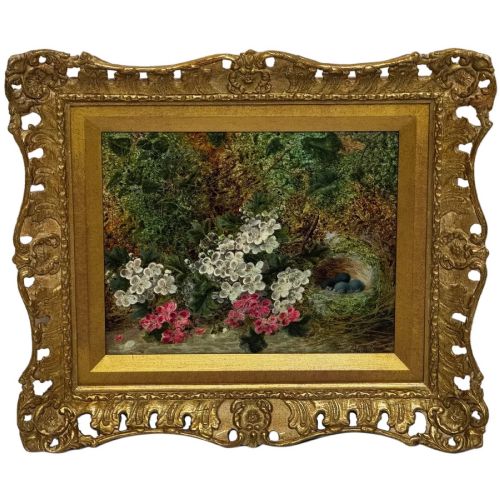
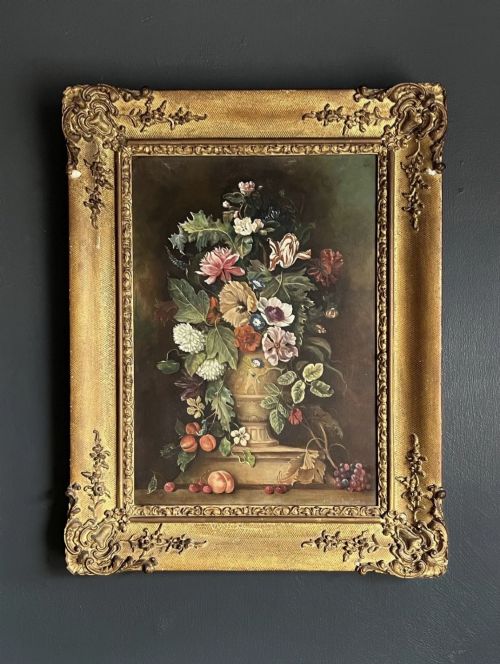
Botanical Oil Artwork
Botanical oil artwork brings centuries of floral and plant studies into interiors through layered pigment and careful brushwork.
Botanical Oil Artwork
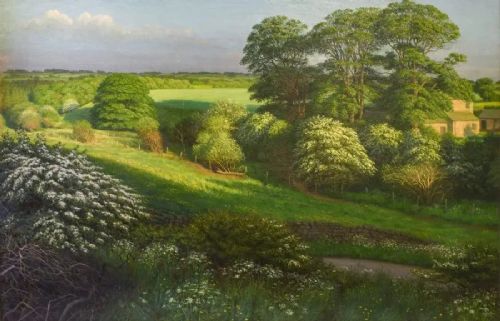
Botanical oil artwork comprises paintings executed in oil paint that focus on flowers, fruit, and natural foliage. These pieces span from the seventeenth century through to the mid-twentieth century, capturing shifting attitudes towards naturalism and decorative interior display.
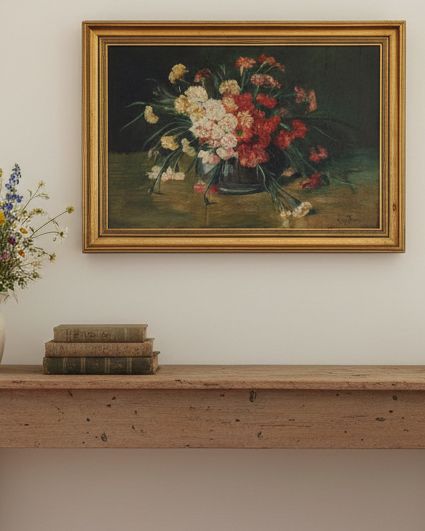
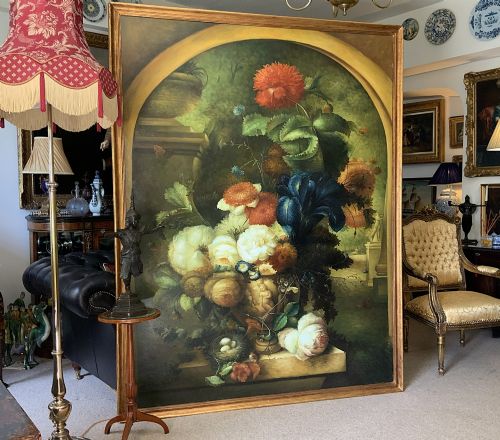
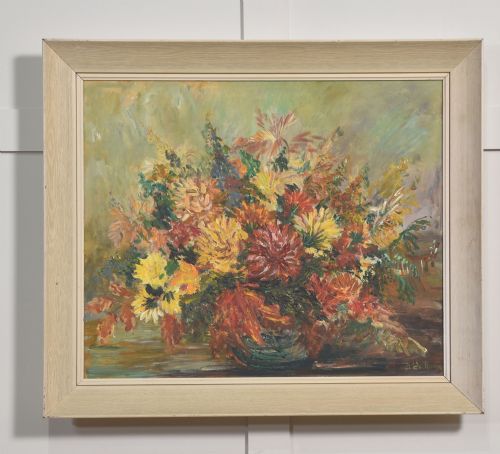
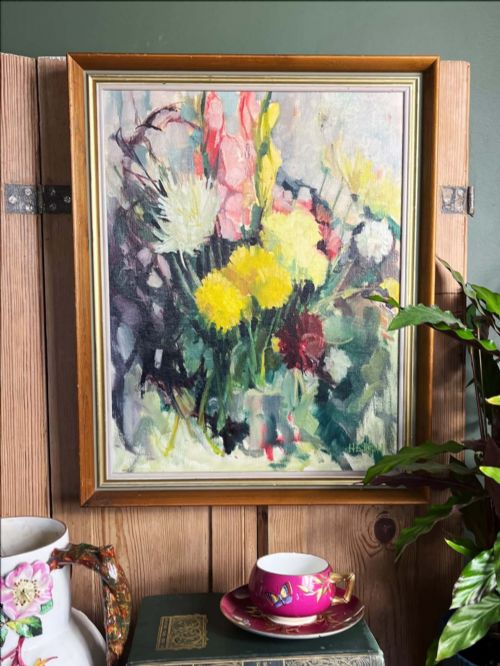
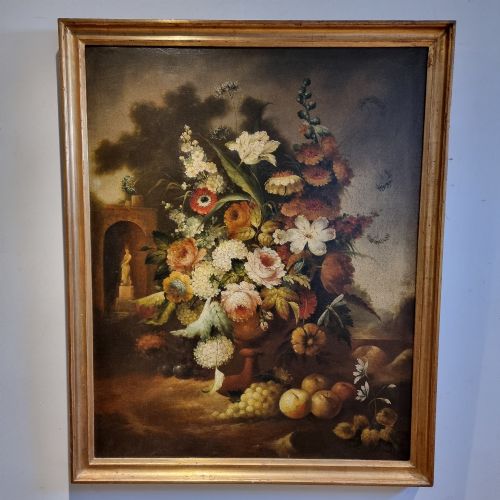
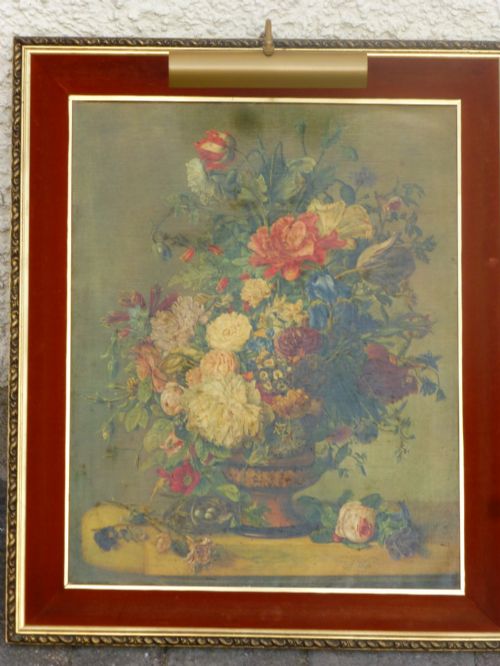
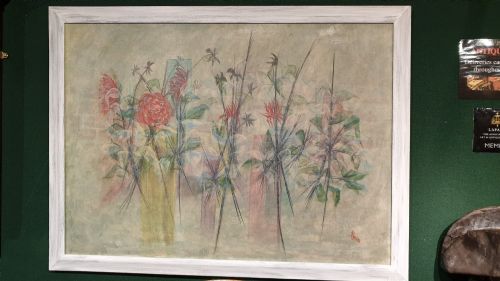
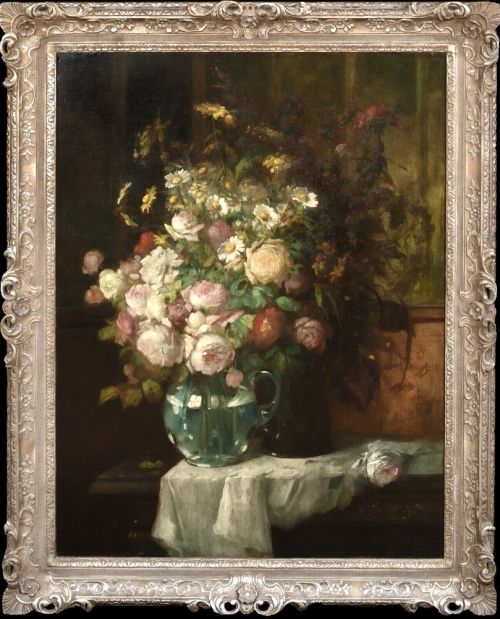
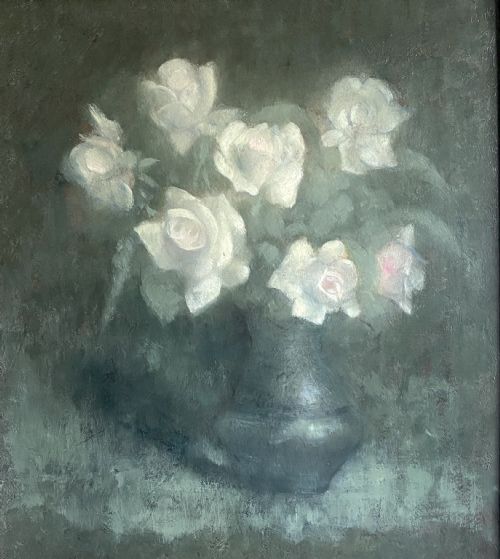
The selections here most frequently include twentieth-century interpretations, mid-century impressionist floral studies, and nineteenth-century compositions. Works range from intimate depictions of single stems in jugs to monumental Dutch style floral arrangements housed in decorative frames.
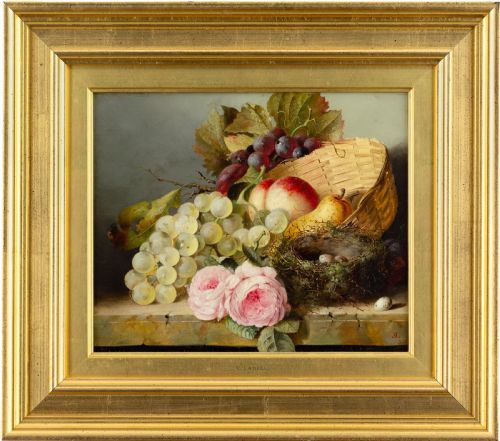
Creators worked across various national schools, producing Flemish baroque compositions, Victorian studies, and mid-century modern variations. These paintings record specific botanical specimens alongside imaginative assemblies of seasonal blooms.
How they were made
Artists applied oil paint onto surfaces such as prepared canvas, wooden panels, and firm boards. The medium allowed for slow drying times, enabling painters to blend tones and build rich textures across petals, leaves, and background shadows.
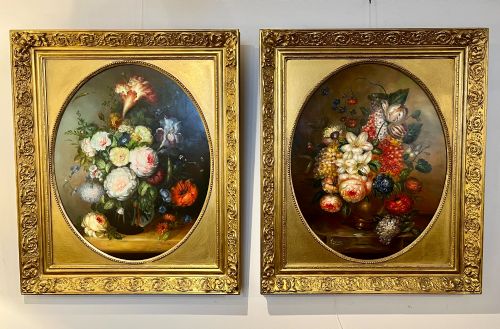
Many works incorporate ornate framing elements, including gilt frames and gesso mouldings designed to complement the richness of the painted surface. Gilding and carved wooden details frequently provide a formal boundary for the organic subject matter within.
Listings feature works spanning from the seventeenth century to the mid-twentieth century, employing canvas, wood, and oil paint.
What varies in quality
Quality rests upon the handling of light, shadow, and botanical structure by the hand behind the brush. Superior works display convincing depth within floral arrangements, accurate botanical observation, and harmonious colour relationships across the composition.
The integration of the painted surface with its period frame contributes significantly to the overall integrity of the piece. Frames finished in period gilt gesso enhance the visual weight of the artwork, whereas unsympathetic replacement surrounds alter the intended presence.
Theude Grönland·Oliver Clare·Edward Ladell·Gaspar Peeter Verbruggen·Emma Fordyce MacRae·Konstantin Stoitzner·Amile Coppieters·Owen Bowen·Gertrude Hayes
The Botanical Oil Artwork Glossary
- Oil paint
- A slow-drying paint made by combining pigment particles with a drying oil, typically linseed oil. This medium allows artists to achieve subtle tonal gradations and rich surface textures.
- Gesso
- A traditional paint mixture consisting of a neutral binder mixed with chalk, gypsum, or pigment. It was applied to panels or canvases to prepare a smooth surface for oil painting and decorative frames.
- Gilt
- A thin layer of gold leaf or gold paint applied to surfaces such as wooden frames. This technique adds a reflective metallic finish that highlights decorative carved details.
- Impressionism
- A nineteenth and twentieth-century painting style characterised by relatively small, thin yet visible brush strokes and an emphasis on accurate depiction of light. Artists working in this manner prioritized atmosphere over meticulous photographic detail.
Botanical Oil Artwork: Frequently Asked Questions
How do I date a botanical oil painting?
Dating relies upon stylistic markers, canvas preparation, and framing techniques characteristic of specific decades. Nineteenth-century works often favour traditional realism, whereas mid-century examples lean towards impressionistic brushwork.
Examining the reverse of the canvas or panel frequently reveals historical inscriptions, framer stamps, or material signatures that narrow down the period of creation.
Where should I hang these paintings?
These floral works suit traditional drawing rooms, dining spaces, or libraries where rich oil pigments complement period interior architecture. Their natural subject matter brings warmth and colour to domestic wall space.
Protect the canvas from direct sunlight and fluctuating humidity to preserve the stability of the oil paint and the surrounding wooden frame.
What is the difference between canvas and board?
Canvas is a woven fabric stretched across a wooden frame, offering slight flexibility and a distinct textured surface for the paint layers. Board provides a rigid, inflexible support that prevents the surface from sagging over time.
Both materials were used across different centuries, with board frequently appearing in twentieth-century studies and smaller domestic works.
How do I care for an oil painting?
Maintenance involves dusting the painted surface gently with a soft, dry brush and keeping the artwork away from excessive moisture. Avoid using liquid cleaners or chemical solvents on the paint or gilt frame.
Professional conservators should handle deeper cleaning or structural repairs to the canvas and gesso frame to prevent accidental damage.