
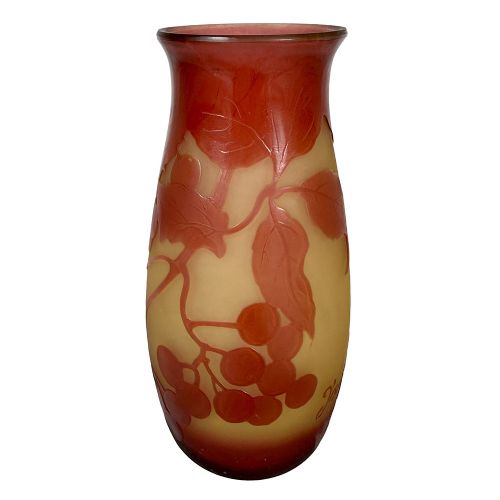
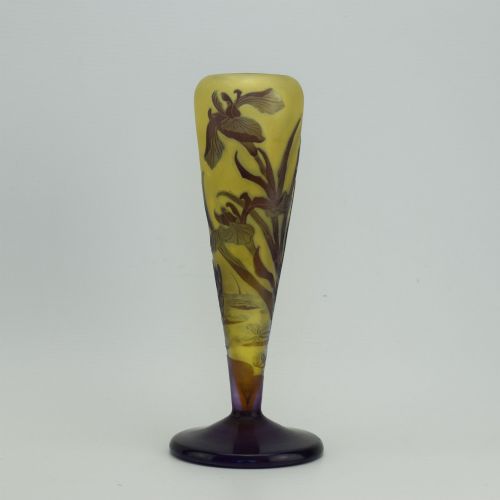


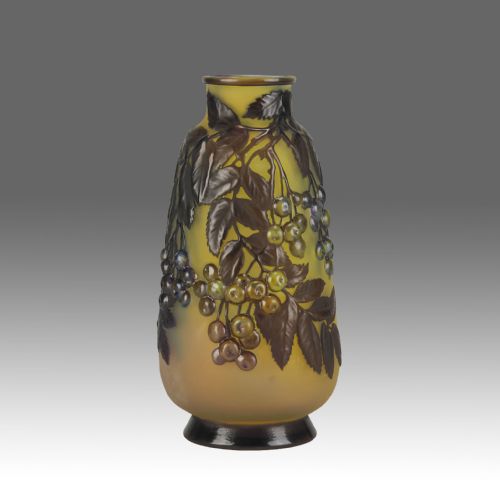


Botanical Acid Etched Vase
A botanical acid etched vase brings the quiet forms of the natural world directly into a room through layered glass.
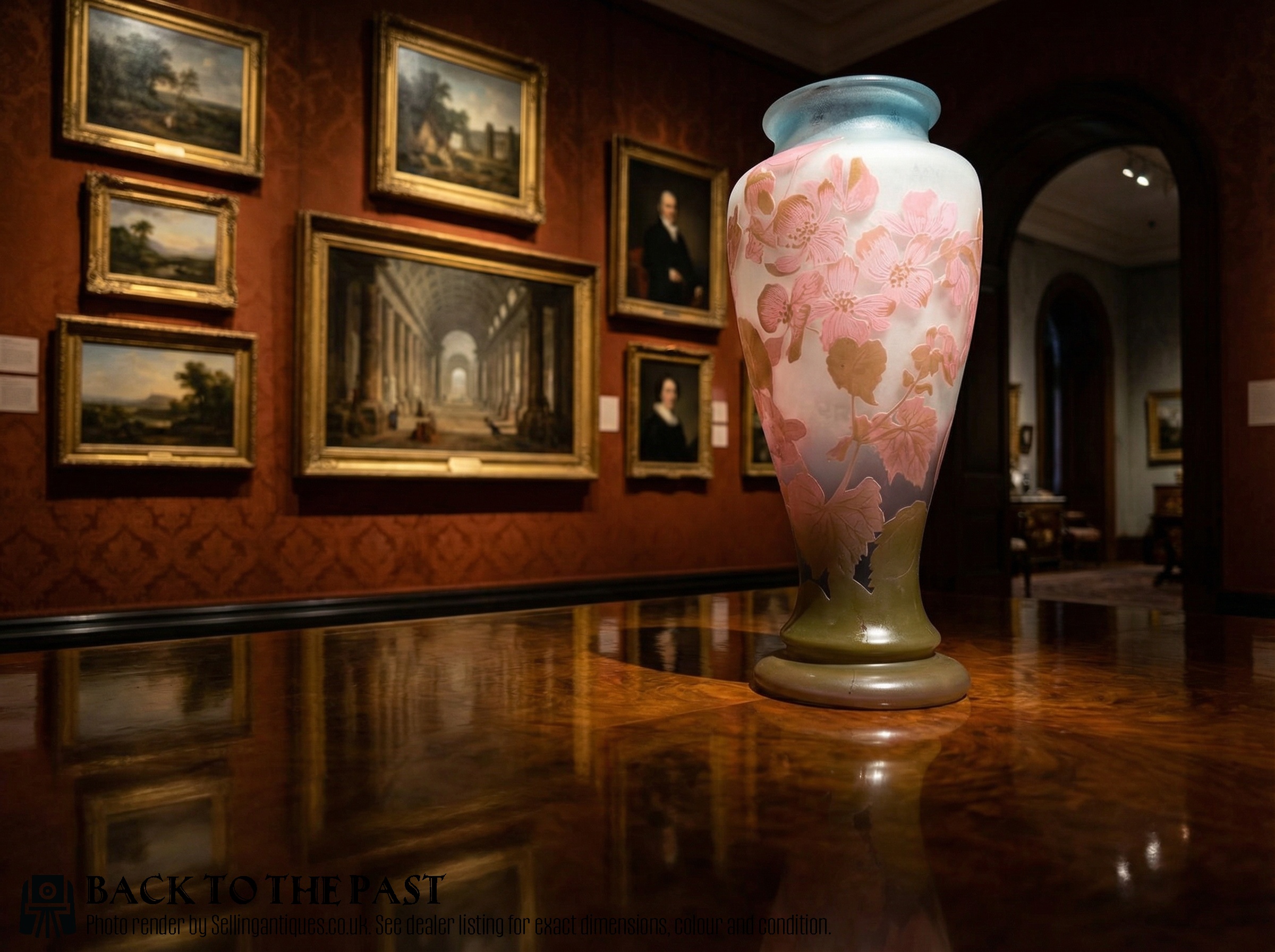
Botanical Acid Etched Vase
A botanical acid etched vase is a vessel formed from glass and decorated with plant motifs such as cornflowers, irises, and blackberries. These pieces emerge chiefly from the Art Nouveau period around nineteen hundred, capturing organic lines in sculptural glass.
The versions most commonly met on this page are signed by prominent makers such as Gallé and Daum Frères. They employ cameo techniques to render flowers, leaves, and seed pods in relief upon contrasting backgrounds.
How they were made
Glassmakers built up multiple layers of coloured glass before submerging the vessel in acid to eat away the unwanted portions. This acid-etching process revealed the underlying botanical design in sharp relief.
Makers then refined the surface by hand using wheel-carving, enamelling, or the application of gold leaf to add fine detail and depth to the stems and petals.
Current listings feature pieces created between eighteen ninety and nineteen twenty, using cameo glass, frosted glass, and enamel.
What varies in quality
The distinction between ordinary and exceptional pieces lies in the depth of the glass layers and the precision of the acid biting into the surface. Superior examples show careful control over colour gradients, creating realistic shadows among the leaves and blossoms.
The artistic harmony between the natural subject matter and the shape of the vase determines the overall strength of the piece. Master workshops achieved a fluid balance where the glass body and the botanical carving function as a single unit.
Emile Gallé·Daum Frères·Baccarat
The Botanical Acid Etched Vase Glossary
- Cameo Glass
- Glass vessels formed with two or more distinct layers of colour fused together. The outer layer is partially carved or etched away to leave a raised design.
- Acid-Etched Glass
- Glass decorated by exposing unprotected areas to hydrofluoric acid rather than cutting them mechanically. This technique allows for soft, textured backgrounds and precise outlines.
- Enamelled Glass
- Glass painted with vitrescend colours that are subsequently fired in a kiln to fuse permanently with the surface. It provides vivid surface tones on top of the glass body.
- Art Nouveau
- An international style of art and architecture prominent around nineteen hundred. It is characterised by intricate linear designs and flowing motifs inspired by natural forms.
- Frosted Glass
- Glass treated to have a diffuse, translucent surface rather than a transparent one. This finish is often used to create atmospheric backgrounds for floral motifs.
Botanical Acid Etched Vase: Frequently Asked Questions
What is a botanical acid etched vase?
A botanical acid etched vase is a glass vessel decorated with plant designs created by chemical erosion and carving. These works date primarily from the late nineteenth and early twentieth centuries.
They display floral motifs such as orchids, cornflowers, and water lilies rendered in multiple layers of coloured glass. Each vessel reflects the natural curves typical of the period's design ethos.
How do I identify an original piece?
Original pieces generally bear an etched or enamelled signature of the maker on the side or base. The weight, the depth of the glass layers, and the hand-finished details confirm authenticity.
Examine the transition between the background and the raised floral design to check for the characteristic texture left by early etching techniques. Signatures should be integrated naturally into the composition rather than added superficially.
What periods do these vases come from?
These vases originate predominantly from the turn of the twentieth century, specifically between eighteen ninety and nineteen twenty. This era coincided with the height of the Art Nouveau movement in Europe.
Production during these decades was centred in France, where pioneering glasshouses refined the chemical processes required for multi-layered cameo work. Pieces from this timeframe represent the peak of this specific decorative technique.
How should I display a cameo glass vase?
Display these vases where natural light can pass through the layered glass to illuminate the botanical colours. Placing them near a window or on an illuminated shelf reveals the subtle tones within the material.
Keep them away from direct, harsh sunlight for prolonged periods to protect any delicate enamel or gold leaf details. A stable surface away from high-traffic areas ensures the slender glass forms remain secure.