





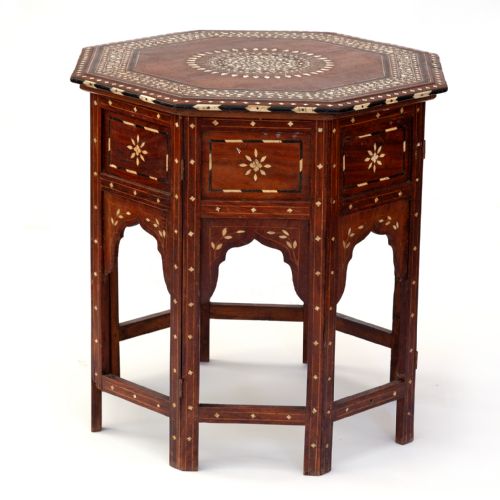


Bone Inlaid Plant Stand
These bone inlaid plant stands bring intricate geometric pattern and exotic timbers into a room, offering a distinct surface for decorative horticulture.
Bone Inlaid Plant Stand
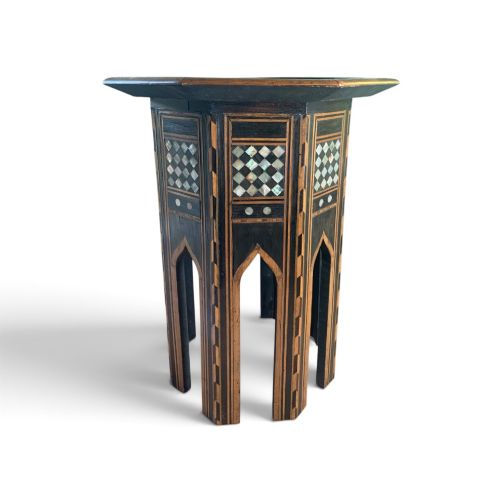
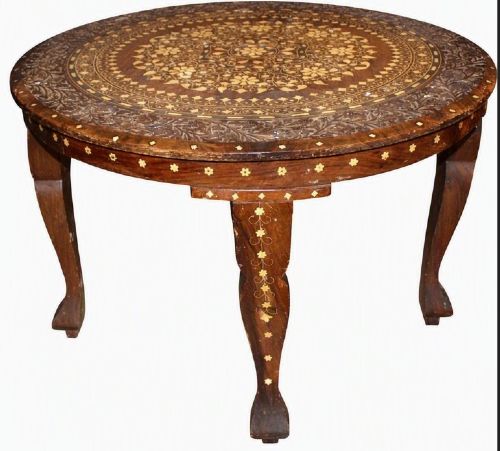
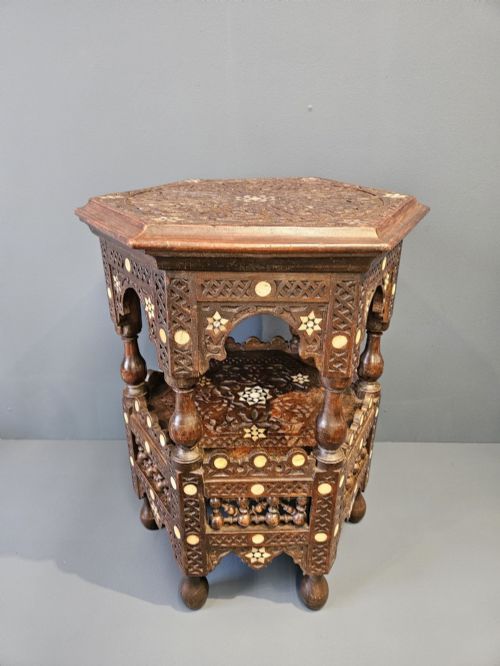
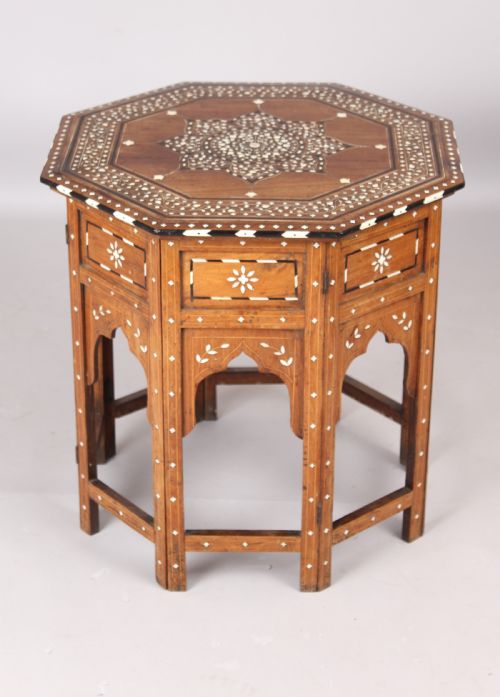
A bone inlaid plant stand sits within a tradition of decorative occasional furniture, taking forms such as octagonal lamp tables, circular side tables, and pedestal occasional tables. The pieces found here span the nineteenth and early twentieth centuries, reflecting diverse global influences from Anglo-Indian and Syrian workshops to Moorish Revival designs.
Makers often utilised folding structures or tripod bases, creating versatile items like Hoshiarpur tables and octagonal occasional pieces that double as plant stands. Hardwoods such as teak, walnut, padauk, and ebonised wood form the sturdy foundations for these elaborate surface embellishments.
How they were made
Craftsmen built the structural frames from dense timbers including teak, sandalwood, sheesham, and padauk, often carving the wood deeply with foliage and animal motifs before applying the surface decoration. Artisans then meticulously shaped pieces of animal bone and mother-of-pearl to fit precisely into hand-cut recesses within the timber.
The delicate inlay work relied on contrasting materials, embedding white bone and shimmering mother-of-pearl into dark hardwoods or ebonised wood to create complex geometric and floral patterns. Some examples incorporate brass wire alongside the bone inlay, adding metallic definition to the intricate surface designs.
Carved wooden elephants occasionally support these tabletops, standing ready to bear the weight of your favourite fern or lamp.
What varies in quality
The fineness of the carved woodwork and the precision of the bone inlay define the upper tier of these pieces, where patterns remain crisp and tightly fitted. Simpler examples display broader carving and less complex arrangements of inlaid fragments.
Timber selection also dictates the distinction between standard items and exceptional workshop productions, with dense, heavy hardwoods like teak and sandalwood supporting more intricate structural carving than softer secondary woods.
Liberty & Co
The Bone Inlaid Plant Stand Glossary
- Hoshiarpur
- A city in Punjab renowned for its distinctive woodwork, where craftsmen specialised in carving dense timbers and covering surfaces with intricate bone and brass inlay. Pieces originating from this region frequently feature dense foliage and animal motifs.
- Anglo-Indian
- A descriptive term for furniture made in India during the British colonial period, combining traditional local carving techniques with European furniture forms such as occasional and side tables. These objects often blend regional timber choices with British domestic utility.
- Moorish Revival
- An architectural and decorative style popular during the nineteenth century that drew inspiration from Islamic art, characterised by horseshoe arches, intricate geometric lattice, and multifaceted octagonal forms. This aesthetic heavily influenced the design of occasional tables and plant stands of the period.
- Ebonised wood
- Timber treated with a chemical stain or black finish to imitate expensive ebony, providing a dark, uniform background that makes white bone inlay stand out sharply. This technique was frequently utilised in nineteenth-century European and revival furniture.
- Mother-of-pearl
- The iridescent inner layer of certain mollusc shells, used alongside bone to add a shimmering, reflective quality to inlaid tabletops and plant stands. It catches light differently depending on the viewing angle.
Bone Inlaid Plant Stand: Frequently Asked Questions
What is a bone inlaid plant stand?
A bone inlaid plant stand is an occasional table, often octagonal or circular, decorated with hand-cut bone and mother-of-pearl set into timber. These items bring complex geometric patterns into interior spaces while serving a practical surface function.
Originating largely from the nineteenth and early twentieth centuries, they reflect global design movements including Anglo-Indian and Moorish Revival styles. Their sturdy hardwood frames support intricate decorative schemes designed to catch the eye.
How were these tables used originally?
These pieces functioned as occasional tables for lamps, decorative objects, or horticulture within Victorian and Edwardian drawing rooms. Their portable sizes allowed them to be moved easily around domestic interiors as needed.
Many versions, such as Hoshiarpur folding tables, were constructed with collapsible bases for ease of transport or storage. This practicality matched the period taste for exotic, adaptable furnishings.
How do I care for inlaid wood?
Inlaid wooden surfaces require gentle treatment, keeping them away from direct heat sources and strong sunlight that can dry out the timber and bone. Regular dusting with a soft, dry cloth preserves the finish without harming the delicate materials.
Avoid using liquid polishes or harsh chemical cleaners, as moisture can seep beneath the bone fragments and loosen the adhesive over time. A microfibre cloth is usually sufficient for routine maintenance.
How do I identify periods and styles?
Identifying these pieces involves looking at the timber species, the style of the wood carving, and the geometric arrangement of the bone inlay. Anglo-Indian and Hoshiarpur items typically display dense, native Indian hardwoods combined with intricate foliage carving.
Revival pieces made in Europe often utilise ebonised wood or walnut as a dark base for contrasting mother-of-pearl and bone work. Examining the underside and construction joints also helps determine whether a piece dates to the Victorian era or the early twentieth century.