





Bombe Fronted Cabinet
A bombe fronted cabinet brings unmistakable continental curves and generous proportions to a room, offering both display space and deep storage.
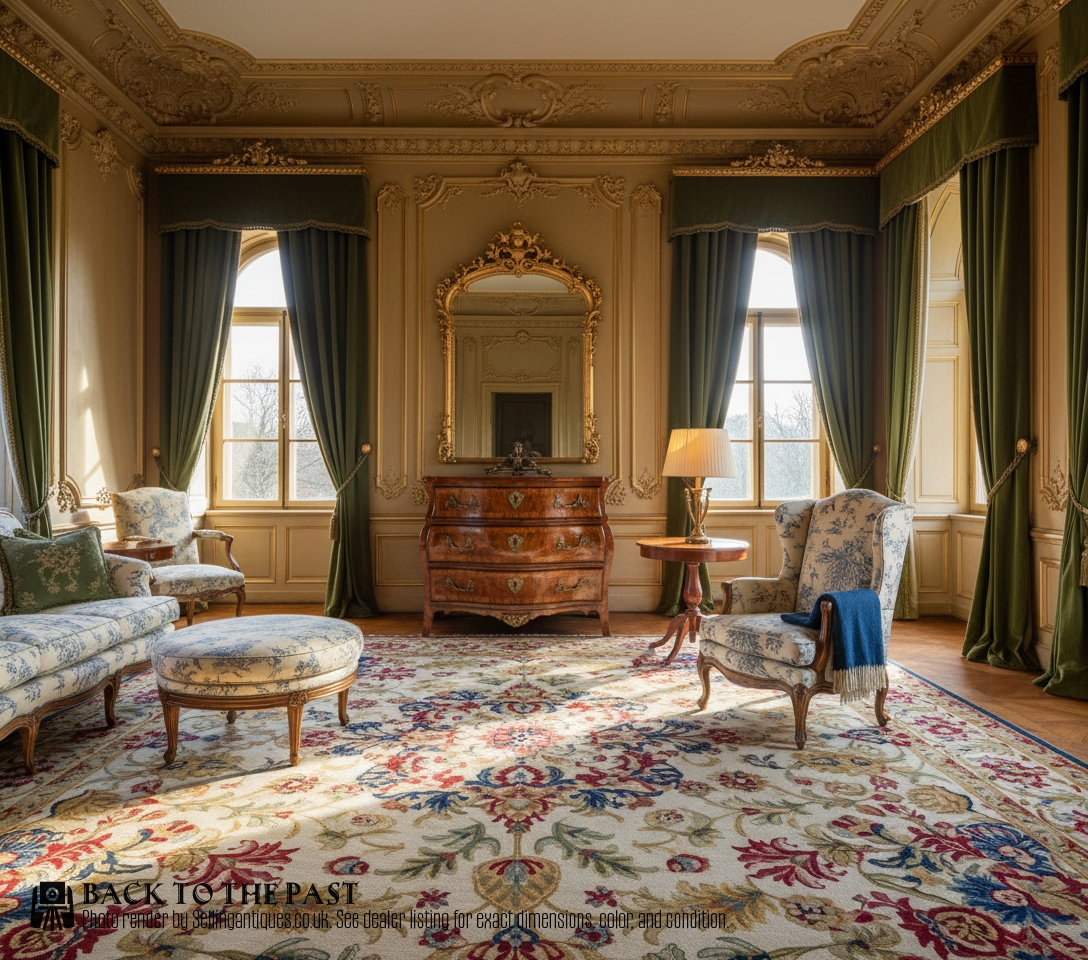
Bombe Fronted Cabinet
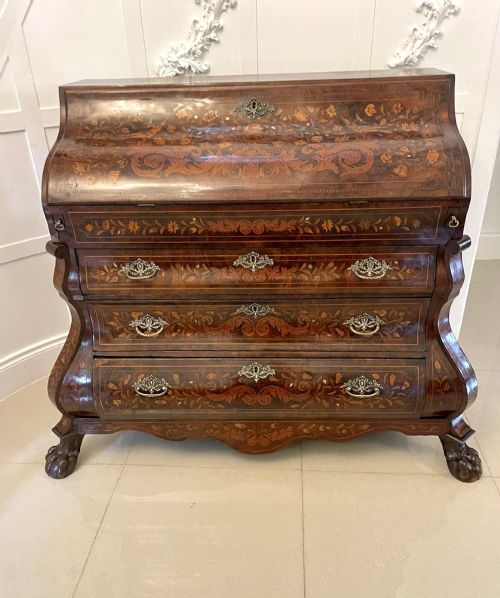
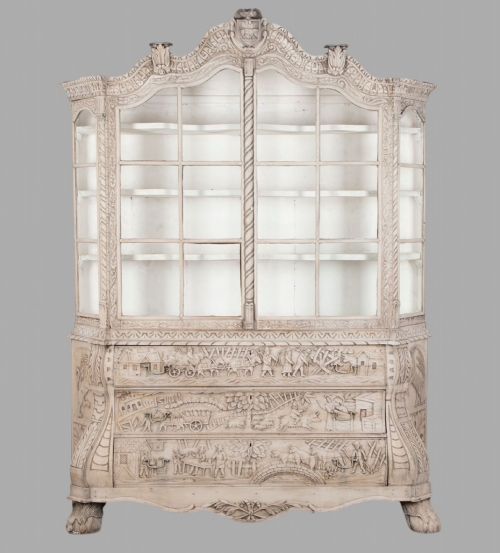
When you search for a bombe fronted cabinet, you enter a world of swelling, outward-curving silhouettes that define continental cabinet-making. These pieces encompass bureau bookcases, chests of drawers, commodes, and vitrines originating primarily from Dutch, French, and Italian workshops.
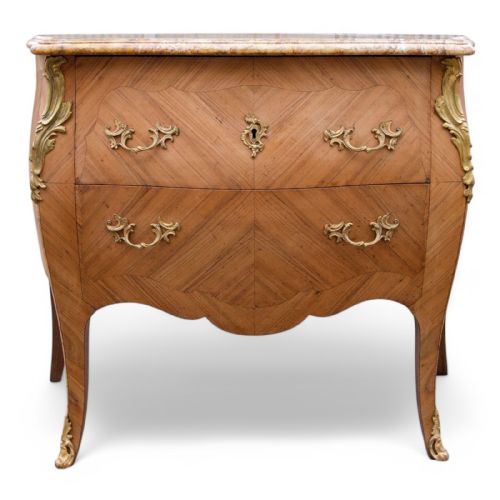
The version you are most likely to meet on this page is the walnut or burr walnut Dutch bureau bookcase from the eighteenth century, heavily decorated with floral marquetry. Alongside these, French commodes featuring marble tops and ormolu mounts appear frequently across various revival periods.
The form relies entirely on rhythmic, convex shapes that demand high technical skill to construct successfully. Every piece balances monumental presence with intricate surface detail.
What varies in quality
The integrity of the timber movement and the precision of the veneer matching separate basic joinery from superior work. On finer examples, the floral marquetry flows seamlessly across drawer junctions without awkward interruptions in the design.
The weight and crispness of the cast bronze or ormolu mounts indicate the workshop standard. Heavy, finely chased metalwork signifies a higher grade of production than thin, pressed brass replacements.
Some eighteenth-century Dutch cabinet-makers hid tiny secret drawers behind sliding marquetry panels, intended for secret love letters and small trinkets.
The Bombe Fronted Cabinet Glossary
- Bombe
- A French term describing furniture with a swelling or bulging outline, curving outward from top to bottom. This silhouette requires complex joinery to maintain structural stability.
- Marquetry
- The art of applying small pieces of wood veneer to a structure to form decorative patterns and pictures. Craftsmen selected various fruitwoods to achieve natural tonal shading in floral designs.
- Ormolu
- Gilded bronze mounts applied to the corners, feet, and aprons of fine cabinet-making. The technique involves coating cast bronze with a mercury-gold amalgam and heating it.
- Vitrine
- A glass-fronted display cabinet designed for porcelain and curiosities. These pieces often incorporate curved glass panels to match the swelling lines of the lower commode base.
Bombe Fronted Cabinet: Frequently Asked Questions
How do I clean the wood surface?
Dust the cabinet regularly with a soft, dry cloth to prevent particulate buildup on the delicate veneer and marquetry details. Avoid using modern aerosol polishes, which leave chemical residues that dull the antique finish over time.
Apply a traditional beeswax sparingly once or twice a year to nourish the walnut or kingwood. Buff the surface gently after application to maintain a soft, natural sheen without creating a greasy film.
Where should I place a bombe cabinet?
Position the cabinet against a flat interior wall away from direct sunlight and strong heat sources. Rapid temperature fluctuations cause the underlying timbers to shrink, which risks splitting the precious burr walnut or fruitwood veneers.
Ensure the floor beneath is level to prevent distortion in the carcass over long periods. Because these pieces have deep, swelling proportions, they require sufficient surrounding floor space to display their curved profiles properly.
How do I tell Dutch from French pieces?
Dutch examples typically rely heavily on elaborate floral marquetry in burr walnut across the entire facade. Their bureau bookcases and chests often feature steeper curves and darker, richer timber patination.
French pieces, particularly commodes and vitrines, frequently incorporate shaped marble tops and cast ormolu or gilt bronze mounts. They lean toward kingwood veneers and styles associated with Louis XV and Rococo revivals.
Were these cabinets used for writing?
Many variations incorporate fitted writing compartments behind sloping lids or fall fronts. The bureau bookcase and cylinder bureau versions served as private administrative desks for correspondence and document storage.
The lower sections provided concealed drawer space for ledgers and personal items, combining writing facilities with substantial household storage in a single piece of furniture.