




Bombe Chest Glazed Cabinet
These bombe chest glazed cabinet pieces combine swelling serpentine storage with illuminated display space, offering collectors a striking focal point for fine interiors.
Bombe Chest Glazed Cabinet
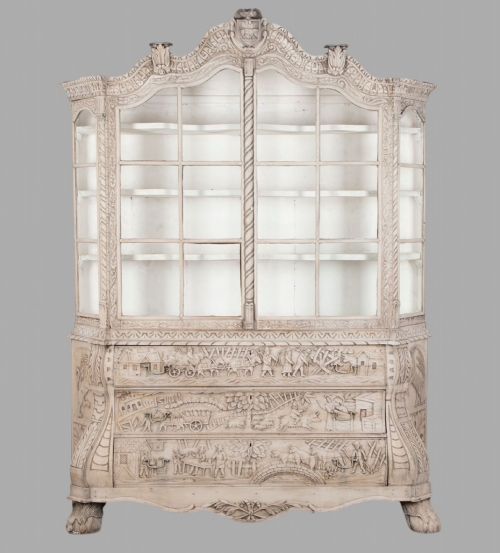
A bombe chest glazed cabinet unites a swelling, convex lower chest with an upper display section enclosed by glass doors. These grand dual-purpose furniture items emerge principally in Dutch Baroque and Dutch Rococo styles, designed to store valuables below while showcasing prized collections above.
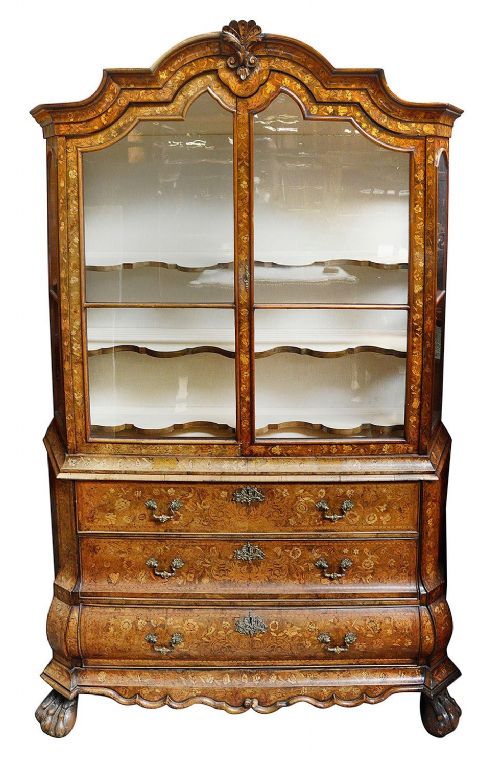
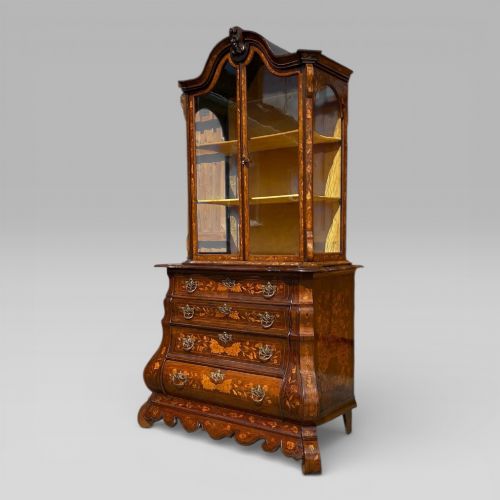
The most common examples encountered on this page date from the 18th century through to the 1930 revival periods, typically constructed as a tall cabinet on chest format. They frequently exhibit the characteristic bombé or kettle-shaped profile that bulges outward on the front and sides.
Materials and construction methods
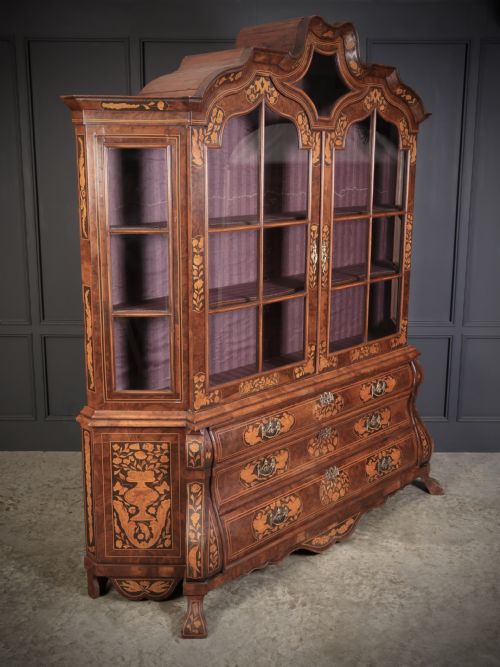
Cabinetmakers built these pieces using solid foundational timbers such as oak, pine, and walnut, applying delicate veneers over the structural carcase to achieve the undulating curves. Skilled artisans then embellished the surfaces with intricate fruitwood marquetry and inlay work, depicting floral and foliate motifs across the swelling drawers and doors.
Glazing bars divided the upper cabinet doors into geometric panes of glass, allowing light to enter the display interior while securing the contents. Cast brass handles and escutcheons were fitted to the drawers, complementing the warm tones of the walnut and fruitwood.
These cabinets bulge so aggressively in the middle that dusting behind them requires a minor expedition.
Judging quality and craftsmanship
The distinction between ordinary and exceptional examples rests upon the fluidity of the bombé contour and the precision of the marquetry. Superior pieces display harmonious proportions where the swelling lower chest transitions naturally into the upper glazed cabinet without appearing clumsy.
Finer cabinets showcase densely detailed floral marquetry executed with varied fruitwoods that retain their natural tonal contrast. The crispness of the carved wooden elements and the integration of original brass hardware further elevate the standing of a piece.
Edwards & Roberts
The Bombe Chest Glazed Cabinet Glossary
- Bombé
- A French term describing furniture with a strongly convex or bulging outward shape. This undulating profile requires advanced woodworking skill to build.
- Marquetry
- Decorative veneer work arranged in pictorial or patterned designs using different coloured woods. Artisans cut thin sections of fruitwood and walnut to form elaborate floral scenes.
- Vitrine
- A glass-fronted cabinet designed for displaying porcelain, curiosities, or books. The upper section of these combination pieces functions as a vitrine.
- Escutcheon
- A protective plate surrounding a keyhole, usually fashioned from cast brass on these cabinets. It serves both a functional purpose and a decorative role on the drawer fronts.
- Dutch Baroque
- An artistic style prevalent in the Netherlands during the 17th and 18th centuries, characterised by dramatic curves and rich ornamentation. Many pieces on this page adopt this aesthetic or its later revival forms.
Bombe Chest Glazed Cabinet: Frequently Asked Questions
What is a bombe chest glazed cabinet?
A bombe chest glazed cabinet is a tall furniture piece featuring a bulging, curved lower chest of drawers beneath an upper glass-fronted display case. These dual-purpose items combine secure storage with visible shelving for precious objects.
Originating largely from Dutch workshops, they serve as commanding focal points in a room due to their sculptural silhouettes and decorative wood veneers.
Where should I place this cabinet?
These large cabinets require a prominent wall space where their swelling proportions and detailed marquetry can be fully appreciated. Living rooms, formal dining rooms, or spacious hallways provide ideal settings.
Ensure the floor is level to support the substantial weight of the timber and glass structure safely.
How do I date an 18th-century cabinet?
Dating relies on examining the construction methods of the carcase, the type of veneers used, and stylistic details in the marquetry. 18th-century examples typically feature hand-cut dovetails and native European hardwoods.
Later revival pieces from the 19th and 20th centuries often incorporate machine-sawn timber elements alongside older stylistic motifs.
How do I care for walnut and marquetry?
Protect the wood surfaces by keeping the cabinet away from direct sunlight and strong heat sources, which can dry out the veneer. Dust regularly with a soft, dry cloth and apply occasional specialist wax polish to nourish the timber.
Avoid using liquid cleaners or placing damp objects directly onto the wooden shelves.