




Bohemian Glass Goblet
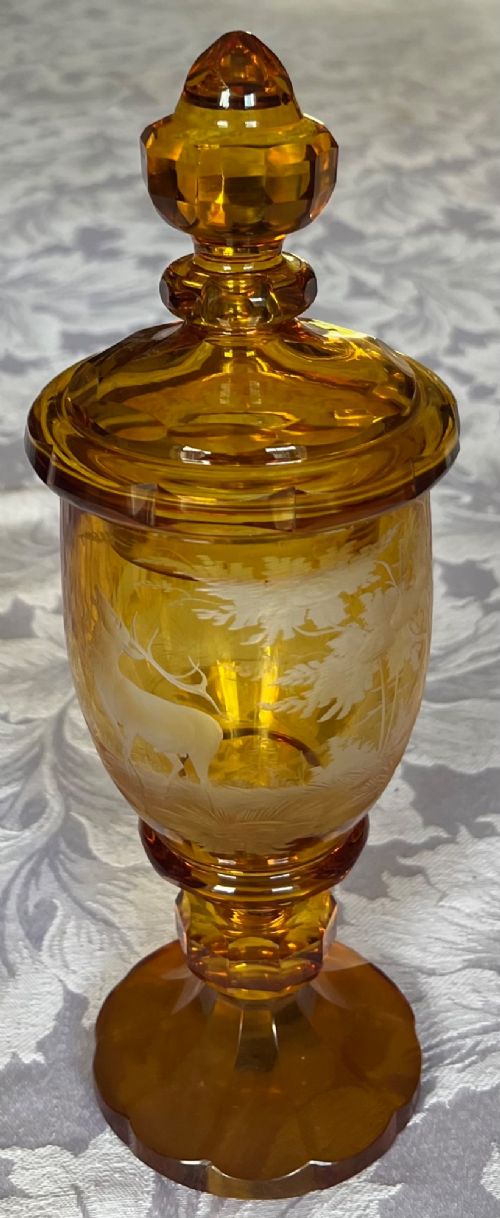
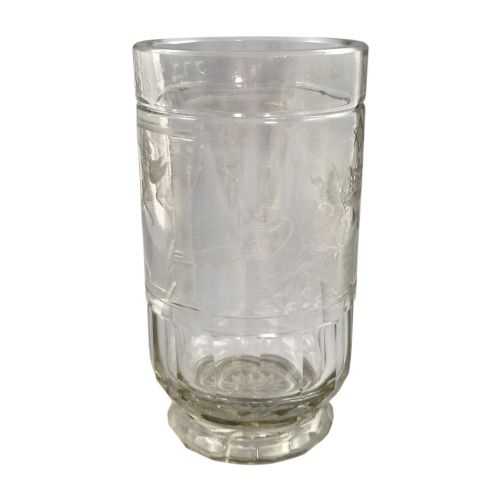
A bohemian glass goblet brings heavy colour and deep wheel-engraved detail to the table, rooted in centuries of Central European craft.
Bohemian Glass Goblet
When you search for a bohemian glass goblet, you enter a tradition spanning from the seventeenth century through to the twentieth, taking in Georgian, Victorian, and later periods. The pieces appearing here range from simple amber roemers to large, heavily cut and engraved vessels.
You are most likely to encounter nineteenth-century examples on this page, particularly Victorian historicism and Biedermeier pieces in green, ruby, or amber glass. These often feature elaborate wheel engraving depicting stags, foliage, or armorial motifs.
The form stretches beyond standard drinking vessels to include massive ceremonial beakers, lidded vases, and heavy gilt presentation pieces. Their heft and depth of tone distinguish them immediately from lighter table glass.
How they were made
Makers shaped these vessels using blown glass and lead crystal, frequently layering colours in double or triple cased techniques. This allowed craftsmen to cut through an outer casing of ruby or green to reveal clear glass underneath.
Decoration relied heavily on precise wheel engraving, polychrome enamel, and applied gold leaf. Artisans utilised contrasting textures, combining polished cut facets with frosted matte engraving.
Bohemian Glass Goblet Retail Price Guide 2026
Typical asking prices for bohemian glass goblet among the pieces listed under this phrase on Sellingantiques today, from the lower quarter to the upper quarter. They describe what is for sale here now, not the wider market.
Materials recorded across the inventory include blown glass, lead crystal, amber glass, gold leaf, enamel, and cut crystal.
What varies in quality
Quality rests on the crispness of the wheel engraving and the depth of the coloured glass layers. Superior pieces show immense control in the cutting, where every facet catches the light cleanly and animal or armorial figures possess anatomical precision.
The weight of the lead crystal and the richness of the gilding also set finer works apart. Lesser examples display softer engraving lines and simpler, uniform staining rather than true cased glass.
Moser·Fritz Heckert·Frits Hechert·Meyr s Neffe·Harroch
The Bohemian Glass Goblet Glossary
- Roemer
- A traditional Germanic wine glass featuring a wide bowl and a studded prunt stem. These often appear in pale green glass with enamel decoration.
- Cased glass
- A method where a layer of coloured glass is fused over a clear or contrasting inner body. Cutting through the outer layer reveals the contrasting colour beneath.
- Historismus
- A nineteenth-century style drawing inspiration from Renaissance and medieval motifs. It heavily influenced Bohemian glassmakers producing armorial goblets and enamelled beakers.
- Prunt
- A blob of applied glass melted onto the stem of a goblet to provide a secure grip. They are typical of traditional green roemers.
- Jugendstil
- The continental European manifestation of Art Nouveau, visible in later twentieth-century pieces with organic, flowing lines.
Bohemian Glass Goblet: Frequently Asked Questions
What distinguishes a bohemian glass goblet from standard wine glass?
These goblets generally possess thicker walls, heavier lead crystal construction, and deeper coloured casings than standard dining glasses. They were designed for display and ceremonial use as much as drinking.
Craftsmen employed intensive wheel engraving and gilding techniques that set them apart from mass-produced tablewares of the period.
How do I identify the period of a goblet?
Look to the colour palette, the style of the engraving, and the weight of the metal. Seventeenth and eighteenth-century examples show thinner glass and specific armorial cutting.
Victorian and later nineteenth-century pieces often embrace Historicism, featuring deep ruby or green cased glass, elaborate stags, and heavy gilt detailing.
Were these pieces meant for daily use?
Many of the larger and more ornate examples served as ceremonial beakers, presentation pieces, or mantle ornaments rather than everyday table wine glasses. Masonic and armorial pieces marked specific events.
Smaller roemers and wine glasses were utilised for dining, though their robust construction helped them survive centuries of handling.
Why are so many pieces green or ruby?
Bohemian glasshouses mastered specific metal oxide colourants that produced deep, saturated tones of amber, emerald green, and rich ruby red. These colours provided the ideal contrast for cut-to-clear techniques.
The resulting contrast made wheel-engraved white motifs stand out sharply against the dark coloured body.