





Boating Scene Landscape Art
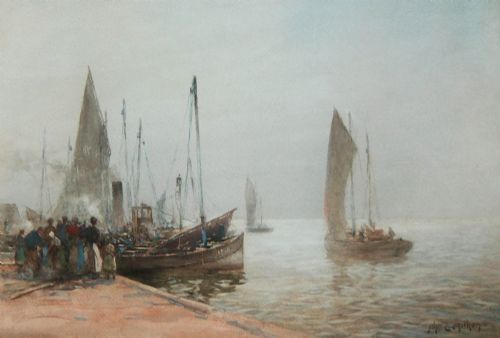
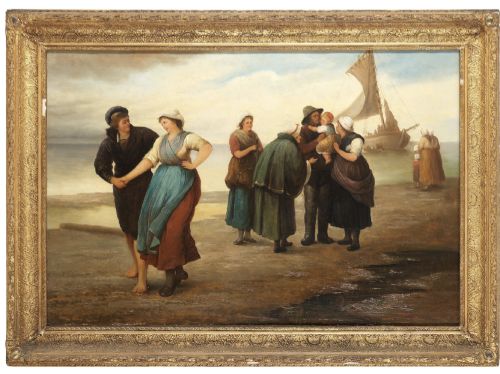
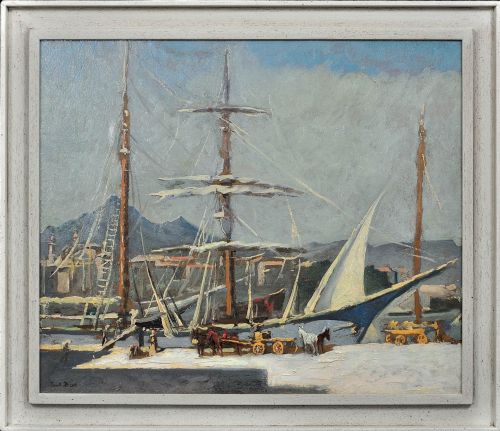
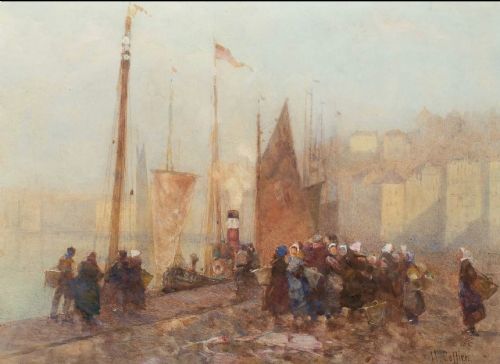
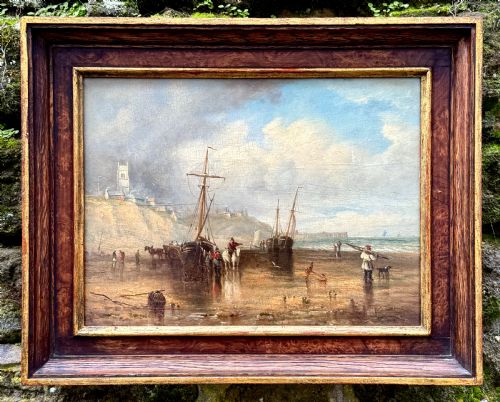
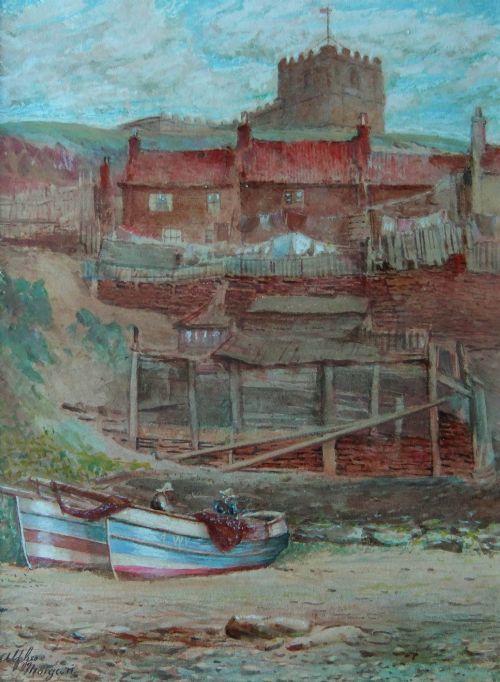
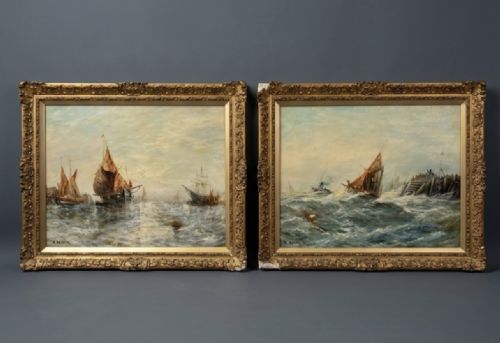
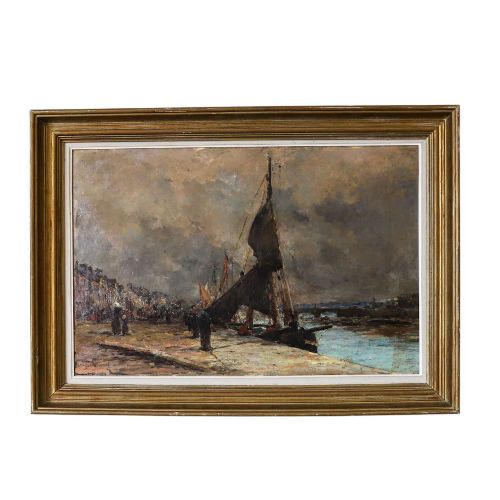
These boating scene landscape art pieces capture harbours, rivers and coastal shores through oils and watercolours spanning multiple centuries.
Boating Scene Landscape Art
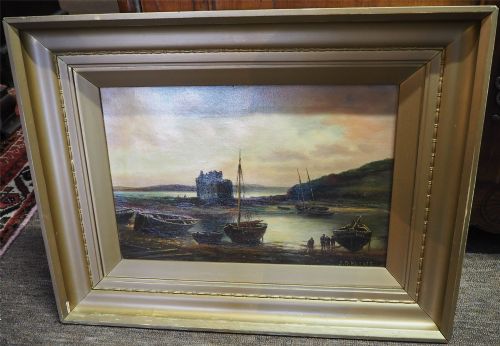
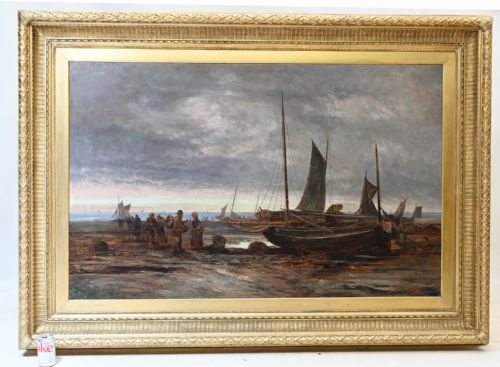
Boating scene landscape art encompasses maritime views, river depictions and coastal scenes populated by vessels ranging from traditional fishing boats to grand sailing ships. These works document working ports, tranquil riversides and dramatic seascapes across British and European coastal locations.
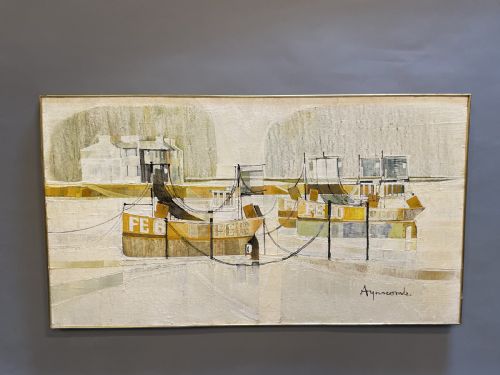
The selections encountered here span from the nineteenth century into the mid-twentieth century, capturing shifts in artistic approach from traditional maritime recording to impressionistic interpretations. Collectors find both intimate watercolours on paper and substantial oil paintings on canvas or board.
Many compositions focus on specific harbours and coastal towns, recording local topography alongside the maritime activity of the period. Artists utilised these aquatic settings to explore light upon water and the interplay between landscape and human navigation.
Materials and methods
Artists relied primarily on oil paint applied to canvas or wood board, or watercolours worked onto paper, often finishing the presentation with gilt wooden frames. The handling of pigment ranged from tight academic brushwork recording precise rigging to looser impressionistic strokes suggesting movement and atmosphere.
Grounds were prepared to receive either translucent washes of watercolour or the heavier impasto characteristic of mid-period oil paintings. Protective elements such as gold leaf often adorned the frames that accompanied these marine and river subjects.
Several artists captured vessels navigating choppy waters while safely ashore with their sketchbooks.
Distinctions in quality
Quality rests upon the artist's command of atmospheric perspective, spatial depth and the natural behaviour of light upon water. Superior examples demonstrate a confident handling of pigment that brings immediacy to the coastal atmosphere.
The strength of the composition and the fidelity of maritime details, such as rigging and vessel construction, separate accomplished works from generic studio output. Original framing matching the period of the painting further enhances the integrity of the piece.
Kenneth Cozens·James Orrock·James E Aitken·Paul Bret·Hector Caffieri·Thomas Creswick·Alfred G Morgan·William Edward Webb·Raymond Picque·William Lee Hankey·Gabriel Dauchot·Gustave De Bréanski·Thomas Bush Hardy·Adrian Van Porten·William Tuck·Edward Henry Eugene Fletcher·T S Wallis·George Gregory·George Morland·John Bell·Frederick Waters Watts·Donald McIntyre·Claude Thomas Stanfield Moore·Frederick William Hattersley·Ernest F Hill
The Boating Scene Landscape Art Glossary
- Seascape
- A work of art depicting the sea, coastal views, ships or maritime activity. These compositions often focus on weather conditions and coastal topography.
- Impressionism
- An artistic style characterised by relatively small, thin yet visible brush strokes and an emphasis on accurate depiction of changing light. Painters utilised this approach to capture fleeting atmospheric moments.
- Impasto
- The process or technique of laying on paint or pigment so that it stands out in relief from a canvas. This method adds physical texture to the water or sky within a painting.
- Provenance
- The chronology of the ownership, custody or location of a historical object. Documented history confirms the authenticity and background of a piece.
- Giltwood
- Wood that has been treated with gold leaf or gold paint to give a metallic surface finish. Frames treated in this manner frequently accompany period oil paintings.
Boating Scene Landscape Art: Frequently Asked Questions
What periods do these paintings cover?
The available selection spans from the early nineteenth century through to the mid-twentieth century. Works range from traditional nineteenth-century maritime pieces to mid-century modern interpretations.
Different decades brought distinct stylistic approaches, moving from detailed topographical recording towards more expressive and abstract impressions of coastal environments.
How should I care for an antique oil painting?
Oil paintings on canvas or board require stable indoor humidity and protection from direct sunlight to prevent cracking and fading. Regular dusting with a soft, dry brush keeps the surface clean without damaging the pigment.
Avoid using liquid cleaners or abrasive materials on the painted surface or the original gilt frame. Professional restoration should be sought for any structural repairs to the canvas or wooden support.
Are these works signed by the artists?
Many of the listed paintings feature visible signatures, initials or contemporaneous attributions linking them to known artists. Documentation on the reverse or within the frame often provides additional context regarding provenance.
Unsigned works are generally attributed through stylistic comparison, subject matter and period materials. Historical records help establish the likely origin of unsigned maritime scenes.
What is the difference between oil and watercolour?
Oil paintings utilise pigments bound in a drying oil, applied to canvas or board to create rich textures and deep tones. Watercolours employ water-soluble pigments on paper, resulting in luminous, transparent washes.
Watercolours typically require protective framing behind glass to shield the paper from moisture and dust. Oils present a more robust surface that remains unglazed unless the specific frame dictates otherwise.