


Blush Porcelain Urn
A blush porcelain urn brings soft pastel warmth and delicate hand-painted flora to a room, offering a distinct piece of late Victorian and Edwardian craftsmanship.
Blush Porcelain Urn
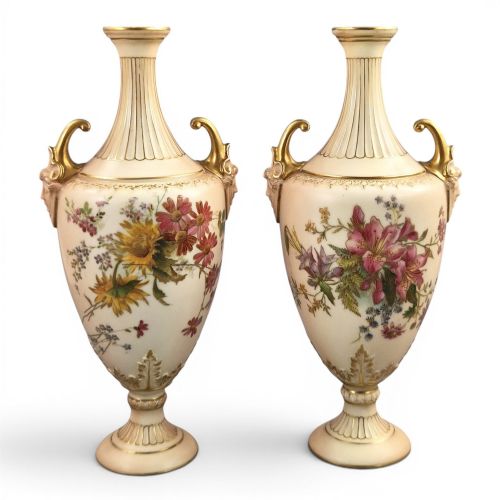
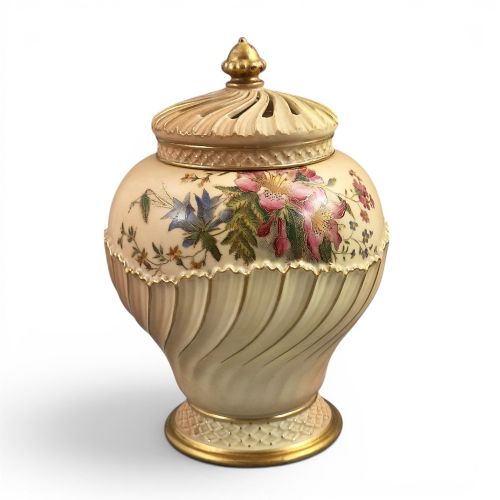
A blush porcelain urn stands as a refined decorative object originating predominantly from the late nineteenth century and the Edwardian era. When searching for a blush porcelain urn, collectors encounter items primarily shaped as vases, pot-pourri jars with covers, pedestal vases, and ewers. These pieces frequently showcase delicate ivory and cream grounds paired with floral motifs.
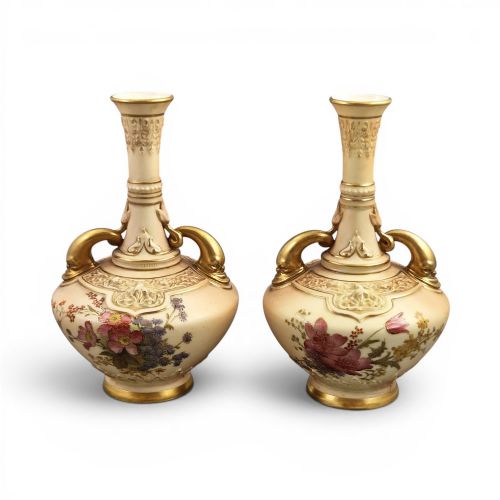
The objects seen here largely trace back to the Victorian Aesthetic Movement and subsequent Edwardian output. They range from simple ovoid forms to elaborate vessels featuring twin handles, dolphin motifs, or pierced gilt work. Each variation serves the primary purpose of ornamental display within period interiors.
How they were made
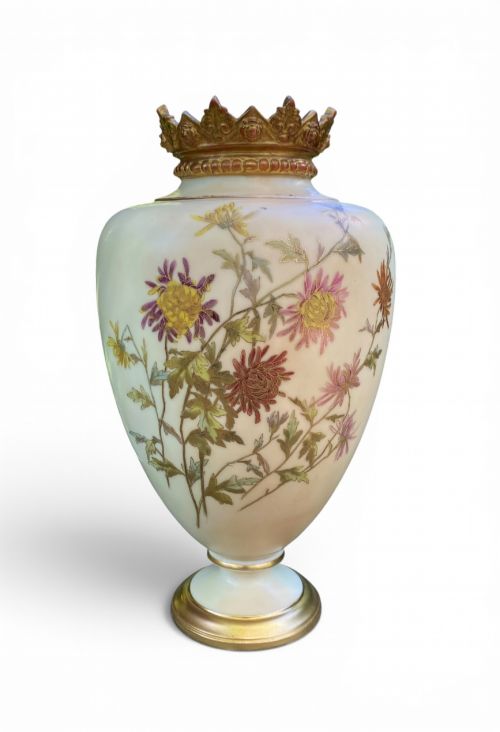
Makers utilised fine porcelain bodies, applying soft glaze treatments to achieve the characteristic blush ivory ground colour. Artisans then painted floral subjects by hand, rendering subjects such as chrysanthemums and roses directly onto the ceramic surface.
Gilding, gold leaf, and gold gilt provide metallic contrast on handles, rims, and moulded details. Enamel colours are layered over the glaze to build up the depth of the floral designs.
Dolphin handles occasionally swim onto the sides of Edwardian vases, proving that Victorian makers loved a marine mammal.
What varies in quality
The standard of painting determines the tier of the piece, particularly where named artists execute hand-painted floral subjects or specific animal scenes. Finer examples display meticulous brushwork and intricate detail in the floral arrangements and foliage.
The complexity of the vessel shape and the richness of the gilding further elevate the piece. Elaborate mouldings such as pierced handles, crown covers, and pedestal bases separate standard production items from superior works.
Royal Worcester·Grainger's Worcester·Kate Locke·Jas Stinton·E Raby
The Blush Porcelain Urn Glossary
- Blush ivory
- A soft, matte cream and peach-toned porcelain ground colour popular in late nineteenth-century ceramic production. It provides a muted background for floral hand-painting.
- Pot-pourri jar
- A covered decorative vessel pierced on the lid or upper body to allow dried scented herbs and petals to release fragrance into a room. These often include an inner lid beneath a crown cover.
- Pâte-sur-pâte
- A ceramic decoration technique where liquid clay is built up in successive layers on a base body to create a low relief cameo effect before firing.
- Gilding
- The application of gold leaf or gold paint to ceramic surfaces, particularly handles, rims, and pedestals, to accent the form.
- Ewer
- A large jug with a wide spout and scroll handle, often produced as a decorative pair alongside matching vases or urns.
Blush Porcelain Urn: Frequently Asked Questions
What is a blush porcelain urn?
A blush porcelain urn is a decorative ceramic vessel featuring a soft ivory or peach-toned ground, typically ornamented with hand-painted flowers and gilt accents. These pieces date predominantly from the late Victorian and Edwardian periods.
They were designed primarily for ornamental display on mantelpieces, pedestals, or side tables in period homes, often functioning as pairs or matching garnitures.
How do I identify Edwardian pieces?
Edwardian pieces generally date from the early twentieth century and often exhibit refined floral painting on soft blush ivory grounds. Shape numbers and date marks impressed into the underside provide precise clues.
Maker marks from this era correspond to established Staffordshire and Worcestershire factories active during the reign of King Edward VII.
Were these urns used for flowers?
Most urns and vases from this group served as decorative ornaments rather than functional containers for cut flowers. Pot-pourri jars specifically held dried scented botanicals behind pierced covers.
Their delicate enamel work and extensive gilding meant they were treated as fine art objects for interior decoration.
How do I care for antique porcelain?
Antique porcelain requires gentle dusting with a soft, dry cloth to protect the delicate enamel and gilt decoration. Avoid using water or cleaning solutions on painted surfaces.
Display the pieces away from direct sunlight and source stable shelving to prevent accidental knocks to handles or pedestal bases.