


Gilded Ivory Vase
A gilded ivory vase brings together soft ceramic tones and brilliant metalwork, offering a decorative centrepiece rooted in late Victorian and Edwardian craftsmanship.
Gilded Ivory Vase
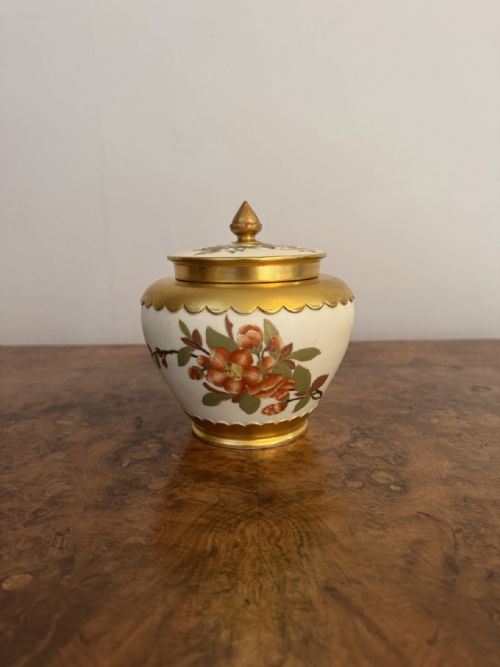
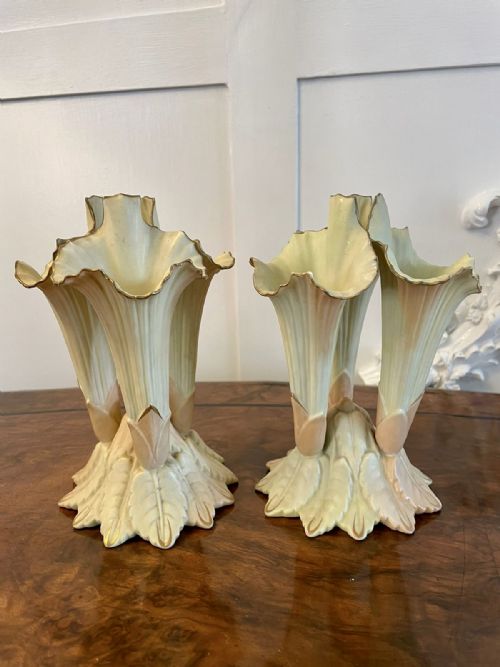
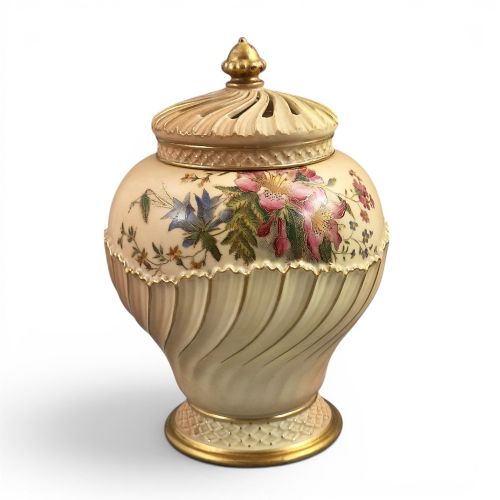
When you search for a gilded ivory vase, you encounter refined ceramic vessels created primarily during the late nineteenth and early twentieth centuries. These objects range from modest spill vases to elaborate potpourri jars with covers and grand pedestal ewers.
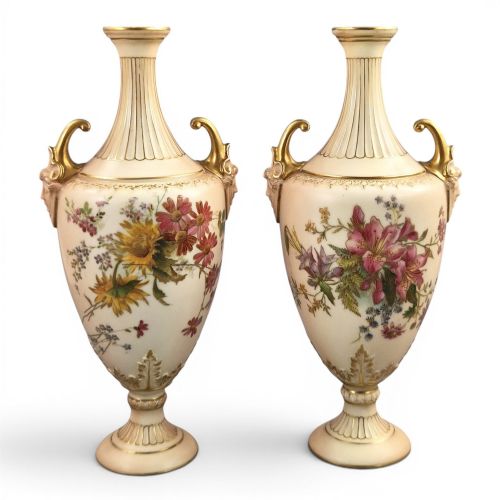
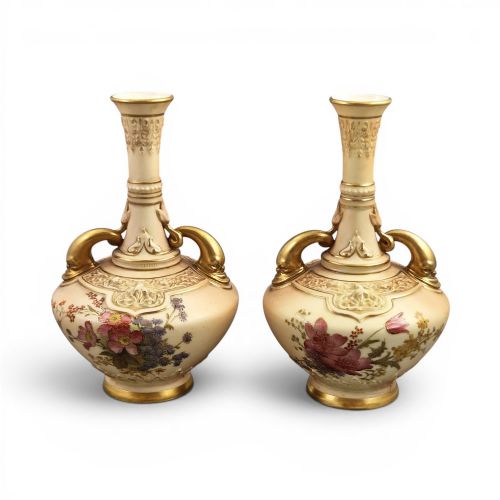
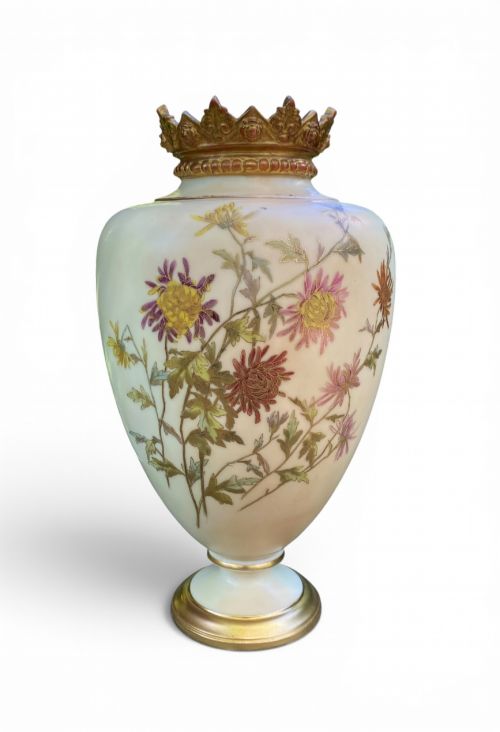
The pieces on this page are dominated by productions from the Royal Worcester factory alongside examples by Locke and Co. These manufacturers shaped porcelain into ovoid bodies, urns, and dolphin-handled shapes, often applying a soft blush ivory ground.
Forms span from simple cabinet vases to three-piece potpourri sets and matching pairs of ewers. Collectors find these items in styles running from Victorian Aesthetic Movement to Edwardian floral designs.
How they were made
Makers utilised fine porcelain as the foundational body for these vessels, applying specialised glazes to achieve the characteristic blush ivory surface. This ceramic base was then fired before artists added hand-painted details such as chrysanthemums and roses.
Gilding and gold leaf were applied to handles, rims, and borders to create a sharp contrast against the matte ivory background. Artisans often incorporated pierced gilt handles, enamel accents, and ceramic enamel to complete the decoration.
Listings span from 1870 to 1920, covering late Victorian and Edwardian periods through porcelain vessels decorated with enamel and gold leaf.
What varies in quality
Quality rests in the precision of the hand-painted floral motifs and the clarity of the signature from known artists like Jas Stinton or E Raby. The complexity of the vessel shape, such as pierced handles and crown covers, also elevates the standing of a piece.
The crispness of the gilding and the smoothness of the enamel work distinguish finer studio output from standard production pieces. Well-preserved gilding without rubbing maintains the visual impact intended by the original maker.
Royal Worcester·Locke and Co
The Gilded Ivory Vase Glossary
- Blush ivory
- A matte ceramic ground developed by Victorian potteries to resemble soft, tinted skin. It provides a subtle background for painted floral decoration.
- Ewer
- A large pitcher with a wide spout and a curved handle, often used as a purely decorative ornamental vase in late nineteenth-century interiors.
- Potpourri
- A jar or vase featuring a pierced or crown cover designed to hold dried scented plant material. These vessels often include internal liners and pedestals.
- Gilding
- The application of gold leaf, gold gilt, or powdered gold onto ceramic surfaces. It highlights handles, necks, and rims with metallic lustre.
- Spill vase
- A narrow cylindrical vessel intended to hold wooden spills used for lighting candles and fires. They frequently appear in matched pairs on this page.
Gilded Ivory Vase: Frequently Asked Questions
How were gilded ivory vases used?
These pieces served primarily as decorative ornaments on mantels, sideboards, and drawing-room tables during the Victorian and Edwardian periods. Potpourri jars also held scented dried petals to freshen domestic spaces.
Larger ewers and urns functioned as standalone artistic statements rather than functional water jugs. Their elaborate painted florals and gilt handles displayed the owner's taste and affluence.
How do I identify a Royal Worcester piece?
Look for factory backstamps underneath the ceramic base, which often include date ciphers indicating the exact year of manufacture between 1870 and 1920. The signature of artists such as James Stinton or E Raby further confirms the origin.
Characteristics include the specific blush ivory glaze combined with hand-painted chrysanthemums, roses, and raised gilding. Pierced gilt handles and crown covers are also common hallmarks of this pottery.
How should I clean a gilded ivory vase?
Dust the surface gently with a soft, dry brush to remove particles without disturbing the delicate enamel and gold leaf. Avoid using water, liquid cleaners, or chemical solvents on the painted areas.
Keep these vessels out of direct sunlight to prevent fading of the hand-painted floral pigments. Handle them by the body rather than relying on delicate applied handles.