




Blue Wool Kilim
A blue wool kilim brings flatweave artistry into a room, offering geometric patterns and rich texture shaped by tribal makers.
Blue Wool Kilim
A blue wool kilim originates from nomadic and village weaving traditions across Persia, the Caucasus, Anatolia, and Central Asia, created as utilitarian floor coverings, storage bags, or eating cloths. These textiles emerge in varied formats including area rugs, runners, cushions, and dining sofreh, reflecting the diverse domestic needs of weavers from groups such as the Baluch, Afshar, and Shahsavan.
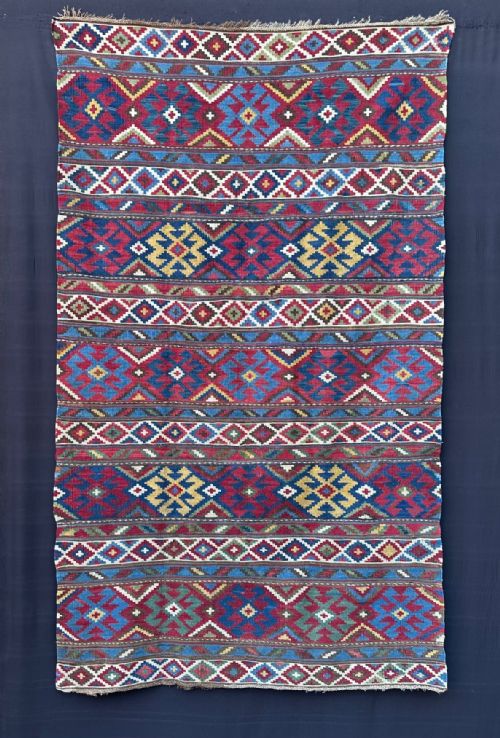
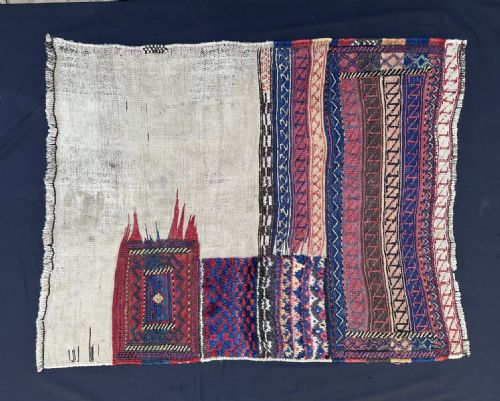
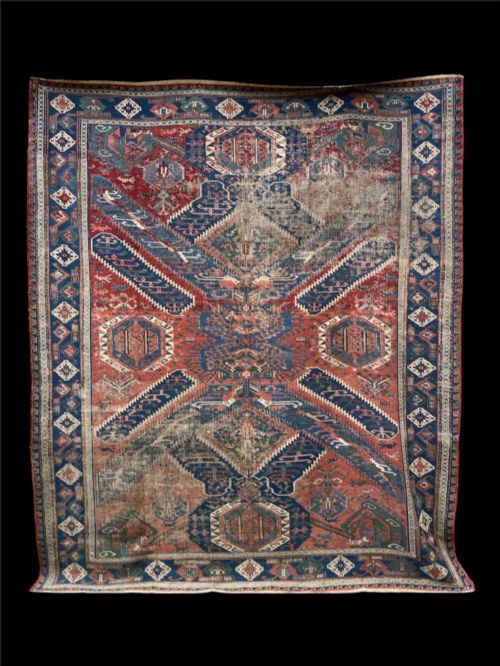
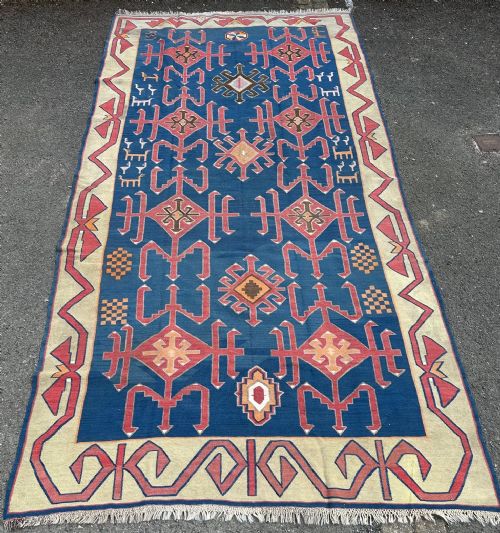
The pieces found here span the late nineteenth and early twentieth centuries, capturing traditional regional patterns from Shirvan, Kuba, and Senneh. Buyers encounter flatweave constructions that range from compact saddlebag faces and wheat sacks to room-sized carpets and multi-strip panels.
Tribal makers employed flat-weave techniques without pile, producing crisp geometric designs and banded motifs that translate easily into contemporary interior settings. Each textile carries the distinct aesthetic of its originating region, uniting practical utility with enduring cultural craft.
Materials and construction methods
Weavers relied primarily on hand-spun wool and cotton, occasionally incorporating goat hair to add structural durability to heavy-use items like storage bags and flatweave rugs. These materials were worked on portable horizontal looms set up by nomadic groups or village workshops.
Natural dyes provided the palette, producing soft colours and deep tones that developed patinas over decades of use. Skilled hands intersected weft threads tightly over the warp to create flat, reversible surfaces featuring sharp linear patterns and chevron designs.
The inventory encompasses diverse forms, including area rugs, runners, storage bags, cushions, and dining sofreh cloths.
Factors defining the grade
The quality of a flatweave rests in the tightness of the weave and the precision of the geometric lines, where closely packed weft threads create a firmer, more resilient fabric. Finer examples display meticulous handling of multi-strip assembly and complex banded or shield motifs.
Materials contribute significantly to distinction, with finely spun wool and well-preserved natural dyes yielding softer handling and greater depth of colour. The structural integrity of the edges and the complexity of regional designs, such as Sumak work or pictorial sofreh layouts, elevate the standing of the piece.
The Blue Wool Kilim Glossary
- Kilim
- A flat-woven carpet or rug produced without a pile by tightly interlocking weft threads over a warp. This technique creates a lightweight, reversible textile with sharp geometric motifs.
- Sofreh
- A woven cloth used traditionally for dining, food preparation, or bread storage among nomadic tribes. These textiles often feature specialised rectangular formats and tribal symbols.
- Sumak
- A decorative flatweave technique utilising wrapping threads around warp strands to produce a textured, raised surface resembling embroidery. It offers greater structural weight than standard kilim weaving.
- Mafrash
- A large, rectangular storage bag constructed in panels, used by nomads for bedding and household goods during migration. Complete examples comprise multiple woven sides joined together.
- Warp
- The vertical foundation threads stretched tightly across a loom before weaving begins. The weft threads are passed through these structural lines to form the fabric.
Blue Wool Kilim: Frequently Asked Questions
How were kilims used originally?
Nomadic groups and villagers utilised these flatweaves as floor coverings, blankets, and eating cloths for daily domestic life. Many examples also served practical functions as transport sacks, storage bags, and wall hangings.
Larger formats accommodated dining and gathering spaces within tribal tents and homes, while smaller bags carried provisions during seasonal migrations.
Where do these textiles come from?
The pieces originate from traditional weaving regions across Persia, the Caucasus, Anatolia, and Central Asia. Specific tribal groups, including the Baluch, Afshar, and Shahsavan, developed distinct regional patterns and colour palettes.
Geographic origins are identifiable through specific geometric vocabulary, border arrangements, and structural assembly methods unique to each local culture.
How should I care for a vintage kilim?
Regular gentle vacuuming without a beater bar removes surface dust and prevents grit from settling into the flatweave structure. Professional textile cleaning is recommended for deeper maintenance to protect natural wool fibres.
Placing a breathable rug pad underneath prevents slipping and reduces friction against hard flooring surfaces, helping preserve the textile over time.
What defines a sofreh?
A sofreh is a specific type of tribal textile created for serving meals, rolling bread dough, or gathering food. These cloths display distinct rectangular proportions and symbolic geometric layouts tied to tribal customs.
They were woven by various nomadic groups, including the Bakhtiari and Afshar, functioning as central focal points for communal eating practices.