




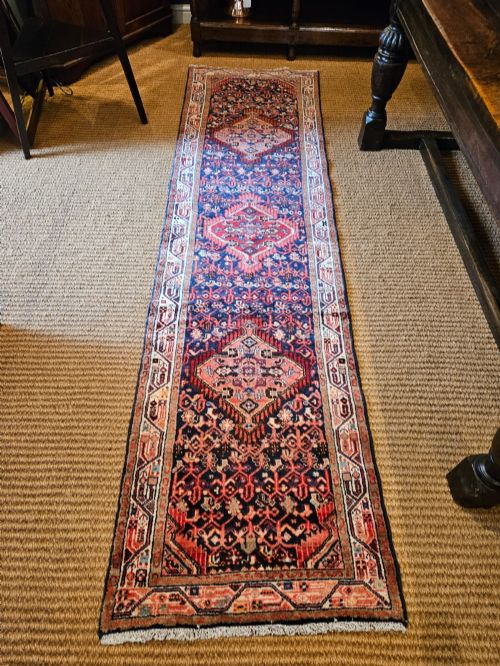
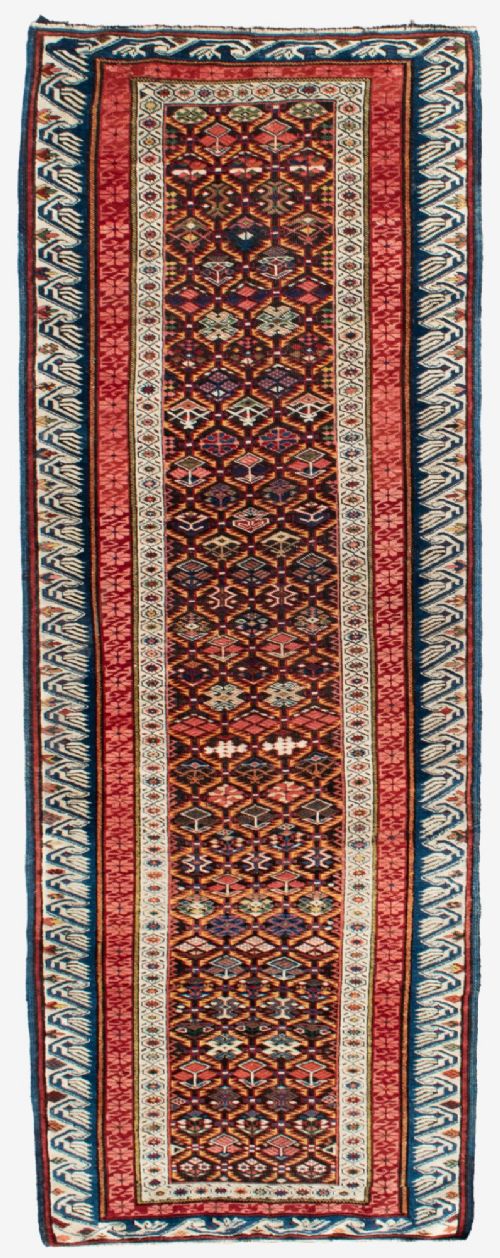
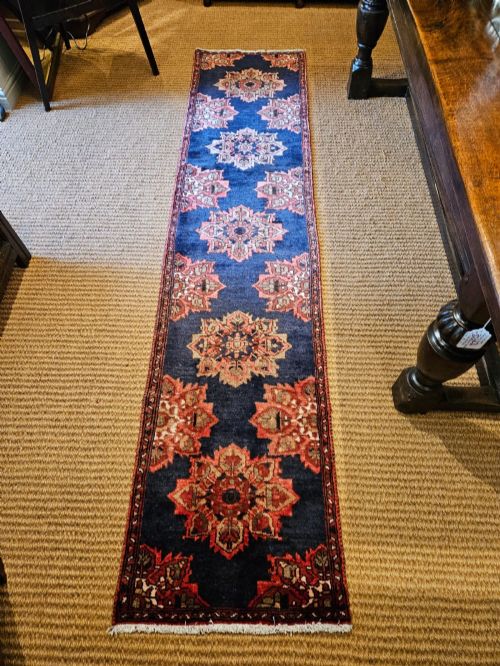
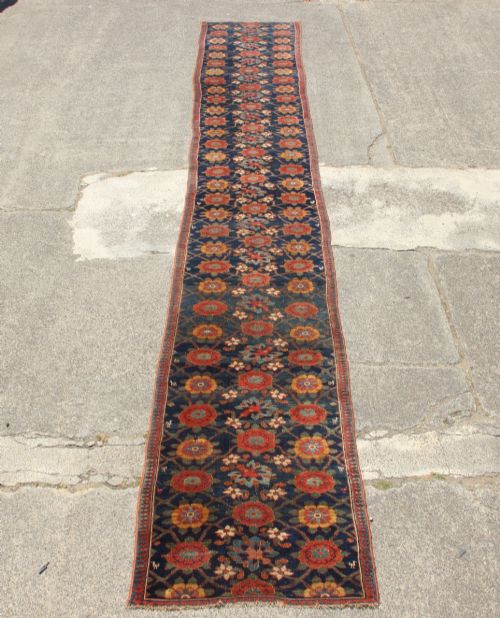

Blue Wool Hallway Carpet
A blue wool hallway carpet brings enduring warmth and deep colour to narrow domestic spaces through woven antique runner rugs.
Blue Wool Hallway Carpet
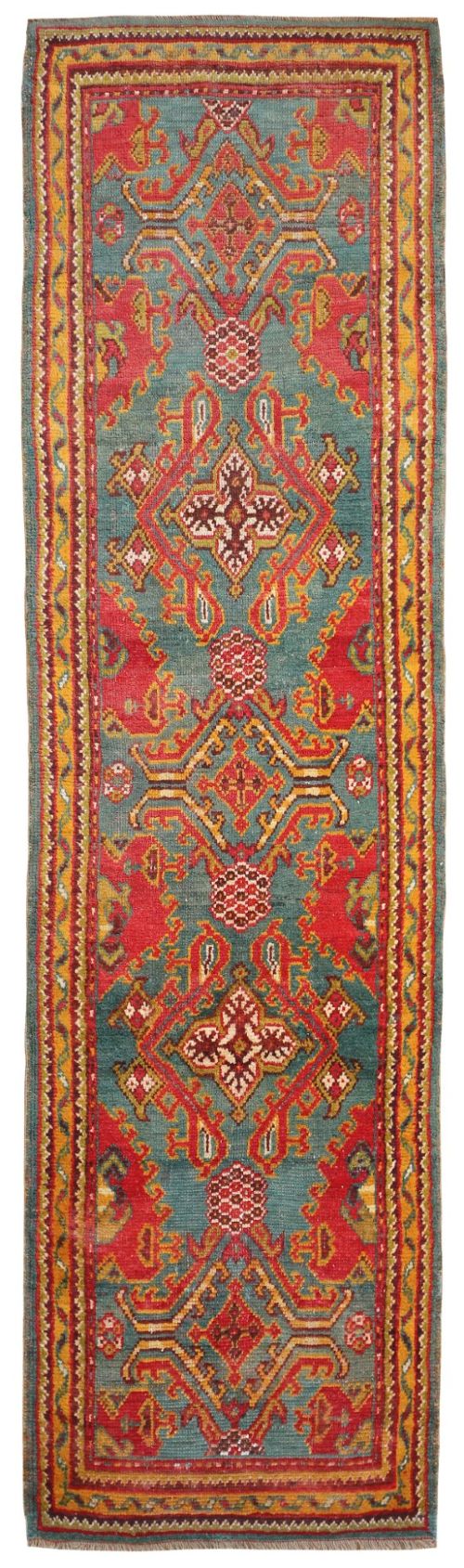
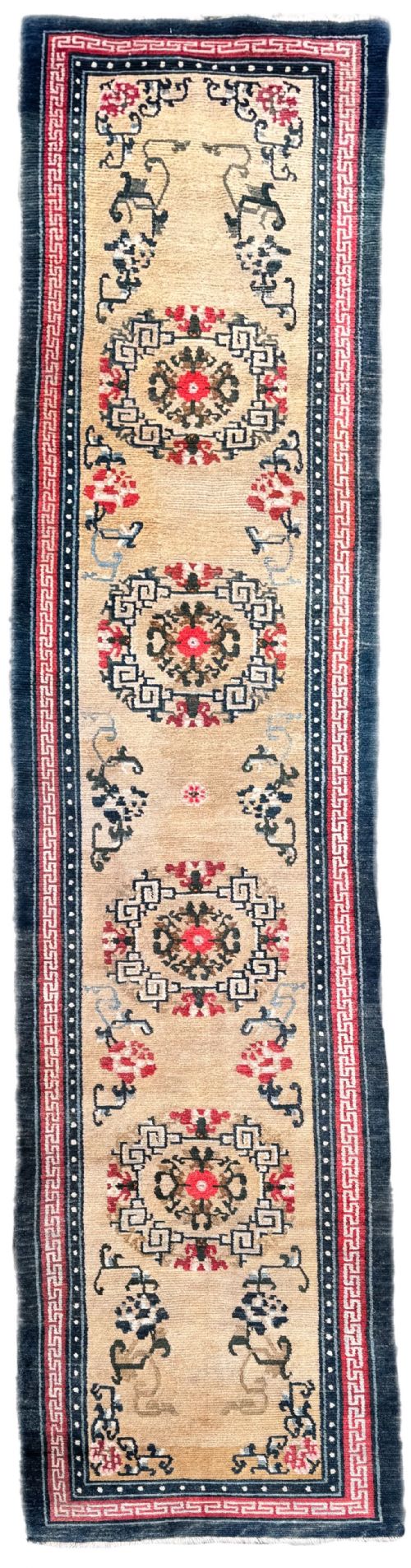
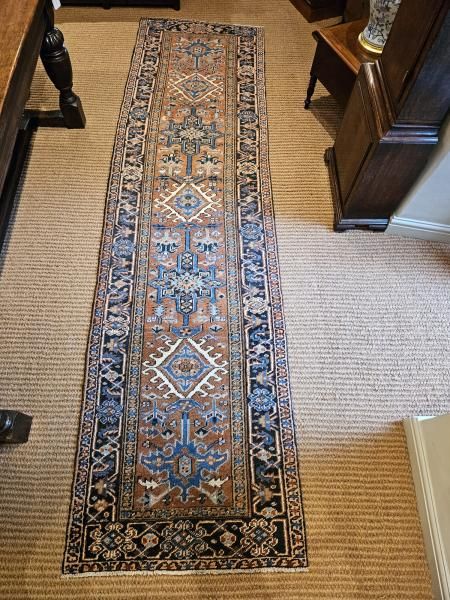
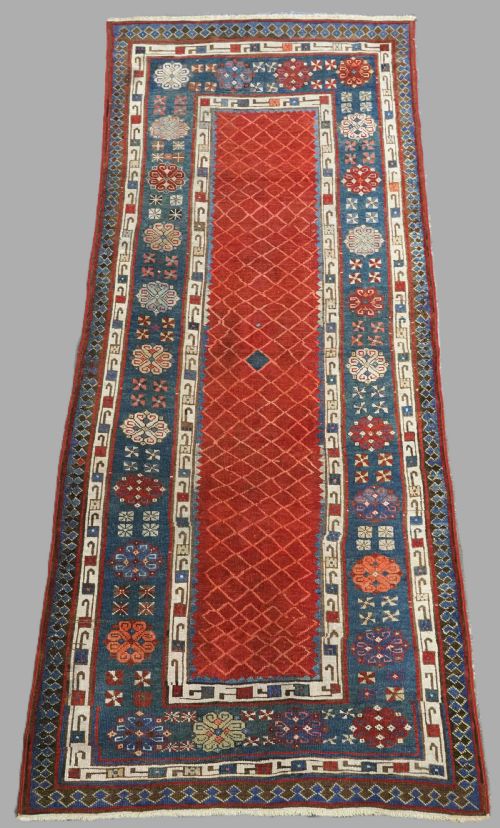
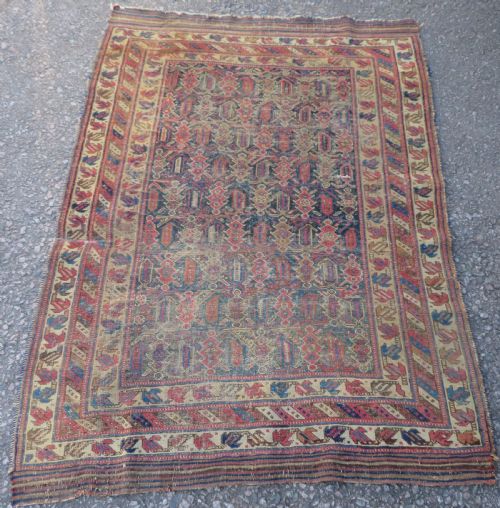
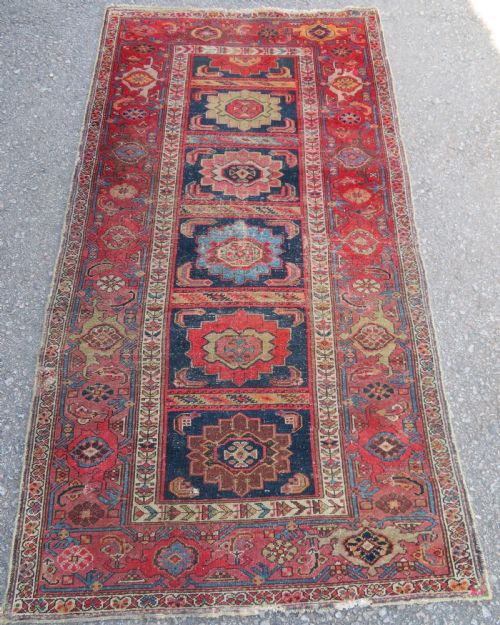
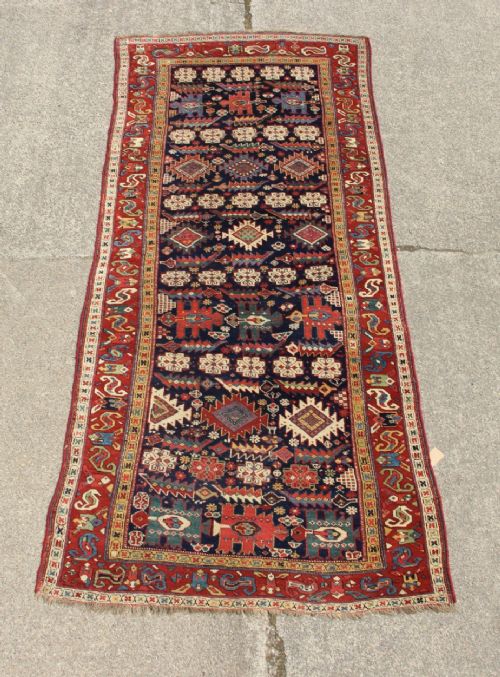
A blue wool hallway carpet is a narrow, elongated textile designed specifically for corridors and passages, appearing primarily as antique runner rugs spanning the late nineteenth century through to the early twentieth century. Buyers seeking this phrase encounter long format floor coverings originating from traditional weaving centres across Persia, the Caucasus, Anatolia, Tibet, and Morocco.
The selection on this page centres on regional styles including Heriz, Ushak, Kurdish, and Caucasian tribal pieces, each offering distinct geometric or medallion formats suited to long spaces. These floor coverings bridge utility and heritage craftsmanship, turning functional corridors into gallery-like passages using durable wool.
Materials and construction
Construction relies fundamentally on wool, cotton, and hand-spun wool, forming dense pile surfaces knotted onto sturdy foundation warps and wefts. Weavers utilised natural dyes to achieve deep navy and indigo tones that anchor the palette of these long formats.
Techniques vary by origin, from the heavy geometric weaves of Kurdish and Caucasian workshops to the finer knotting found in Persian Heriz and Fereghan productions. This traditional hand-knotting ensures the structural resilience required for heavy foot traffic in narrow hallways.
Listings feature traditional wool floor coverings dated from the late 19th century through the 1930s.
Qualities of distinction
Quality rests upon the fineness of the knotting and the crispness of the tribal or floral design, distinguishing master regional output from simpler village work. The integrity of the hand-spun wool and the saturation of the indigo dye further separate standard runners from exceptional examples.
Proportion and structural alignment also define superior pieces, as many antique runners exhibit irregularities from handloom weaving that add character without compromising durability. Well-preserved edges and balanced borders indicate superior historical care during generations of domestic use.
The Blue Wool Hallway Carpet Glossary
- Runner
- A long, narrow carpet format specifically proportioned for corridors, hallways, and staircases. These pieces measure significantly longer than they are wide.
- Pile
- The upright yarn loops or cut ends that form the usable surface of a carpet. Density of pile directly influences longevity.
- Warp
- The vertical foundation threads stretched tightly on the loom before knotting begins. Cotton and wool are typical materials for these structural elements.
- Weft
- The horizontal threads passed between warp threads to lock the knots in place. This technique creates the firm grid underlying traditional rugs.
- Medallion
- A central ornamental motif set into the field of a carpet. Regional weavers often anchor their geometric or floral compositions with this focal design.
Blue Wool Hallway Carpet: Frequently Asked Questions
How do I choose the right length?
Measure your corridor carefully while leaving a uniform border of exposed flooring around the perimeter of the rug. This placement frames the passage visually and prevents the edges from curling against skirting boards.
Keep in mind that antique runners come in fixed historical dimensions rather than custom lengths. Select a piece that leaves balanced clearance at both ends of the hallway.
Are these carpets suitable for heavy traffic?
Traditional hand-knotted wool runners possess inherent resilience against daily footsteps due to dense pile construction and sturdy natural fibres. Wool naturally resists crushing and springs back after pressure.
Using a quality underlay beneath the carpet prevents slipping and absorbs impact, extending the lifespan of antique textiles in busy corridors.
How do I clean an antique wool runner?
Regular gentle vacuuming without a rotating brush roll removes surface grit before it settles deep into the wool pile. Address spills immediately by blotting with a clean, dry cloth rather than rubbing.
Professional specialist cleaning remains essential for antique rugs every few years to protect natural dyes and fragile historical foundations.
What indicates a tribal origin?
Tribal runners typically display bold geometric motifs, asymmetrical details, and simpler stylized animal or plant forms rather than courtly floral curves. Weavers working in nomadic or village settings expressed local traditions through these patterns.
Irregularities in width and spontaneous colour shifts often accompany these hand-spun pieces, reflecting the individual hand of the maker.