


Narrow Oriental Carpet
A narrow oriental carpet brings linear geometry and rich dye work to corridors and halls, shaped by village and tribal weavers across generations.
Narrow Oriental Carpet
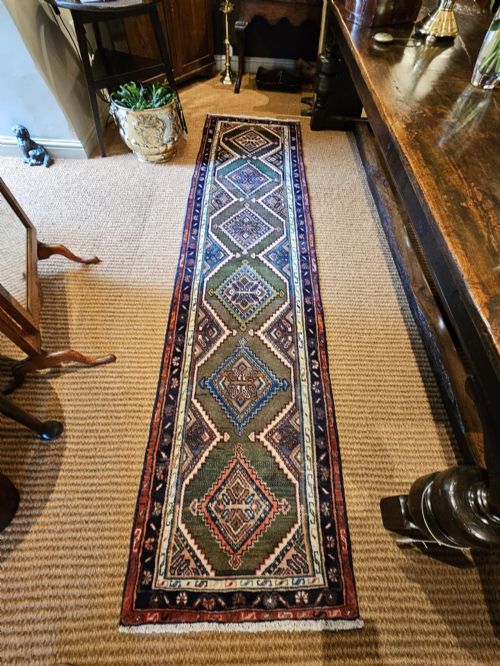
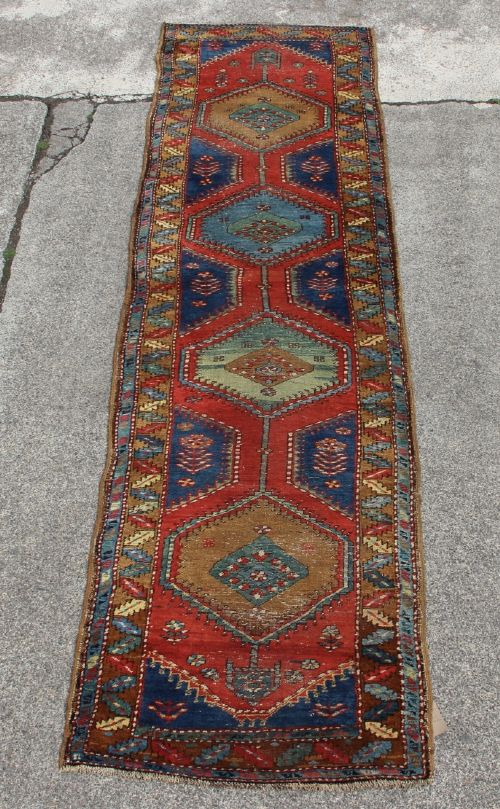
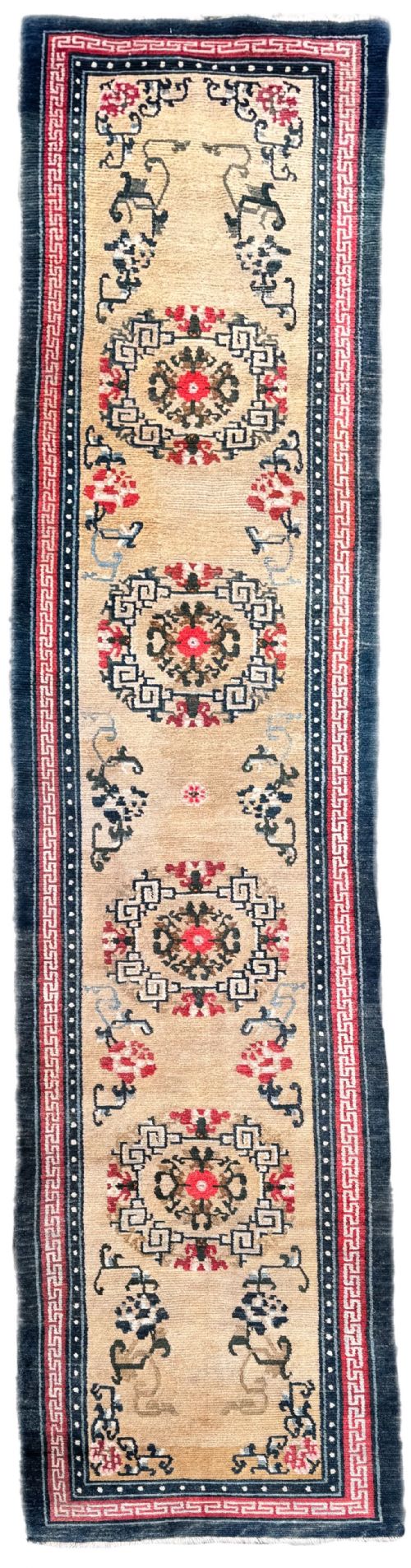
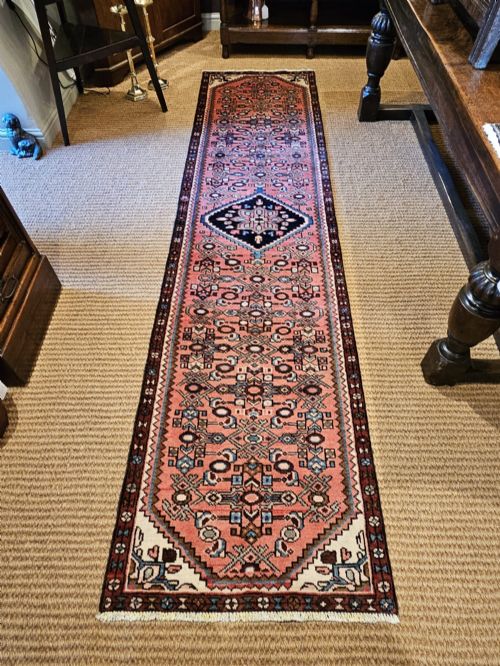
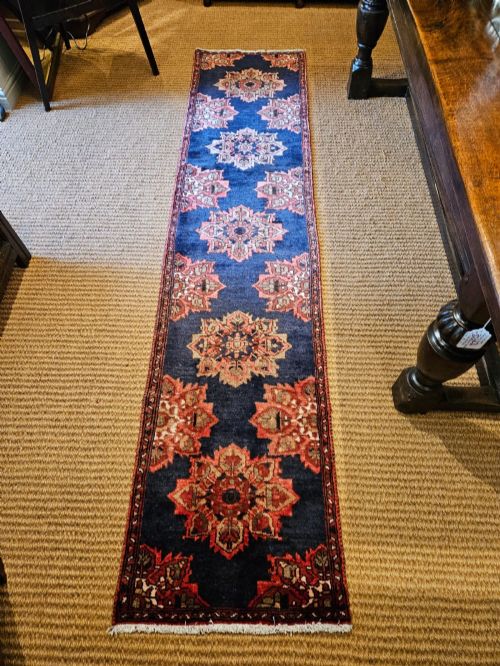
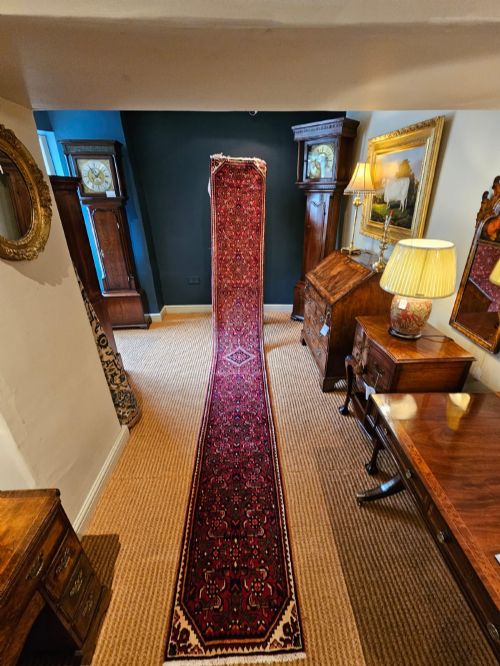
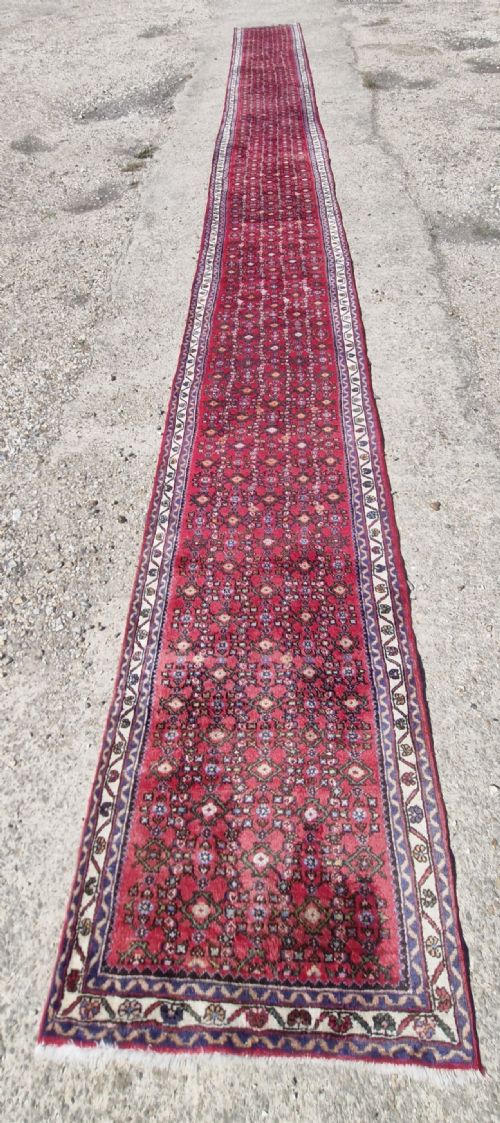
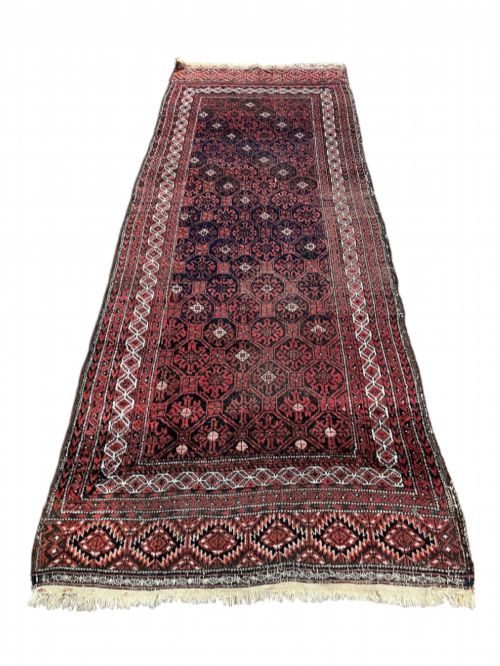
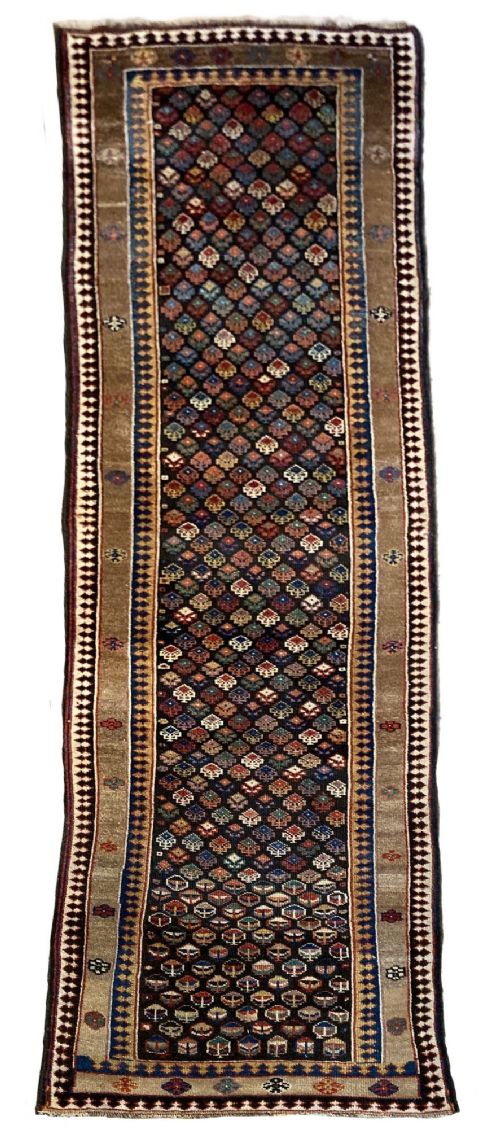
A narrow oriental carpet primarily takes the form of hallway runners and elongated floor coverings designed for corridors, landings, and narrow spaces. These pieces span from the late nineteenth century into the mid-twentieth century, originating from Persian, Turkish, Caucasian, and Tibetan weaving traditions.
The format focuses on length over width, producing distinct proportions suited to passageways. Tribal workshops and village centres produced these textiles using traditional floor looms to meet domestic needs.
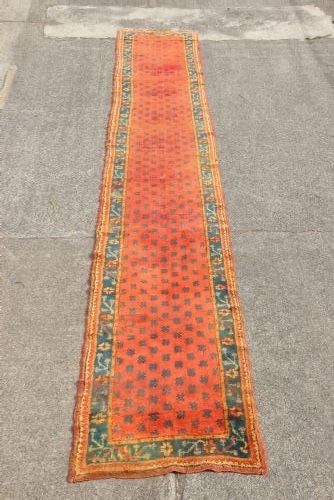
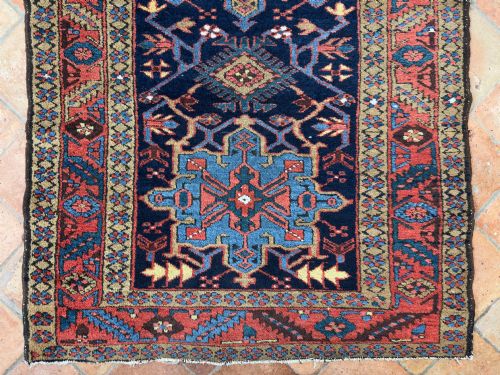
Examples on this page draw from established regional designs, including Heriz, Hamadan, Kurdish, and Oushak traditions. Each piece reflects the specific decorative vocabulary of its geographic origin.
Materials and Construction
Weavers constructed these carpets predominantly from wool pile set on cotton foundations, occasionally incorporating hand-spun wool and camel hair. The choice of fibre directly influences the weight and handle of the rug.
Natural dye stuffs provided the palette for these textiles, yielding deep blues, reds, and olive greens that soften with age. Pile was knotted by hand onto warp and weft threads, creating a dense surface capable of withstanding heavy foot traffic.
Some hallways apparently demanded thirty-two feet of uninterrupted Persian geometry.
Assessing Quality and Execution
Quality in a narrow oriental carpet rests on the precision of the knotting and the density of the weave. Tighter knots allow for sharper definition within geometric and floral motifs.
The integrity of the materials also dictates standard, with hand-spun wool and stable foundational cotton yielding superior durability. Consistency in width along the entire length of the runner indicates skilled execution at the loom.
The Narrow Oriental Carpet Glossary
- Runner
- A long, narrow carpet designed specifically for hallways and corridors. Its proportions balance length with a restricted width.
- Pile
- The upright loops or cut ends of yarn that form the surface texture of the carpet. Pile depth varies according to regional tradition.
- Warp
- The vertical threads stretched lengthwise on the loom that carry the structural load of the rug. Weavers tie knots directly onto these parallel strings.
- Weft
- The horizontal threads passed alternately over and under warp threads to bind the knots in place. This technique secures the structural integrity of the weave.
- Kilim
- A flat-woven carpet produced without pile, often utilised for runners and transitional floor coverings. These pieces rely on interlocking weft threads to form patterns.
Narrow Oriental Carpet: Frequently Asked Questions
Where should I place a narrow runner?
These carpets suit hallways, landings, and long corridors where standard rectangular rugs fail to fit. Their elongated proportions guide movement through domestic spaces while protecting wooden or tiled floors.
Position the runner away from excessive moisture and direct, harsh sunlight to preserve the natural wool fibres and vegetable dyes. Regular, gentle rotation distributes foot traffic evenly across the surface of the textile.
How do I identify a Persian runner?
Persian pieces often display specific regional characteristics, such as the geometric medallion systems found in Heriz carpets or the dense, all-over patterns typical of Hamadan and Kurdish village work. Examination of the knot structure and border motifs helps pinpoint the exact origin.
Local workshops utilised distinct colour palettes and wool preparations that separate Persian village weaving from Turkish or Caucasian counterparts. Comparing the field design against known regional markers clarifies attribution.
How do I care for an antique runner?
Maintenance requires gentle vacuuming without a rotating brush bar to protect the wool pile from unnecessary friction. Professional cleaning should occur infrequently and only by specialists experienced in antique textiles.
Using a breathable underlay prevents slipping and cushions the foundation threads against hard flooring. Promptly blot liquid spills with a dry white cloth rather than rubbing the affected area.