


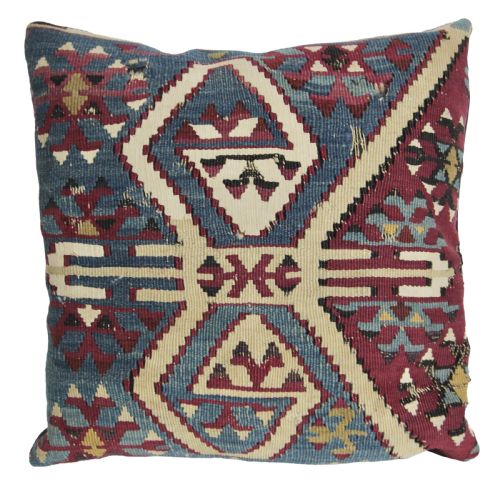


Blue Wool Cushion
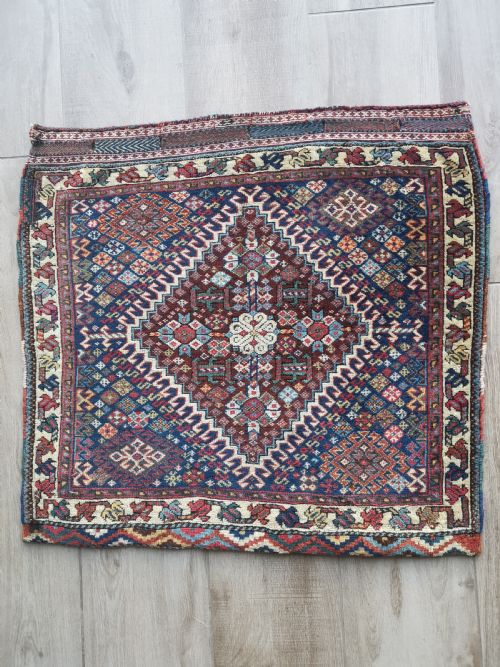
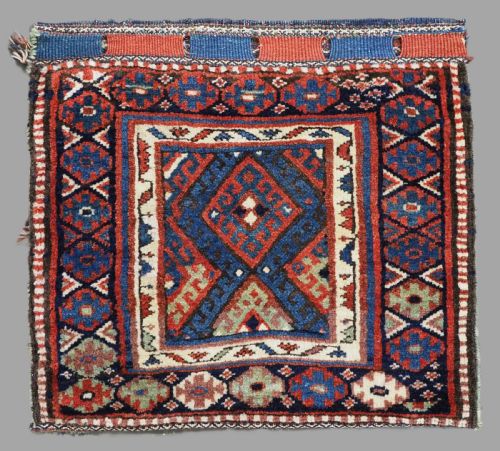
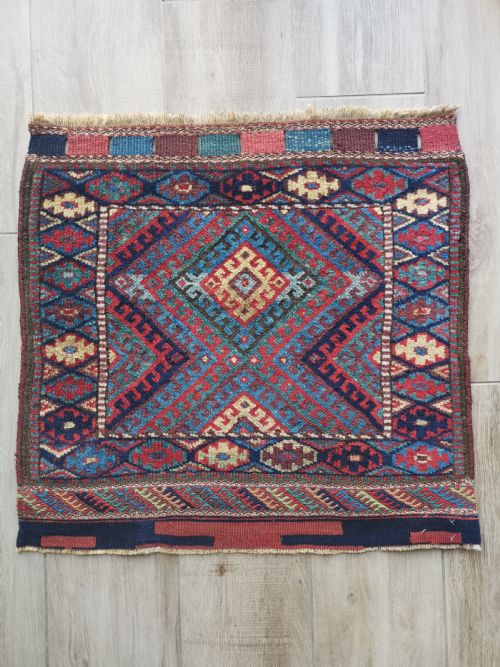
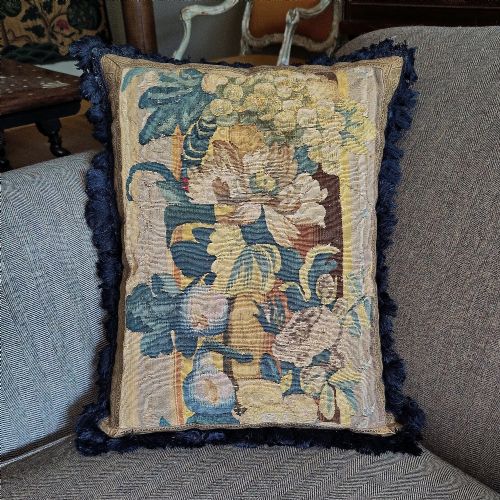
A blue wool cushion brings warmth and history to a room through repurposed tribal bagfaces and antique tapestry fragments.
Blue Wool Cushion
The assortment spans diverse regional forms such as yastics, wheat sacks, and rug bags, alongside Flemish tapestry cushion covers. Periods range from the seventeenth century through the nineteenth century up to the early twentieth century, reflecting varied weaving traditions from Persia and Europe.
Buyers encounter items that bridge tribal weaving practices and household decoration, uniting nomadic craftsmanship with functional seating accessories. Each piece carries structural evidence of its previous life as a bag or wall hanging.
Materials and construction
The construction relies heavily on wool, hand-spun wool, cotton, silk, and natural dyes, sometimes incorporating goat hair and linen for structural support and backing. Weavers utilised techniques such as soumak work, kelim flatweave, and tapestry weaving to create durable surfaces.
Nomadic makers and European ateliers handled textiles with dense weaves designed for daily utility, resulting in resilient cushion covers that withstand handling. Materials like lustrous wool interact with natural dye colours to produce depth across the face of each piece.
Listings feature materials such as wool, cotton, silk, goat hair, and linen, alongside natural dyes applied across nomadic and European workshops.
Quality variations
Quality depends upon the integrity of the original weave, the density of the hand-spun wool, and the survival of natural dye colours over time. Pieces retaining complete plain weave backs or crisp tribal motifs show higher preservation standards.
The distinction between superior examples and simpler items rests on the fineness of the knotting or flatweaving technique and the overall structural stability of the textile fragment.
The Blue Wool Cushion Glossary
- Bagface
- The decorated front panel of a nomadic saddlebag or storage sack, repurposed for cushions. It displays the primary woven pattern intended for display.
- Soumak
- A flatweaving technique producing a wrap-patterned surface that resembles embroidery on the reverse. This method creates a sturdy textile structure.
- Yastic
- A small pile-woven or flat-woven Turkish or Persian cushion cover traditionally used for sitting on floors or divans. They display regional tribal designs.
- Kelim
- A flat-woven carpet or textile lacking a pile, produced by tightly interweaving warp and weft strands. This technique forms crisp geometric patterns.
- Tapestry
- A form of textile art woven by hand on a vertical or horizontal loom using coloured weft threads. Seventeenth-century examples often depict figurative scenes.
Blue Wool Cushion: Frequently Asked Questions
How do I care for an antique wool cushion?
Keep these cushions out of direct sunlight to protect natural dyes from fading over time. Gentle surface cleaning preserves the fragile hand-spun wool and structural integrity.
Avoid immersion in water or harsh mechanical washing methods. Professional textile cleaning is recommended for antique fragments.
Where do these tribal designs originate?
The tribal textiles originate from various nomadic confederations and regions across Persia, including Kurdish, Afshar, Shahsavan, and Qashqai groups. Each tribe utilised distinct geometric motifs, animal symbols, and colour palettes.
European examples stem from Flemish weaving workshops producing verdure and figurative tapestry borders during the seventeenth century.
Can I use them for daily seating?
These pieces function well as decorative accents on armchairs, sofas, or beds. Their robust wool and flatweave construction handles normal domestic use.
Very fragile seventeenth-century tapestry fragments suit gentle display rather than heavy physical wear.