




Blue Winter Painting
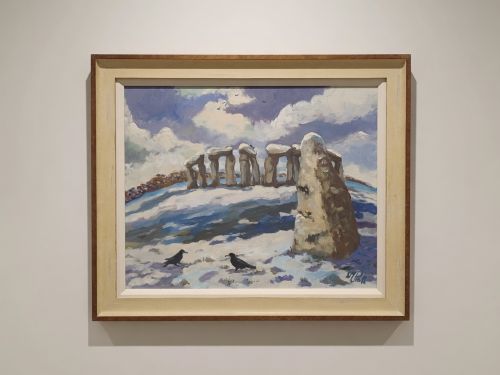
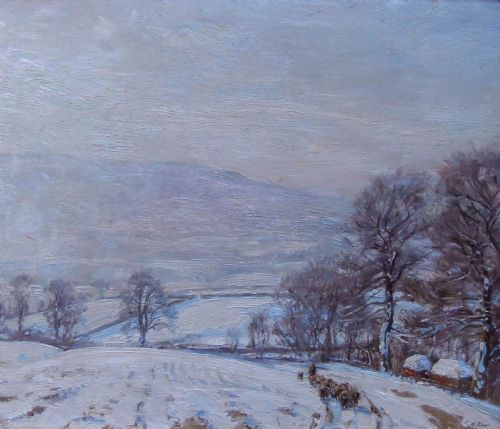
A blue winter painting captures the cold light and quiet frost of the colder months through the eyes of various artists.
Blue Winter Painting
A blue winter painting represents snowy landscapes, frosty mornings, and cold seasonal scenes captured on various supports. These artworks span from the nineteenth century through the mid-century modern period and later times.
The pieces on this page include fine art paintings, watercolours, and pastel works depicting specific locations from Stonehenge to Wensleydale and Normandy. Landscapes dominate the selection, often focusing on snow, ice, and winter atmospheres.
Makers and artists range from early twentieth-century painters to contemporary creators, utilising different regional styles such as British Impressionism and German Expressionism.
Materials and techniques
Artists utilise oil paint and watercolours applied to canvas, paper, wood, and glass supports. Canvas and paper form the primary surfaces for these winter scenes.
Techniques vary from detailed watercolour washes to expressive oil applications and pastel strokes, reflecting styles from realism to post-impressionism.
Listings feature works created between the nineteenth century and later than 1960, using oil, watercolour, and pastel on paper or canvas.
Assessing quality and execution
Quality rests in the handling of light and atmospheric depth, distinguishing a competent topographical record from a compelling winter atmosphere. The application of pigment on canvas or paper dictates the visual texture of the frost and snow.
The distinction between standard works and superior examples lies in the artist's ability to convey temperature and mood through colour harmony and brushwork.
Lucy Pratt·A. McDonald·Fred Lawson·Ernest Uden·Herbert Royle·William Tatton Winter·A. Winter Shaw·Ernest Higgins Rigg·Emily M. Paterson·William Cave Day
The Blue Winter Painting Glossary
- Watercolour painting
- A work executed with water-soluble pigments on paper. This medium allows for translucent washes that suit snowy skies.
- Oil on canvas
- Pigment bound in a drying oil applied to a stretched fabric support. This combination permits rich texture and deep tonal layering.
- German Expressionism
- An early twentieth-century modernist movement focused on evoking emotional states rather than physical reality. Works in this style use bold marks to express the harshness of winter.
- British Impressionism
- A painting style concerned with transient effects of light and weather in outdoor settings. Artists working in this manner capture natural light on winter landscapes.
Blue Winter Painting: Frequently Asked Questions
What periods do these winter paintings cover?
The selection spans from the nineteenth century through the 1920s, 1930s, 1940s, 1950s, 1960s, and later periods.
Most pieces originate from the early to mid-twentieth century, showing diverse stylistic approaches from realism to post-impressionism.
What materials were used for these artworks?
Artists employed oil paint, watercolours, ink, and pastel.
The supportive grounds include canvas, paper, wood, and glass.
How do I display a watercolour painting safely?
Watercolours require framing behind glass to protect the paper and pigments from atmospheric moisture and dust.
Keep them away from direct sunlight to prevent fading of the delicate washes.
Where do these winter scenes originate?
The locations depicted range across British landscapes such as Wensleydale and Wharfedale, alongside European scenes in France and Germany.
Some works also record specific historical contexts like wartime settings.