




Snowy Landscape Artwork
Snowy landscape artwork captures winter scenes across canvas and paper, offering buyers atmospheric depictions of frost and snow through oil and watercolour.
Snowy Landscape Artwork
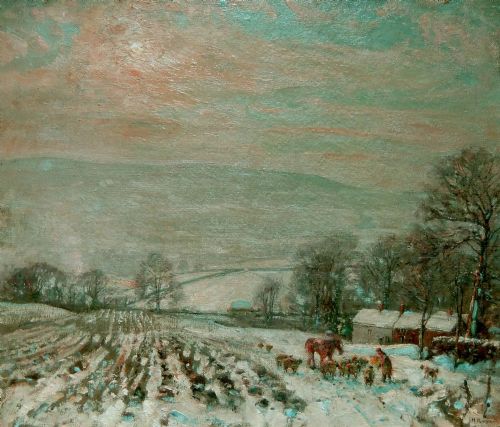
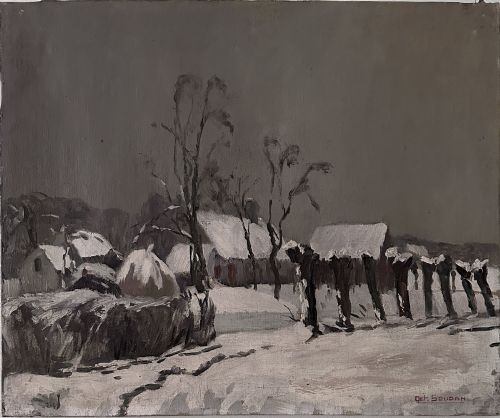
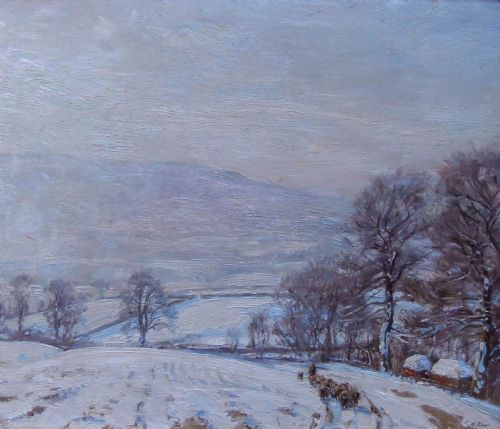
When you search for snowy landscape artwork, you encounter paintings capturing winter scenes through various mediums like oil and watercolour. These pieces range from Victorian depictions of sheep droving to mid-century British impressions of Yorkshire dales in winter.
The versions most frequently met on this page date from the nineteenth century through to the later twentieth century, reflecting rural villages, Canadian vistas, and European winter scenes. Painters utilise canvas, paper, and wood to convey the chill and quiet of snowbound fields.
Subjects often incorporate figures in the cold, from stagecoaches and shepherds to livestock navigating deep drifts. Stylistically, the selection spans British Impressionism, Modern British, and traditional approaches from distinct periods like the 1920s and 1930s.
Methods and materials
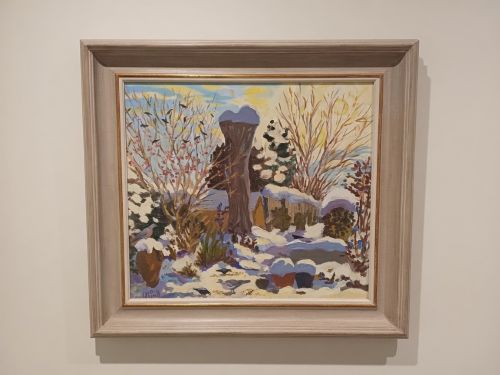
Artists apply oil paint directly onto canvas or wood panels, building rich textures to represent thick drifts of snow and frozen ground. Watercolours on paper offer a lighter touch, capturing the delicate mist and pale winter light of French or British scenes.
Frames made of wood often complement the paintings, protecting the edges of the canvas and paper works while matching the period aesthetic. Pigments blend earthy tones of brown and grey with bright whites to communicate the austere atmosphere of winter.
Listings span from the 19th century to later than 1960, utilising canvas, watercolour, and wood.
Markers of quality
Quality rests in the handling of light and shadow on white surfaces, distinguishing works that merely depict snow from those that convey its tactile chill. Superior handling of brushwork in oil or precise washes in watercolour brings depth to winter skies and frosted landscapes.
The distinction also lies in the strength of composition, where figures like sheep, stagecoaches, or farmhouses anchor the snowy expanse effectively. Strong provenance and attribution to listed artists elevate the standing of a piece within its period.
Herbert Royle·Lucy Pratt·Brian Shields Braaq·Fred Lawson·Ernest Uden·John Smith Atherton·Charles Jones·Pieter Cornelis Steenhouwer·George Graham·Ernest Higgins Rigg·John Richard Worsdale·Anthonij Anton Mauve
The Snowy Landscape Artwork Glossary
- Canvas
- A heavy woven fabric used as a surface for oil painting. It provides a durable ground that holds thick layers of pigment.
- Watercolour
- A paint consisting of pigment suspended in a water-based solution. It is applied to paper to create translucent washes of colour.
- British Impressionism
- A painting style focusing on light and everyday subjects in a loose brush manner. It emerged in Britain during the late nineteenth and early twentieth centuries.
- Mid-Century Modern
- A design and art movement spanning the middle decades of the twentieth century. It embraces simplified forms and contemporary aesthetics.
- Wood frame
- A protective border constructed from timber to enclose and display paintings. Many period works retain their original wooden surrounds.
Snowy Landscape Artwork: Frequently Asked Questions
What periods do these paintings cover?
The works span from the nineteenth century through the 1920s, 1930s, and 1950s, up to later than 1960.
This broad timeline incorporates Victorian realism, early twentieth-century British approaches, and mid-century modern perspectives.
Which materials are commonly used?
Paintings utilise oil paint on canvas, wood panels, as well as watercolour and ink on paper.
Artists frequently housed these works in period wood frames suited to the style of the era.
What subjects appear in these winter scenes?
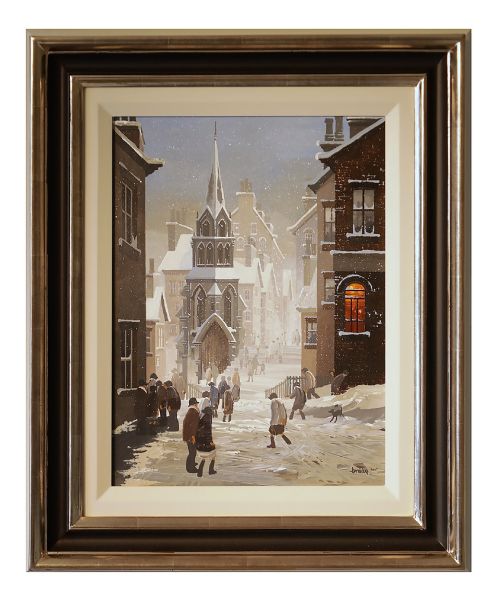
Common subjects include rural Yorkshire dales, livestock such as sheep and Highland cattle in snow, and village streetscapes.
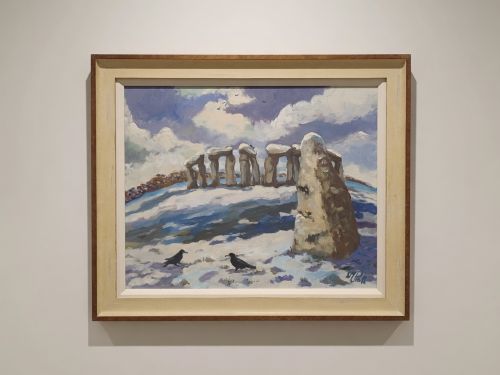
Other compositions feature stagecoaches, figures near barns, and specific locations like Stonehenge and French winter vistas.
How do watercolours differ from oils here?
Watercolours on paper provide translucent effects, often capturing mist and delicate winter light with thin washes.
Oils on canvas allow for heavier textures and impasto application, building up thick layers of white pigment to represent drifts.