


Blue White Pottery Tureen
These blue white pottery tureen pieces bring the transfer-printed landscapes of the Georgian and Victorian eras straight to the dining table.
Blue White Pottery Tureen
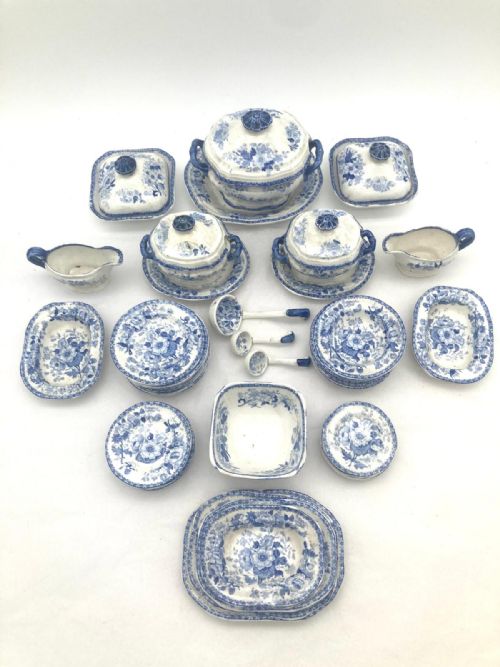
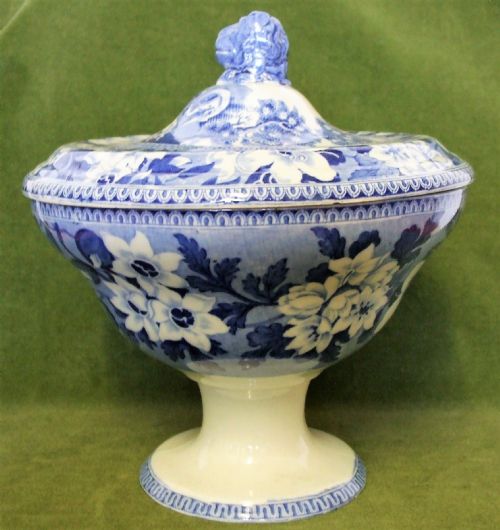
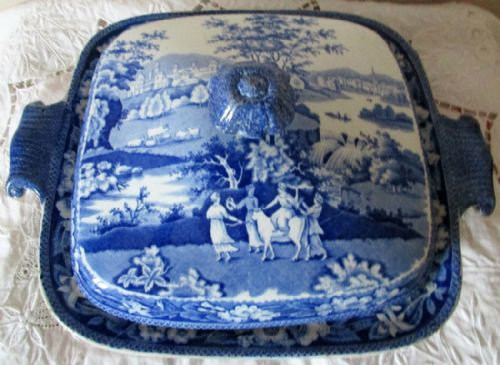
A blue white pottery tureen serves as a deep vessel designed for soups, sauces, or vegetables, usually accompanied by a matching cover and sometimes a stand or ladle. These pieces range from full-sized soup tureens down to smaller vegetable tureens and miniature child's service items.
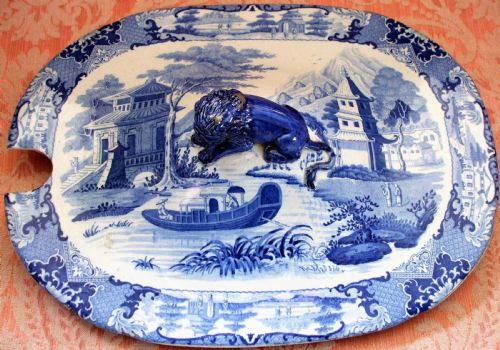
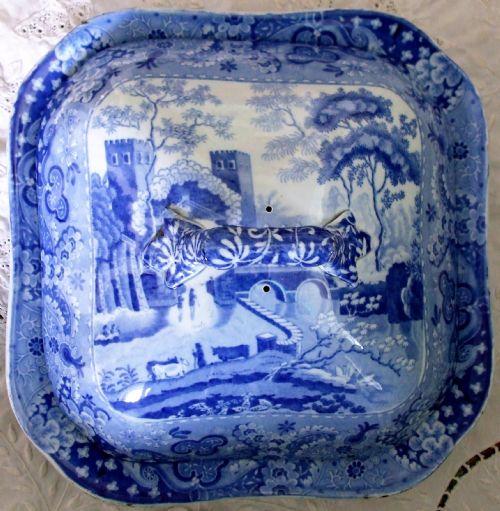
Most examples found on this page date from the nineteenth century, spanning Georgian and Victorian periods. Collectors encounter named topographical, architectural, and figural patterns such as Canton River Scene, Castle, and Elephant.
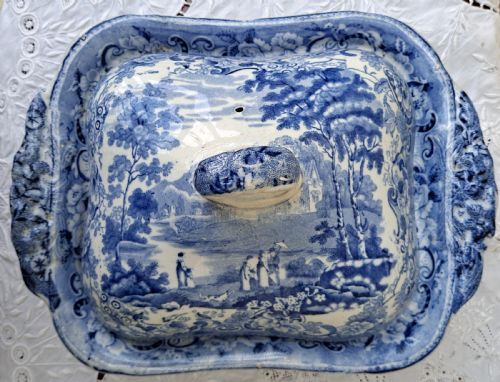
The form often includes footed bowls, lidded vegetable dishes, and accompanying stands with transfer-printed ornamentation. Production centres on English earthenware and pearlware traditions from this era.
Materials and Techniques
Potters of the period shaped these vessels from earthenware and pearlware, applying a smooth glaze over the ceramic body. Lead glaze formulations provided a glossy protective coating that sealed the porous clay underneath.
Decoration relied on blue and white transfer printing, a technique where engraved copper plates transferred detailed patterns onto tissue paper before being applied to the ceramic surface. This process allowed workshops to produce intricate architectural and pastoral scenes consistently.
Listings feature earthenware, pearlware, and glazed ceramic bodies decorated with nineteenth-century transfer printing.
Evaluating Quality
Quality rests upon the crispness of the transfer print and the balance of the cobalt blue tones across the ceramic surface. Smudged lines or uneven glaze application alter the visual clarity of the landscape motifs.
The survival of ancillary pieces, such as matching covers, stands, and ladles, dictates the integrity of the service. Complete sets and tureens retaining their original components command greater interest among collectors.
Robert Hamilton·James Wallace and Co·J and R Clews·John Rogers and Son·John and Richard Riley·Spode·Ridgway·Minton·Wedgwood·Don Pottery·Middlesbrough Pottery·Ralph Stevenson of Cobridge
The Blue White Pottery Tureen Glossary
- Pearlware
- A refined earthenware developed in the late eighteenth century featuring a subtle bluish-white glaze that created a paler background for transfer-printed designs. This body preceded standard Victorian white ironstone.
- Transfer printing
- A decoration method using an engraved copper plate to transfer ink onto tissue paper, which was then pressed onto the ceramic biscuit before glazing. It enabled complex pictorial scenes to be replicated rapidly.
- Flow blue
- A ceramic printing style where cobalt blue intentionally bled into the surrounding white glaze during firing, creating a soft, hazy effect popular during the mid-nineteenth century.
- Earthenware
- A porous pottery body fired at lower temperatures than stoneware or porcelain, requiring an impermeable glaze for liquid containment. Most nineteenth-century dining vessels utilised this material.
- Tureen
- A large, deep serving bowl with a lid, used originally for serving soups, stews, or boiled vegetables at the table. Smaller versions functioned specifically for sauces.
Blue White Pottery Tureen: Frequently Asked Questions
What were blue white pottery tureens used for?
These vessels held soups, sauces, and cooked vegetables at formal dining tables during the Georgian and Victorian periods. Their lidded designs kept contents warm between the kitchen and the dining room.
Larger soup tureens sat centrally on the table, while smaller vegetable tureens and sauce tureens flanked the main dishes as part of an integrated table service.
How do I date a nineteenth-century tureen?
Dating relies on stylistic markers, impressed pottery marks on the base, and the specific blue and white transfer pattern recorded by the manufacturer. Earlier Georgian pieces often utilise pearlware bodies with classical or topographical views.
Victorian examples frequently transition towards heavier earthenware bodies and blurrier flow blue decoration techniques. Comparing the printed pattern name against known historical potteries narrows the production window.
Are matching covers and ladles common?
Finding a complete tureen featuring its original cover, stand, and ladle remains uncommon due to centuries of domestic use and accidental breakage. Surviving sets where all components match in paste, pattern, and glaze colour are prized by collectors.
Many surviving pieces retain their base and cover while missing the matching ladle or under-plate. Separate stands and ladles often circulate independently in the antiques market.
How should I display a ceramic tureen?
Display these vessels on sturdy sideboards, in glazed cabinets, or on open shelving where their printed transfer scenes remain visible. Placing lids slightly askew or resting ladles beside the base highlights the functional nature of the pieces.
Keep ceramic tureens away from direct sunlight and areas subject to sudden temperature shifts to protect the historical glaze and ceramic body over time.