




Blue White Porcelain Figures
Blue white porcelain figures bring painted cobalt decoration and modelled ceramic form together in pieces spanning English, continental, and Asian traditions.
Blue White Porcelain Figures
Blue white porcelain figures encompass modelled ceramic subjects decorated with cobalt pigment under the glaze, ranging from Chinese export pieces to European factory productions. Collectors searching for blue white porcelain figures encounter varied object types, including figural groups, table lamps, and decorative vases originating from the 17th century through the 20th century.
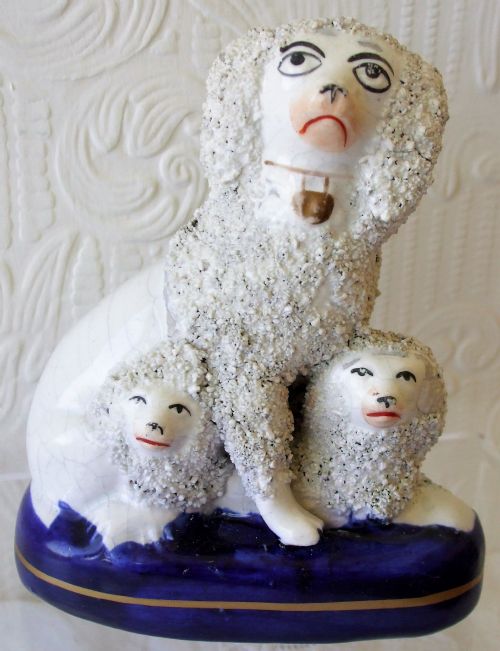
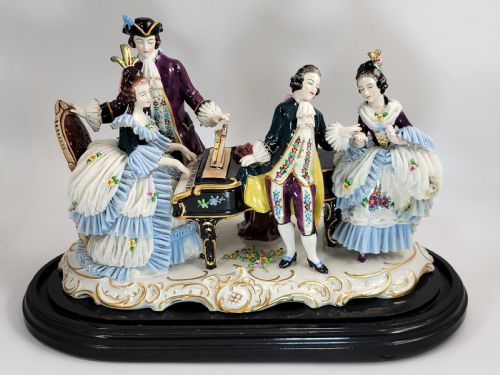
The selection includes wares spanning the Kangxi period, Qing Dynasty, and Victorian era, alongside Japanese Kutani and Imari works. Formats stretch from miniature dog figures and lace figural groups to large brush pots, jardinières, and French biscuit porcelain groups.
How they were made
Potters shaped these objects from soft-paste or hard-paste porcelain, earthenware, and biscuit porcelain, frequently applying cobalt glaze beneath a clear outer coat to achieve the characteristic blue and white surface. Certain examples incorporate gilding, gold leaf, enamel highlights, or added fabric elements such as applied lace ruffs.
Moulding and hand-modelling techniques allowed workshops to produce both intricate figural groups and functional vessels like teapots, coffee cups, and sauce boats. Firing temperatures determined the vitrification of the ceramic body and the depth of the cobalt pigment.
Listings feature porcelain, earthenware, enamel, and gold leaf across Victorian, Qing Dynasty, and Art Deco styles.
What varies in quality
Quality rests in the crispness of the modelled detail and the control of the cobalt pigment during firing, where superior pieces exhibit clean lines without blurring or bleeding into the glaze. The sophistication of the hand-painting separates standard production wares from finer factory outputs.
Bow Porcelain·Ernst Bohne Söhne·Chantilly·Mintons·Meissen
The Blue White Porcelain Figures Glossary
- Cobalt glaze
- A metallic oxide pigment applied beneath the glaze to produce deep blue decoration on ceramic surfaces. It remains stable at high kiln temperatures.
- Biscuit porcelain
- Unglazed ceramic fired to a hard, matte state that resembles marble. This finish highlights modelled form over surface gloss.
- Soft-paste porcelain
- An artificial ceramic compound containing glass frit and white clay, fired at lower temperatures than true hard-paste porcelain. It produces a warm tone beneath the glaze.
- Kangxi period
- A phase of Qing Dynasty ceramic production noted for cobalt blue painting and fine potting. Pieces from this era often carry reign marks.
- Imari
- A style of Japanese export ceramic featuring underglaze blue combined with iron red and gold. It gained popularity in European interiors.
Blue White Porcelain Figures: Frequently Asked Questions
How are blue white porcelain figures dated?
Dating relies on factory marks, stylistic conventions, and ceramic body characteristics recorded across different manufacturing periods. Examiners look at glaze texture, potting techniques, and cobalt tone to place an object in context.
Changes in trade routes and European imitation of Asian exports also provide markers for attribution, distinguishing 17th-century pieces from later Victorian revivals.
What is biscuit porcelain?
Biscuit porcelain is fired ceramic left unglazed to showcase fine sculptural detail without the softening effect of a glossy coat. It feels matte to the touch.
European factories utilised this body to mimic carved marble in figurative groups and portrait busts.
How do I care for antique figures?
Maintenance requires gentle dusting with a soft brush and avoidance of harsh cleaning agents that might damage delicate glazes, gilding, or applied lace. Display environments should remain stable.
Kept away from direct sunlight and heavy vibrations, porcelain bodies and painted surfaces retain their condition over generations.