

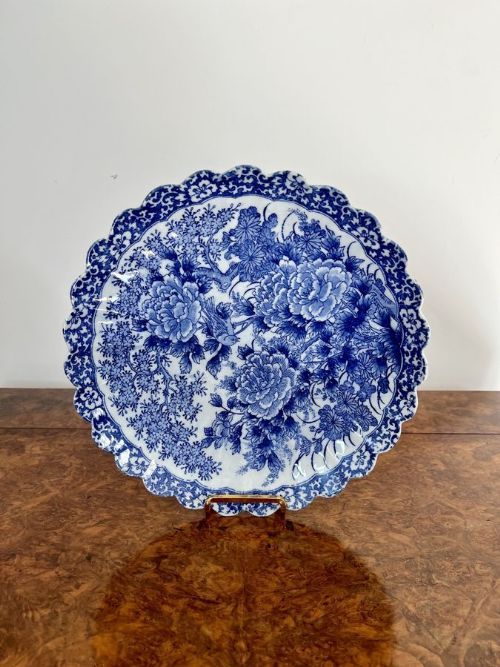


Blue White Floral Platter
A blue white floral platter brings durable everyday utility and striking cobalt contrast to any dining room.
Blue White Floral Platter
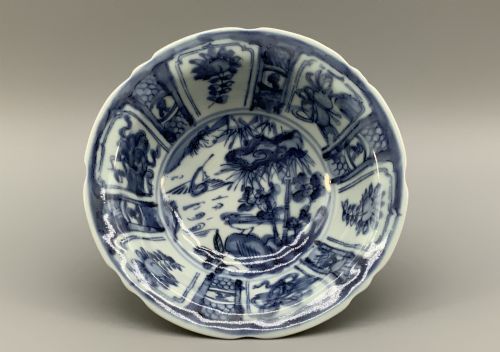
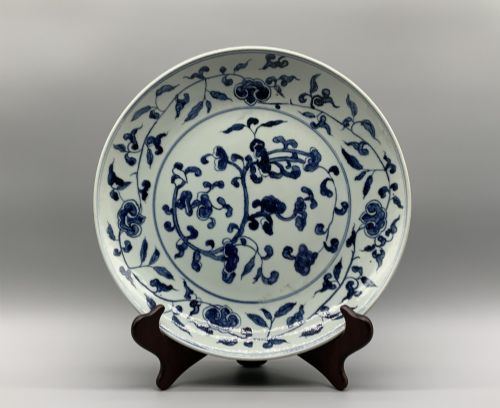
A blue white floral platter gathers domestic serving pieces and large decorative dishes created across multiple centuries and regions. When searching for a blue white floral platter, buyers encounter English earthenware, Chinese porcelain, and Japanese ceramics decorated with cobalt pigment under a clear glaze. These items range from large Victorian meat platters to 18th-century Delft chargers and Kangxi period porcelain bowls.
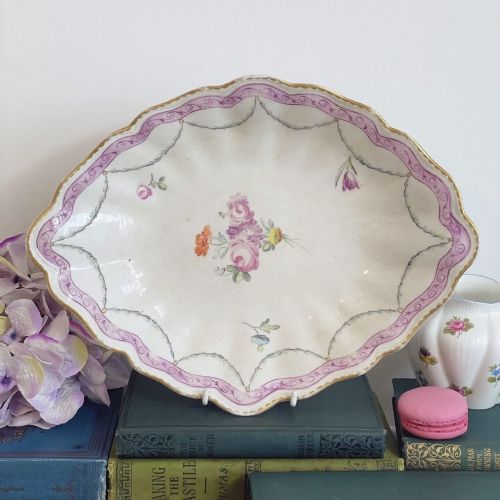
The selection on this page relies heavily on 18th-century, 19th-century, and 1900s pieces spanning Georgian, Victorian, Qing Dynasty, and Japanese Arita styles. Buyers most frequently meet large meat platters, serving dishes, and chargers designed for substantial feasts or prominent wall display. Forms vary from traditional scalloped edges and barbed rims to broad rectangular trays and deep lobed bowls.
English transferware versions sit alongside handpainted oriental chargers and tin-glazed earthenware dishes. The enduring appeal lies in the crisp visual contrast of cobalt blue against white ceramic backgrounds, depicting floral patterns, landscapes, and traditional motifs. Every piece carries the physical marks of its period, whether through the heavy ironstone body or the delicate translucency of early porcelain.
Materials and methods of production
Potters utilised ceramic, earthenware, porcelain, and stoneware bodies shaped into heavy meat platters, chargers, and serving dishes. The primary decorative effect relies upon cobalt pigment or cobalt glaze applied directly to the raw clay or unfired glaze before high-temperature firing. Tin glaze also appears on early earthenware chargers, providing an opaque white surface suitable for handpainting.
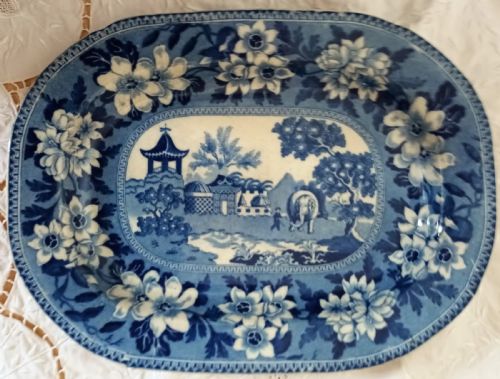
Transfer printing revolutionized English production during the Georgian and Victorian eras, allowing intricate floral and pictorial patterns to be mechanically applied from engraved copper plates onto pottery platters. In contrast, Asian works from the Kangxi period and Japanese Arita kilns relied upon skilled brushwork using cobalt pigment beneath a glossy glaze, sometimes complemented by gold leaf highlights.
Ironstone bodies offered superior strength for large meat serving platters, preventing warping during the intense kiln firing required for heavy Victorian and 19th-century utility wares. Delicately potted porcelain dishes required precise temperature control to achieve the characteristic white resonance and smooth surface finish seen in Chinese and Japanese examples.
Several heavy meat platters proudly bear the 'Elephant' pattern, reminding us that Georgian tables enjoyed unexpected animal themes alongside traditional florals.
Judging the quality of ceramic wares
Quality rests upon the clarity of the cobalt pigment and the crispness of the painted or transfer-printed floral design against the white ceramic ground. Superior examples display deep, vibrant blues without blurring or bleeding into the surrounding glaze, whereas lesser pieces suffer from muddy colour application or blurred transfer lines.
The physical potting of the dish dictates its refinement, separating heavy utility earthenware from finely potted porcelain chargers with smooth, even foot rims and unblemished surfaces. Glaze consistency also matters, as top-tier items maintain a uniform glassy shine free from excessive pitting, kiln grit, or drying cracks.
Maker attribution and historical integrity elevate certain platters, particularly when clear factory marks or period characteristics connect the object to renowned English potteries or specific Chinese imperial reigns. Well-preserved surfaces that retain their original glaze lustre without extensive modern restoration command greater appreciation from collectors.
John Rogers and Son·Minton·John Ridgway·Elkin Knight and Bridgwood
The Blue White Floral Platter Glossary
- Cobalt Glaze
- A vitreous coating containing cobalt oxide that produces a deep blue colour upon firing. This material provides the primary contrasting hue found across these historical dishes.
- Tin Glaze
- An opaque white glaze rendered milky by the addition of tin oxide. It creates a smooth pale surface traditionally used on earthenware chargers before painting.
- Transferware
- A pottery decoration technique where an engraved copper plate prints a design onto tissue paper, which is then transferred onto the ceramic body. This method enabled mass production of intricate floral patterns in the 19th century.
- Charger
- A large decorative plate or platter traditionally used for ceremonial dining or placed beneath smaller courses. These substantial pieces frequently feature prominent floral or landscape compositions.
- Ironstone
- A heavy, durable type of earthenware patented in the 19th century to imitate porcelain. It provided exceptional strength for large meat serving platters and heavy domestic use.
- Imari
- A traditional Japanese style of porcelain featuring underglaze blue and overglaze colours. These pieces display rich decorative density and scalloped edges.
Blue White Floral Platter: Frequently Asked Questions
How were blue and white platters used?
Historical records show these large ceramic dishes served joints of meat, poultry, and communal courses at formal dining tables throughout the Georgian and Victorian eras.
Many larger chargers and plates also featured pierced foot rims or hanging holes, allowing households to display the intricate floral patterns on dining room walls when not in active use.
Are these platters safe for modern food use?
While durable earthenware and ironstone bodies remain physically robust, antique glazes from the 18th and 19th centuries can contain trace metals from historic production methods.
Most collectors choose to utilise these items for decorative display, dry staging, or light serving rather than heavy daily dining or microwave heating.
How do I clean antique ceramic platters?
Gentle hand washing in lukewarm water with mild soap preserves the delicate cobalt glaze and prevents historical crazing from absorbing moisture.
Harsh abrasive pads and modern dishwashers must be avoided to protect the soft earthenware bodies, delicate transfer prints, and historical glaze surfaces.
How can I tell English pottery from Asian porcelain?
English pieces from this selection typically utilise heavier earthenware, stoneware, or ironstone bodies with transfer-printed or factory-marked floral designs.
Asian pieces from the Kangxi period or Japanese Arita kilns display translucent porcelain bodies, finer potting, and handpainted cobalt brushwork beneath a high-fired glaze.