


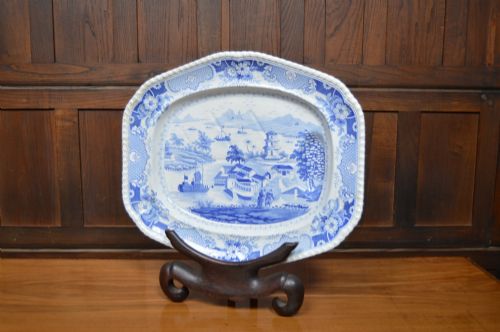
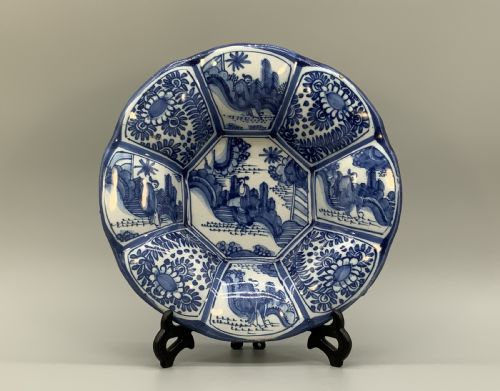
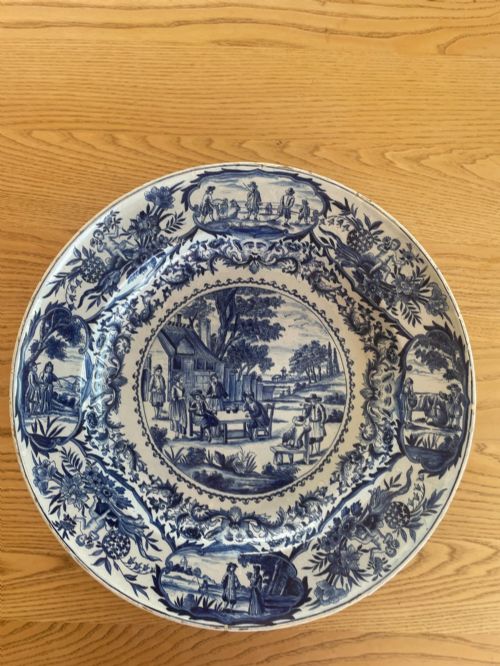
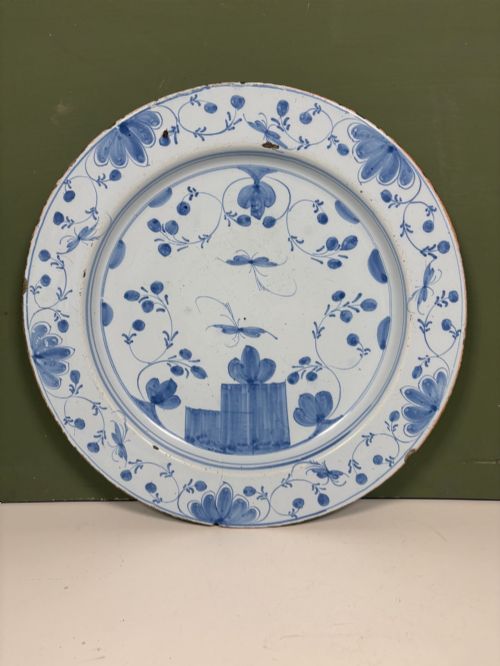


Blue White Display Platter
These large blue white display platter examples bring centuries of ceramic artistry to a wall or cabinet.
Blue White Display Platter
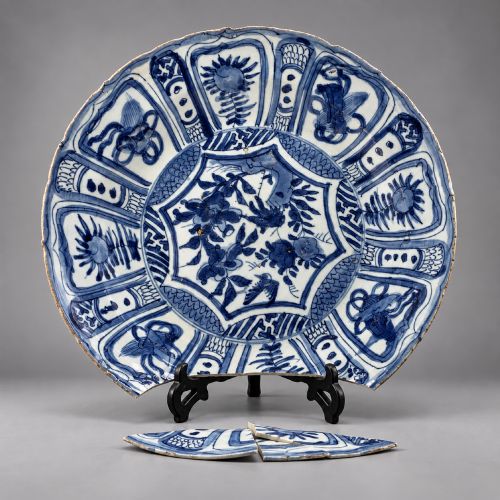
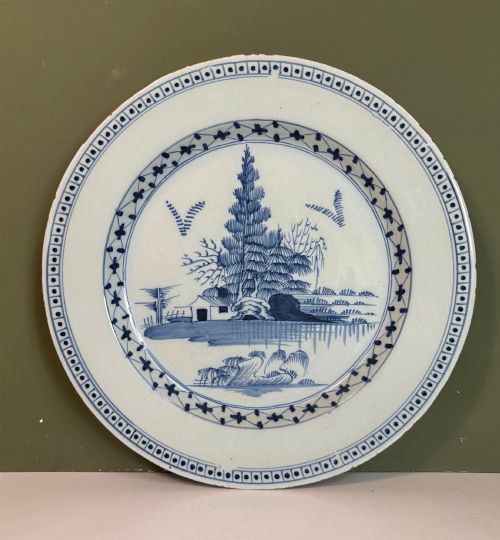
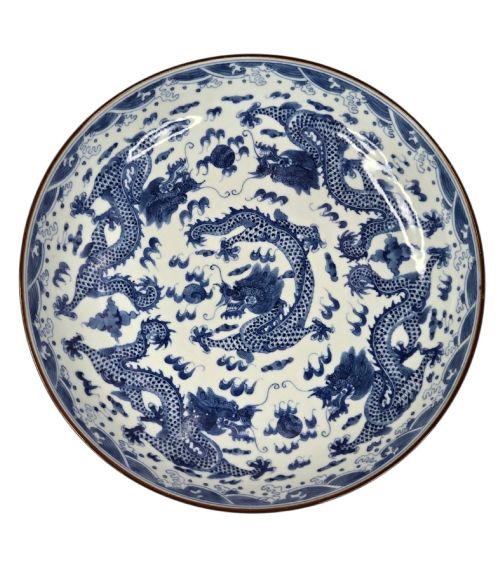
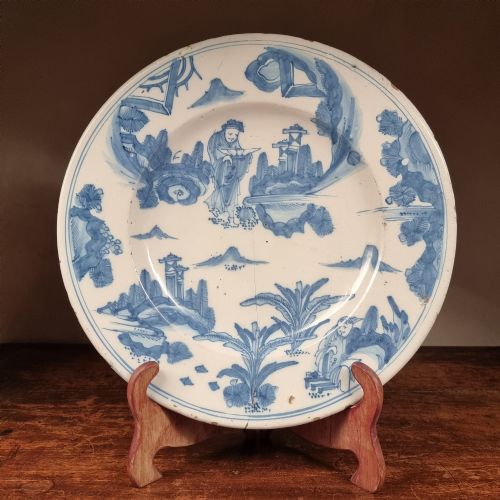
A blue white display platter serves as a decorative focal point, taking the form of large chargers, wall chargers, and wide plates intended for viewing rather than dining. When searching for a blue white display platter, collectors frequently encounter pieces originating from Dutch Delftware traditions, Japanese Arita and Imari kilns, and Chinese imperial kilns.
The selection spans from the seventeenth century through the Victorian era, encompassing diverse aesthetics such as Dutch Baroque, Japanese Meiji, and Georgian designs. These objects range from broad earthenware chargers decorated with tin glaze to robust porcelain and stoneware dishes bearing transfer-printed or hand-painted motifs.
How they were made
Potters shaped these large vessels from ceramic bodies including earthenware, porcelain, and stoneware, applying mineral pigments underneath a transparent or opaque glaze before firing. Tin-glaze techniques created a milky white opaque surface on earthenware chargers, while high-fired porcelain and stoneware accepted cobalt blue pigments beneath clear glazes.
Decoration involved meticulous hand-painting with cobalt oxide or the application of transfer-printing methods for intricate scenes. Artisans utilised techniques ranging from freehand brushwork to moulded floral borders and barbed rims, followed by high-temperature kiln firings to vitrify the glazes.
A solitary koi fish painted on a nineteenth-century charger swims eternally through cobalt waves.
What varies in quality
The refinement of the painted or printed cobalt design determines much of the visual hierarchy, distinguishing hurried brushwork from precise, detailed artistry. Sharpness of line, depth of the blue tone, and the harmony between the central motif and scrolling foliate borders separate standard domestic wares from exceptional exhibition pieces.
Structural integrity and the condition of the glaze surface also distinguish examples, as large earthenware and porcelain bodies are susceptible to firing warps, kiln stilt marks, and glaze crazing. Superior items maintain a stable, well-balanced form alongside crisp decorative execution that preserves the integrity of the original period style.
John Ridgway·Minton·Bassano pottery works
The Blue White Display Platter Glossary
- Charger
- A large decorative plate or platter traditionally displayed on a wall or sideboard rather than used at the table.
- Tin-Glazed Earthenware
- Pottery coated with a white glaze containing tin oxide, providing an opaque surface for painted cobalt decoration.
- Transferware
- Ceramic ware decorated by applying a printed paper design from an engraved copper plate onto the unglazed or biscuity body.
- Kraak Style
- Chinese porcelain design style characterised by panelled borders and central motifs of landscapes, flowers, or animals, widely copied in Europe.
- Imari
- Japanese porcelain decorated in underglaze blue and overglaze iron red, gold, and other colours, produced primarily in Arita.
Blue White Display Platter: Frequently Asked Questions
How do I hang a heavy charger?
Heavy ceramic chargers require specialised wall brackets or spring-loaded plate hangers designed to distribute the weight evenly without stressing the rim. Ensure the mounting hardware is securely anchored into wall studs.
Avoid wire-only solutions that rely on friction alone against the sloping edges of deep earthenware or porcelain vessels.
Were these platters meant for food?
Most large chargers and display platters served primarily decorative functions in grand dining rooms and parlours. Their generous dimensions and painted surfaces made them ideal for visual display on buffets and walls.
While some sturdy earthenware and stoneware pieces could hold provisions, tin-glazed surfaces remained vulnerable to cutlery scratching and acidic foods.
What causes crazing on old ceramic glazes?
Crazing appears as a fine network of microscopic cracks across the glaze surface caused by the different rates of contraction between the ceramic body and the glass layer during cooling. Age, environmental temperature fluctuations, and natural settling contribute to this network over centuries.
In tin-glazed earthenware, crazing is a common characteristic of the firing and ageing process rather than a structural defect.