





Blue White Ceramic Figurine
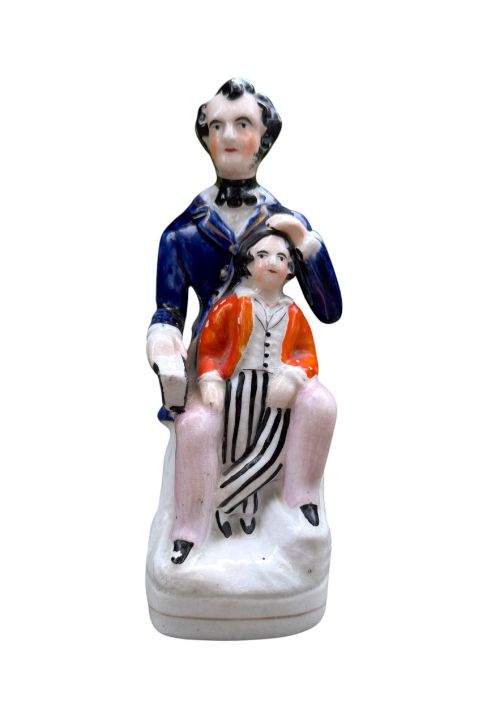
A blue white ceramic figurine brings character to a shelf, taking the form of animals, historical portraits and theatrical groups.
Blue White Ceramic Figurine
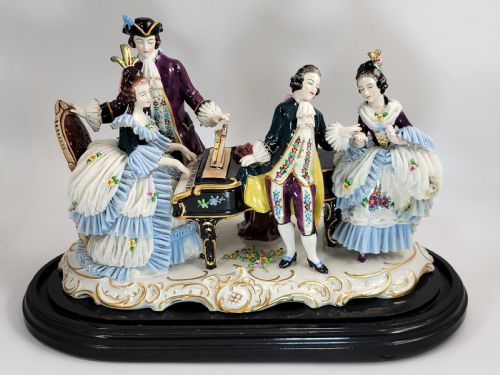
When you search for a blue white ceramic figurine, you meet an array of objects ranging from Staffordshire earthenwares to continental porcelains and Dutch delftware. The selections span the eighteenth, nineteenth, and early twentieth centuries, capturing subjects from domestic animals to royal portrait groups.
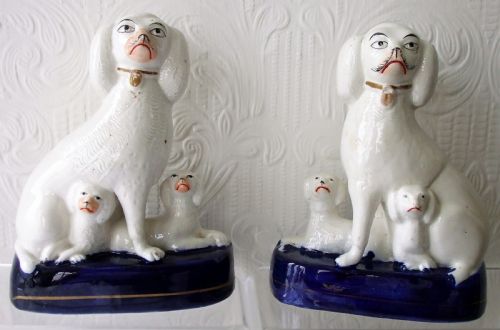
You encounter figures of poodles, spaniels, and dalmatian inkwells alongside historical figures such as Lord Shaftesbury and Admiral Sir Charles Napier. Pairs of Dutch delft pottery cows and French porcelain groups sit alongside table lamps and tobacco or cigarette accessories.
The styles shift between Victorian realism, Rococo Revival, Dutch Delftware, Art Deco, and Neoclassical designs. Many pieces serve decorative purposes, while others incorporate practical functions like watch-holders, candlesticks, or quill holders.
How they were made
Enamels and underglaze blue pigments were applied by hand to define the surface patterns and facial expressions of the figures. Biscuit porcelain pieces relied on unglazed firing to achieve a matte, marble-like texture suitable for portrait busts and classical groups.
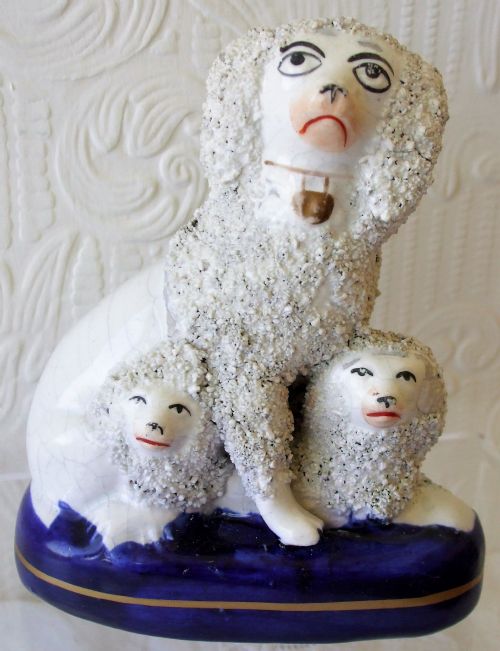
Nineteenth-century Staffordshire poodles arrived on mantelpieces decorated with actual ceramic crumbs stuck to their fur.
What varies in quality
Relief elements like floral encrusting and lace work demand high technical skill, with finer items retaining intricate, delicate application rather than thick, clumsy masses. The depth and clarity of the blue and white glaze also separate mass-produced wares from more ambitious artistic output.
Vion et Baury·Ernst Bohne Sohne·Royal Worcester·Pieter Verburg
The Blue White Ceramic Figurine Glossary
- Earthenware
- A porous pottery body fired at lower temperatures, requiring a glaze to achieve impermeability. Most Staffordshire figures are made from this material.
- Biscuit porcelain
- Unglazed porcelain fired once to produce a matte, fine-grained surface with a texture akin to marble. It is frequently seen on classical portrait busts and figures.
- Staffordshire flatback
- A pottery figure designed to stand against a wall, with the back left unglazed and largely unmodelled to save effort and material during production.
- Delftware
- Tin-glazed earthenware originating in the Netherlands, known for its characteristic blue and white painting imitating Chinese porcelain. Pieces range from tiles to figurative animals and bishops.
- Faience
- European tin-glazed earthenware similar in construction to delftware, often decorated with polychrome or blue pigments over an opaque white glaze.
- Encrusting
- Applied clay details, such as small flowers or textured fur, added by hand to the surface of a figure before firing to create a tactile, ornate effect.
Blue White Ceramic Figurine: Frequently Asked Questions
What are blue white ceramic figurines?
These pieces are decorative pottery and porcelain figures produced across Europe and Asia from the eighteenth century into the twentieth century. They encompass a wide variety of subjects including animals, historical personages, and theatrical characters.
Potters shaped them in moulds and decorated them with underglaze blue, enamels, and lead glazes. Many were designed purely for display on mantelpieces, while others incorporated practical functions such as inkwells or watch-holders.
How do I date a Staffordshire figure?
Dating relies on stylistic clues, manufacturing techniques, and the subject matter depicted. Victorian pieces often record mid-nineteenth-century historical events, political alliances, or fashion trends.
Earlier eighteenth-century examples display different glaze characteristics and painting styles compared to the mass-produced Staffordshire flatbacks of the 1860s and 1870s. Comparing base markings and handling characteristics helps narrow down the production era.
Where were these figures displayed?
In period interiors, these figures sat prominently on mantelpieces, sideboards, and occasional tables. Pairs of animals like poodles or spaniels were arranged symmetrically to flank other decorative objects.
Functional variants with inkwells or quill holders found a place on writing desks and bureaus. Their blue and white palette allowed them to complement various interior colour schemes without dominating the room.
What is a flatback figure?
A flatback is a type of pottery figure moulded with a finished front and sides but a flat, unpainted, and often unglazed rear. This construction method suited pieces meant to stand directly against a wall on a narrow shelf.
It saved time and materials during manufacturing while keeping the price accessible for middle-class Victorian households. Despite the plain back, the front received careful modelling and painted detail.