




Ceramic Equestrian Ornament
These ceramic equestrian ornament selections bring together mounted figures and horses from the Victorian era and early Chinese periods, prized for their expressive modelling.
Ceramic Equestrian Ornament
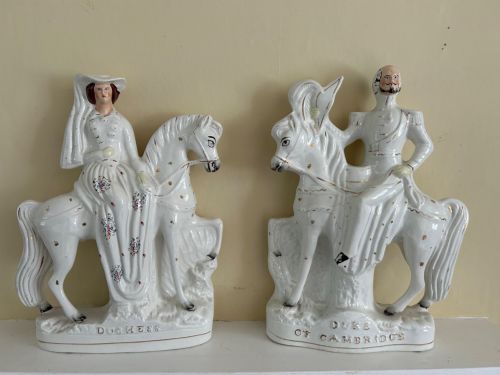
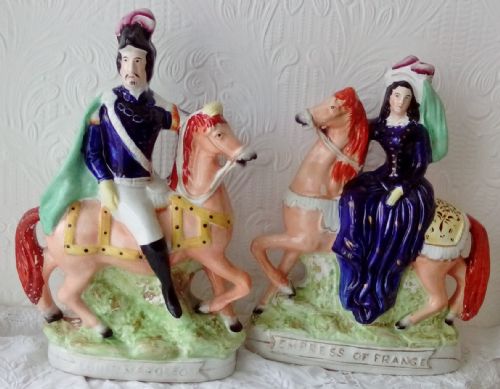
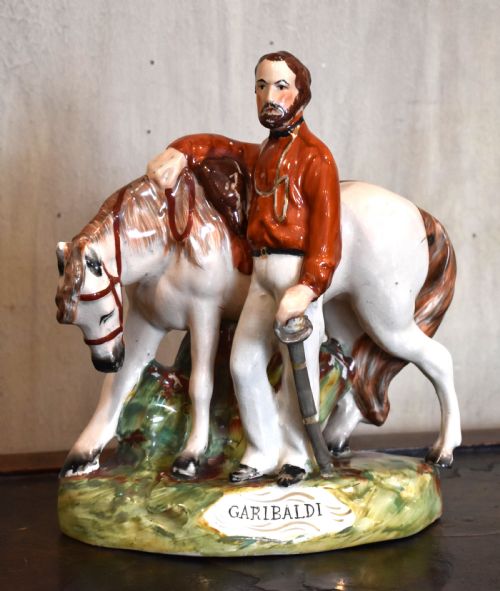
A ceramic equestrian ornament typically depicts mounted riders, military figures, royalty, or animals moulded in clay and fired for display. You will most frequently encounter Victorian Staffordshire flatback figures showing historical characters, Scottish Highlanders, or jockeys on horseback.
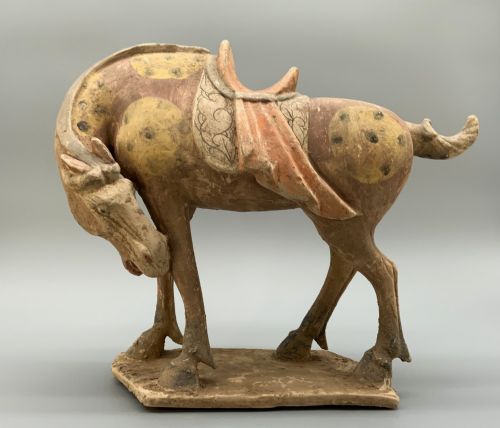
The selection also spans Chinese Tang Dynasty pottery horses alongside later interpretations employing traditional glazing methods. These pieces range from primitive folk art portrayals to detailed depictions of historical and political personages.
Moulded figures dominate the offerings, usually created as symmetrical pairs for mantelpieces or larger standalone sculptural works. Their subjects draw heavily from nineteenth-century popular culture, royalty, and historical drama.
Materials and production
Makers utilised earthenware and terracotta as the primary clay bodies, shaping them through press-moulding or slip-casting techniques. These foundational bodies provided the stable structure necessary for large animal forms and seated riders.
Surface decoration relied on enamels and lead glazes applied over the fired clay to impart colour and a protective sheen. Sancai glazing techniques appear on specific Asian examples, creating distinctive multi-coloured runs across the ceramic surface.
Materials span basic terracotta and earthenware decorated with hand-applied lead glazes and vibrant surface enamels.
Assessing craftsmanship and finish
The Ceramic Equestrian Ornament Glossary
- Flatback
- A style of figure moulded with a finished front and a plain, unpainted flat back designed to sit flush against a wall. This technique saved time and material during nineteenth-century production.
- Earthenware
- A porous pottery body fired at lower temperatures, commonly used for nineteenth-century Staffordshire figures. It requires a glaze to become impermeable to liquids.
- Sancai
- A traditional Chinese three-colour glaze technique associated with Tang Dynasty pottery, typically employing amber, green, and cream tones. These glazes naturally pool and mingle during the high-temperature firing process.
- Enamel
- Opaque colours applied over the fired glaze and subjected to a second, lower temperature kiln firing. This method allowed makers to add vivid reds, blues, and gilding to finished pottery.
- Lead glaze
- A glossy coating containing lead oxide that vitrifies during firing to seal the porous clay body. It gives early ceramics their characteristic smooth, reflective finish.
Ceramic Equestrian Ornament: Frequently Asked Questions
What subjects do these figures show?
These ceramic pieces primarily depict historical leaders, royalty, literary characters, and military figures mounted on horses. Common subjects include generals, monarchs, Scottish highlanders, and jockeys.
Victorian makers also produced decorative pairs featuring musicians, children, and hunters on horseback. Asian examples focus more specifically on traditional saddled horses.
How were Staffordshire figures displayed?
Staffordshire flatback figures were specifically designed to sit on mantelpieces, shelves, or chests of drawers against a wall. Because the backs were left plain and unpainted, they occupied minimal depth.
Many were produced and sold in opposing pairs to create symmetrical arrangements on either side of a fireplace or mirror.
How do I care for antique ceramic figures?
Keep these pieces out of direct sunlight to prevent the enamel colours and overglaze decorations from fading over time. Dust them gently with a soft, dry brush.
Avoid using water or chemical cleaners on antique earthenware, as moisture can penetrate through tiny crazing lines in the glaze and damage the underlying clay.
What is the difference between Staffordshire and Tang styles?
Staffordshire figures originate from nineteenth-century English potteries and feature bright enamel paints, flat backs, and Victorian subjects. They reflect popular culture and domestic mantelpiece decoration.
Tang Dynasty and Tang style pieces are ancient Chinese sculptural works focusing on funerary pottery horses with characteristic sancai glazes. They emphasise ritual placement rather than domestic display.