


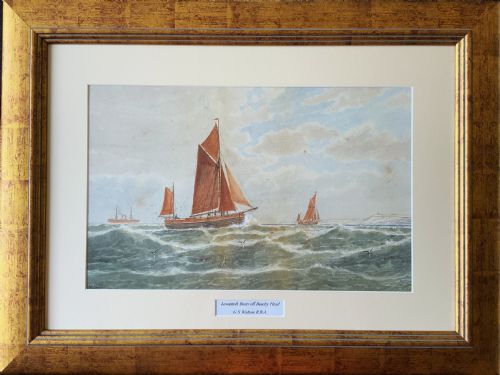
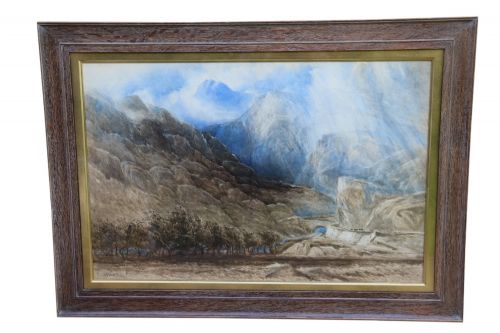

Blue Watercolour Landscape Picture
These works capture open terrain through fluid washes, offering buyers a serene piece of British art history.
Blue Watercolour Landscape Picture
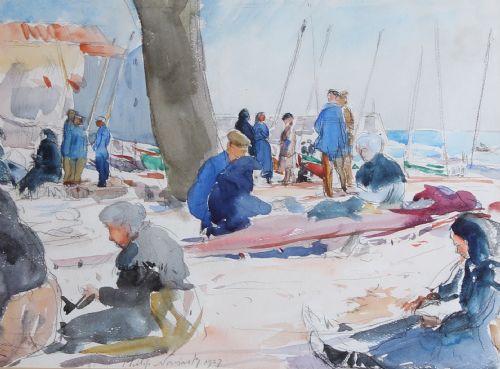
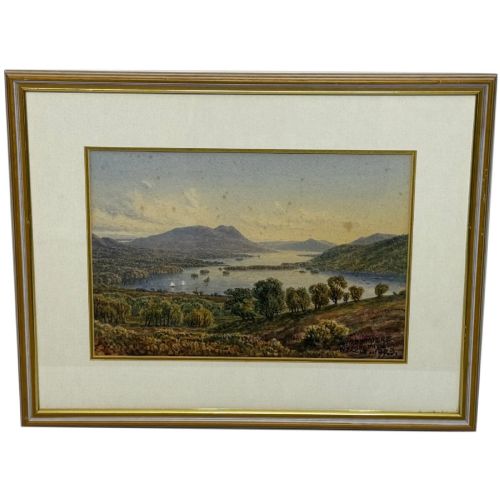
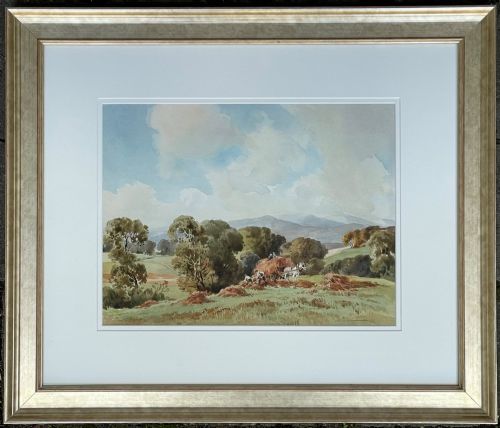
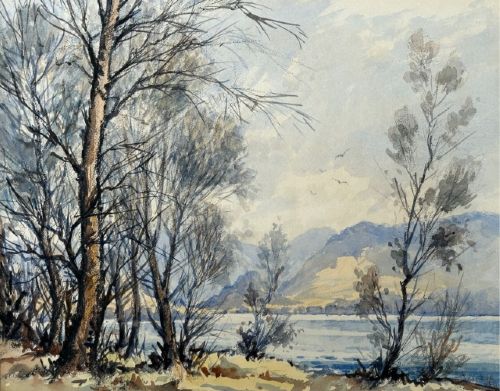
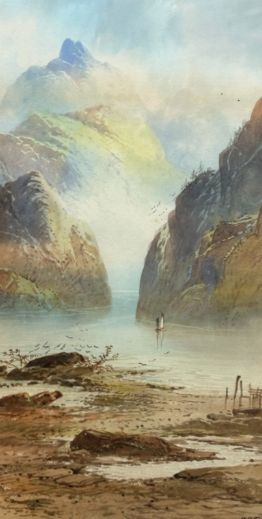
A blue watercolour landscape picture presents scenes of rivers, lakes, coasts, and valleys rendered primarily in cool blue pigments and washes on paper. These paintings range from nineteenth-century romantic and Victorian fine art traditions through Edwardian works and into mid-twentieth-century British impressionism and post-impressionism.
The most common examples on this page date from the nineteenth and early twentieth centuries, capturing domestic and continental views including Scottish lochs, Welsh rivers, and coastal harbours. Painters utilise the fluid qualities of watercolour to render atmospheric skies, expansive waters, and distant mountain ranges with a sense of immediacy.
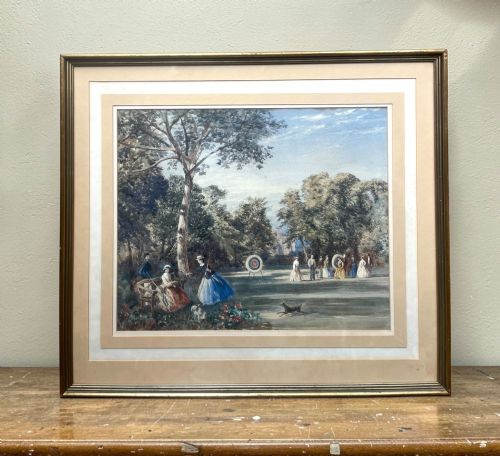
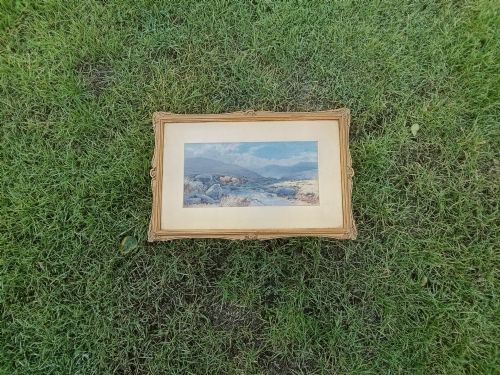
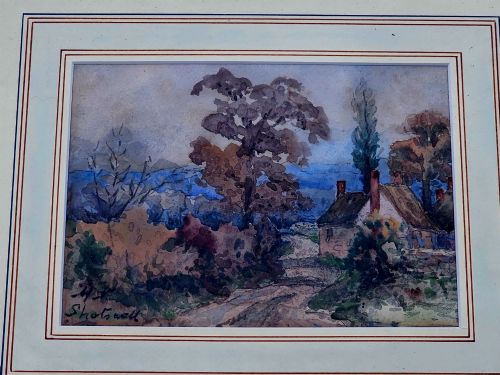
Framed works often arrive behind glass in period wood frames, sometimes accented with gilt or gold leaf to complement the painted composition. Buyers encounter both intimate vignettes and larger framed artworks depicting pastoral countryside, rural cottages, and maritime horizons.
Materials and Technique
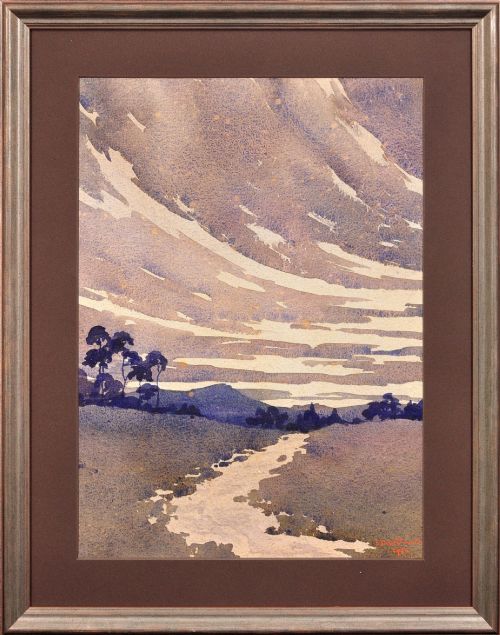
Artists apply watercolour pigment and paint suspended in water onto heavy paper sheets, allowing translucent washes to build depth and luminosity across the landscape. The white of the unpainted paper frequently serves as highlights for clouds, foam, or breaking waves.
Many works incorporate preliminary pencil or ink sketches beneath the pigment to establish the structural composition of buildings, trees, and shorelines. Finished pieces are secured behind glass within wooden frames, occasionally incorporating gilt or gold leaf mouldings to protect the fragile paper surface from atmospheric moisture.
Blue Watercolour Landscape Picture Retail Price Guide 2026
Typical asking prices for blue watercolour landscape picture among the pieces listed under this phrase on Sellingantiques today, from the lower quarter to the upper quarter. They describe what is for sale here now, not the wider market.
Several artists braved chilly coastal drafts and boggy riverbanks just to capture a misty morning on paper.
Assessing Artistic Quality
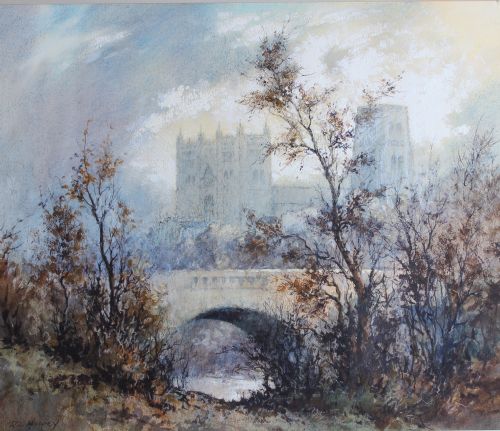
The success of a watercolour depends on the artist's confidence in handling transparent washes to convey light, atmosphere, and distance without muddying the pigments. Superior examples display a vibrant interplay between sky and water, where controlled brushwork captures the specific mood of a Welsh estuary or a Yorkshire coast.
The preservation of the paper and the retention of original pigment intensity distinguish finer compositions from faded examples exposed to excessive sunlight. Additionally, the presence of a period frame matching the era of the painting enhances the overall integrity of the piece.
Tom Rowden·Samuel Timmins·David Woodlock·Philip Naviasky·William Taylor Longmire·William Henry Earp·Alfred Young Nutt·Percy Lancaster·Robert Leslie Howey·Henry Martin Pope·George Stanfield Walters·Cornelius Pearson·William Lee Hankey·Arthur Reginald Smith·Sir Thomas Newenham Dean·Rowland Henry Hill·John McDougal·James Watson·Ernest Uden·Helena Maguire·George Soper·Frederick William Hattersley·James Thomas Watts·Nora Cundell·Charles Harmony Harrison
The Blue Watercolour Landscape Picture Glossary
- Watercolour pigment
- Finely ground colour particles mixed with a water-soluble binder, forming the primary medium for these landscape paintings.
- Gilt
- A thin layer of gold applied to wood frames, providing a decorative metallic border that complements the cool tones of the artwork.
- British Impressionism
- An artistic approach adopted by late nineteenth and early twentieth-century painters focusing on light, fleeting effects, and natural scenery.
- Wash
- A semi-transparent layer of diluted watercolour paint spread broadly across the paper to create skies, water, or distant terrain.
Blue Watercolour Landscape Picture: Frequently Asked Questions
How should I display a watercolour?
Watercolours are sensitive to direct sunlight, which can cause pigments to fade over time. Hang your picture on an interior wall away from bright windows to preserve the integrity of the blue tones.
Ensure the room maintains stable humidity levels and keep the piece safely sealed behind glass within its original wooden frame.
What subjects appear in these landscapes?
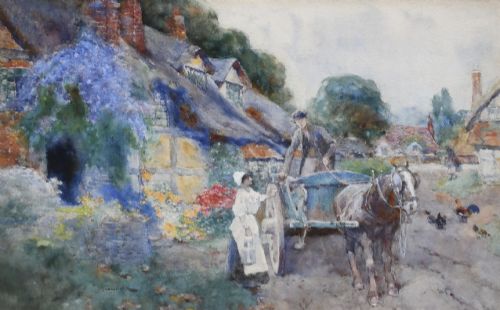
The paintings depict a wide variety of natural scenery, including Welsh estuaries, Cumbrian lakes, Scottish lochs, and coastal marine views. Artists frequently recorded rural cottage scenes, river valleys, and pastoral countryside views across Britain and Europe.
Many works focus specifically on water elements, capturing harbours, tides, and reflections under varying atmospheric conditions.
How do I identify the period of a painting?
Periods can often be identified through a combination of the artist's active dates, the framing style, and written inscriptions on the reverse of the paper or mount. Stylistic traits also provide clues, shifting from nineteenth-century romanticism toward early twentieth-century impressionist techniques.
Examining the type of paper and the nature of the wooden frame helps confirm whether a piece belongs to the Victorian, Edwardian, or later eras.
Are these paintings original works?
The listings comprise original hand-painted watercolours rather than mass-produced prints or reproductions. Each sheet bears the distinct brushstrokes and pigment variations created by the individual artist.
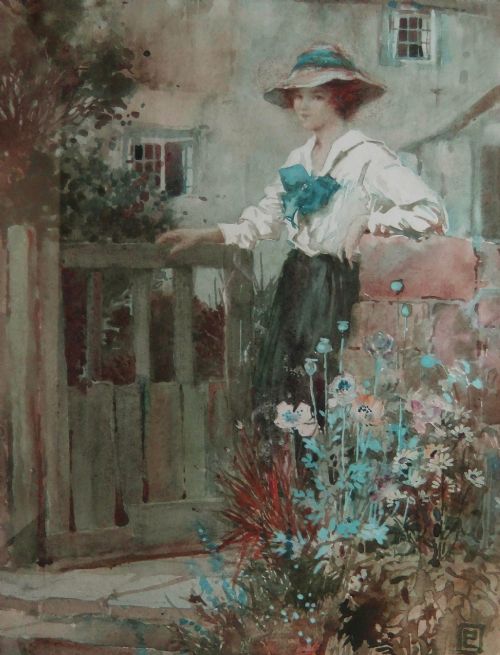
Signatures or initials from the period often appear in the corners of the compositions, confirming their status as unique historical artworks.