



1930s Landscape Art
1930s landscape art captures the rural and coastal vistas of an era through watercolours, oils on canvas, and mixed media.
1930s Landscape Art
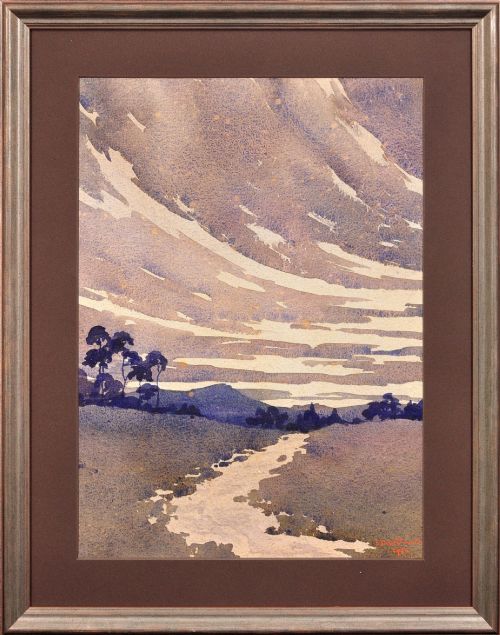
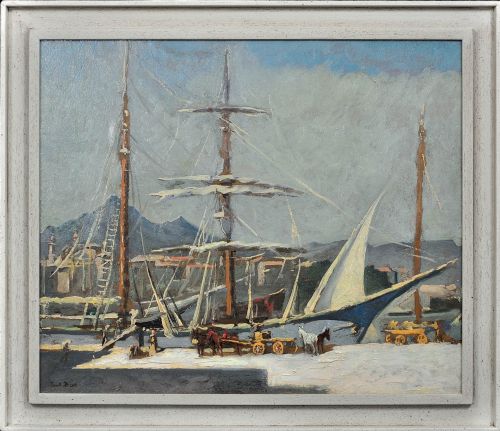
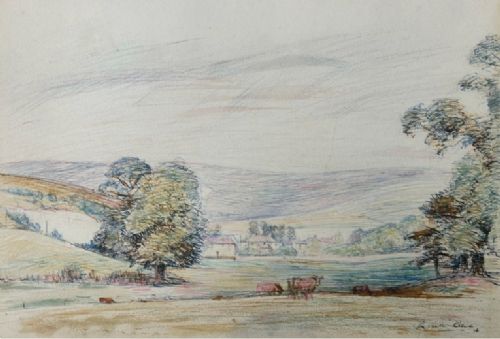
When seeking 1930s landscape art, collectors encounter framed watercolours and oil paintings depicting pastoral English countryside, French coastal ports, and quiet rural scenes. These works reflect the varied movements of the period, ranging from traditional topographical views to bolder continental styles.
The most common pieces on this page are framed original oil paintings and delicate watercolours on paper. Subjects often feature rivers, harbours, and rolling hills created by British and French artists active during the interwar years.
How they were made
Artists of the period applied oil paint to canvas or prepared board, or used watercolour pigments on paper. Many works rely on direct plein air observation, capturing natural light with visible brushstrokes.
Framing typically involves wood mouldings, occasionally finished with gilt or paint, protecting works executed on fragile paper and canvas supports.
1930s Landscape Art Retail Price Guide 2026
Typical asking prices for 1930s landscape art among the pieces listed under this phrase on Sellingantiques today, from the lower quarter to the upper quarter. They describe what is for sale here now, not the wider market.
Listings feature works executed on paper, wood panels, and canvas supports, utilising oil paint, watercolour, and mixed media.
What varies in quality
Quality in these works rests upon the confidence of the brushwork and the artist's ability to capture atmospheric light and spatial depth. Strong compositions demonstrate a deliberate balance between land, water, and sky.
The preservation of the original medium, whether watercolour pigments retain their vibrancy or oil paint remains stable without excessive craquelure, determines the overall integrity of the piece.
Samuel Timmins·Paul Bret·Russell Sidney Reeves·Charles Walter Simpson·Gustave Vidal·William JB Jenkins·Fred Lawson·Clarice Cliff·Frank Percy Wild·Claude Jousset·Rowland Henry Hill·Donald Wood
The 1930s Landscape Art Glossary
- Watercolour
- A painting method where fine pigment is suspended in a water-based, translucent solution. It is typically applied to heavy paper stock.
- Post-Impressionism
- An art movement extending beyond impressionism's focus on light to emphasise symbolic content and expressive use of paint. Artists often employed distinct brushstrokes and unnatural colour palettes.
- Gilt
- A thin layer of gold leaf or gold-coloured pigment applied to wood frames. It provides a reflective decorative border to paintings.
- Plein air
- The act of painting outdoors to capture the direct effects of light and air on a landscape. This method was widely practised by French and British artists.
1930s Landscape Art: Frequently Asked Questions
What subjects appear in 1930s landscape art?
Paintings from this decade frequently depict rural English countryside, Yorkshire farmyards, Welsh river streams, and French Mediterranean ports. Artists recorded both tranquil domestic pastoral scenes and coastal harbours with working boats.
Views range from specific named locations like Whitby and Palermo to generalized depictions of rolling hills, farm gates, and rural cottages under changing skies.
How do I identify a 1930s painting?
Clues lie in the combination of subject matter, artist signatures, framing styles, and the medium used. Many works bear contemporary inscriptions or exhibition labels on the reverse detailing dates and locations.
The aesthetic often bridges traditional realism with early modernist movements like Art Deco and Post-Impressionism, utilising distinctive colour palettes characteristic of the interwar period.
How were these watercolours and oils framed?
Original framing generally consists of wooden mouldings, sometimes painted or finished with simple gilt profiles. These frames are designed to complement the specific tonal qualities of the artwork within.
Watercolours are typically mounted behind protective glass with paper borders, while oil paintings on canvas or board sit within open or glazed wooden surrounds.
Where were these landscape artists working?
The creators represented were active across various regions, including rural pockets of Yorkshire, Shropshire, and Devon, as well as continental locations like the Côte d'Azur and Provence. Artists travelled widely to paint coastal harbours and agricultural valleys.
This geographic spread resulted in diverse interpretations of light and topography, contrasting English pastoral scenes with brighter Mediterranean palettes.