


Blue Water Watercolour Painting
A blue water watercolour painting brings the movement of seas, rivers and lakes directly onto paper through translucent pigment.
Blue Water Watercolour Painting
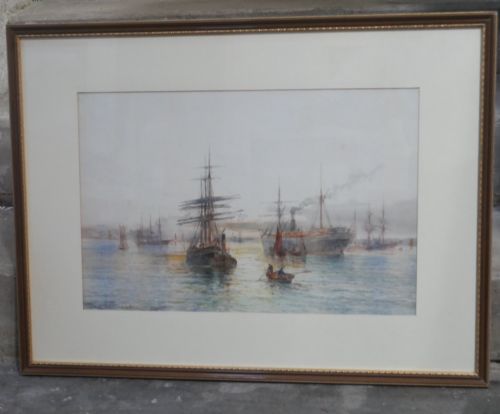
A blue water watercolour painting captures bodies of water, coastal scenes, marine vessels and still life subjects incorporating blue vessels or flowers across various periods from the nineteenth century to the mid twentieth century. Buyers encounter maritime views, shipping scenes, serene lakes and floral studies executed by named artists and regional schools.
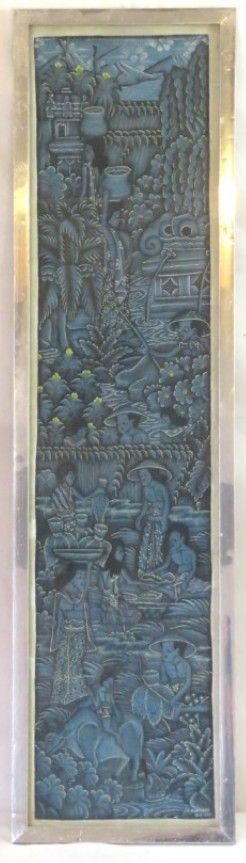
The selection on this page ranges from Victorian marine art and Edwardian landscapes to Balinese fabric works and interwar realism. Most pieces originate from British artists working in the nineteenth and early twentieth centuries, alongside continental European and Japanese examples.
Framed artwork and wall art dominate the selection, presented behind glass in wood or gilded wood frames. These paintings record specific locations from Dublin Bay and the Grand Canal Venice to Coniston Water and North Wales.
How they were made
Artists applied watercolour pigment suspended in water onto paper or fabric supports, often utilising the white of the paper to render highlights in water and sky. Painters built up transparent washes to capture the fluidity of seas, rivers and atmospheric effects.
Works are typically preserved behind glass within wooden frames, occasionally with gilded mouldings or ebonised surrounds that protect the delicate pigment from light and moisture damage over time.
Listings feature works on paper and fabric spanning the nineteenth century, the Edwardian era, the interwar period and the mid twentieth century.
What varies in quality
Quality rests in the handling of pigment and the confidence of the brushwork, where master artists capture the motion of choppy water or the stillness of a lake with minimal, assured strokes. Lesser examples rely on rigid outlines and heavy, opaque washes that obscure the translucent luminosity characteristic of the medium.
The preservation of the paper support and the vibrancy of the watercolour pigment determine the visual strength of the piece. Works suffering from heavy fading or foxing lose the tonal contrast essential to atmospheric marine and landscape art.
William Frederick Settle·Arthur Reginald Smith·Edith E Caswall·William Knox·Frederick William Booty·Carleton Grant·Tom Dudley·Yves Brayer·Edward Aubrey Hunt·Olive Higginbottom·Tom Whitehead·Ernest Forbes
The Blue Water Watercolour Painting Glossary
- Watercolour pigment
- Finely ground colour particles mixed with a water-soluble binder, used to create transparent washes on paper.
- Wash
- A thin, fluid layer of diluted watercolour pigment applied across paper to achieve smooth skies or water surfaces.
- Ebonised frame
- Wood stained or finished to imitate ebony, commonly used for nineteenth-century portraits and works on paper.
- Marine art
- Artistic representation of ships, coastal views and the sea, encompassing both calm waters and stormy maritime scenes.
- Support
- The underlying material, such as paper or fabric, upon which the artist applies the watercolour painting.
Blue Water Watercolour Painting: Frequently Asked Questions
How should I frame a watercolour?
Watercolours require framing behind glass with a mount that keeps the paper from touching the glazing directly. This prevents moisture accumulation and protects the pigment from atmospheric pollutants.
Keep these paintings away from direct sunlight to prevent the watercolour pigments from fading over the decades.
What subjects appear in these paintings?
The works depict a range of subjects centred around water and blue tones, including shipping vessels on choppy seas, quiet wharfedale rivers, Venetian canals and domestic still life compositions featuring blue vases.
Artists also recorded specific topographical views, architectural landmarks and coastal figures across Britain and continental Europe.
How do I date an antique watercolour?
Dating relies on signatures, artist registry records, stylistic conventions of the period and framing materials such as original ebonised wood or gilt moulding. Victorian and Edwardian works often carry inscriptions, dates or labels on the reverse detailing the location and artist.
Paper characteristics and watermark evidence also help historians place works within nineteenth or early twentieth-century windows.
Are these paintings original works?
The selection consists of original hand-painted watercolours executed directly by the artists rather than mechanical reproductions or prints. Each piece displays unique brushstrokes, pigment granulation and hand-mixed colour washes.
Signatures, monograms and artist attributions further distinguish these unique historical paintings from mass-produced artwork.