



Blue Upholstered Side Chairs
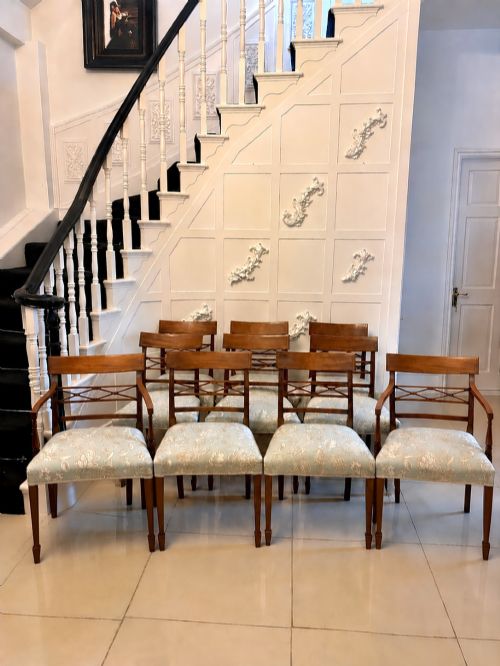
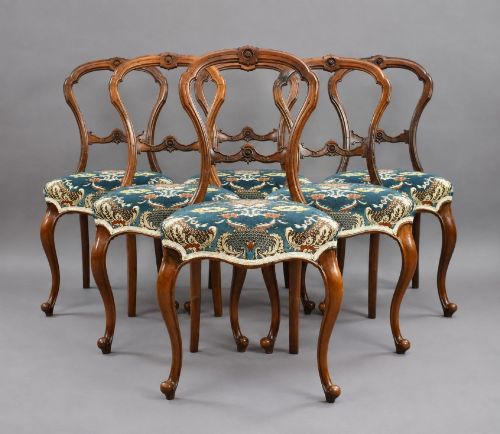
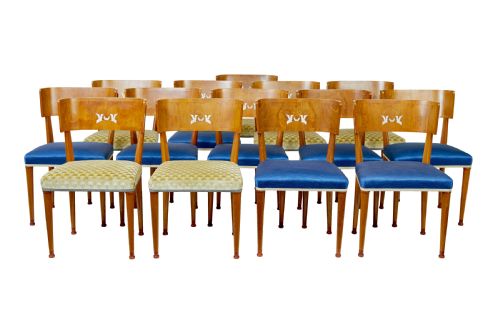
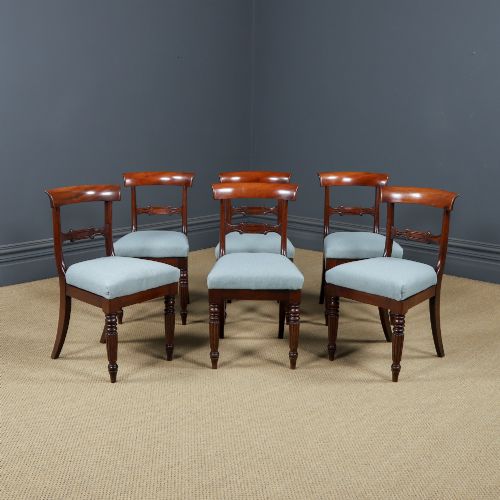
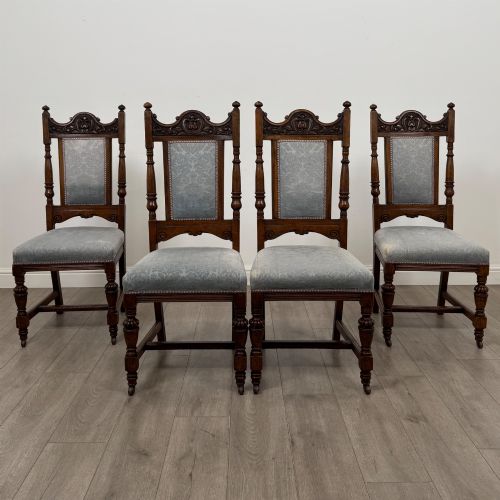
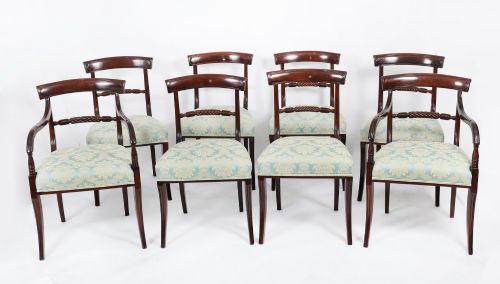
Blue upholstered side chairs bring colour and period character to a room, ranging from mahogany frames to Edwardian oak.
Blue Upholstered Side Chairs
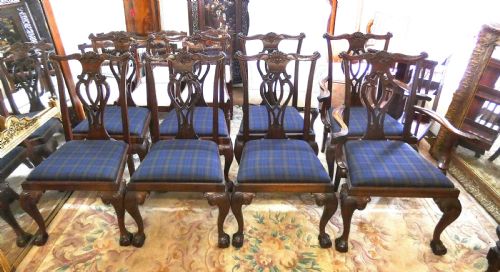
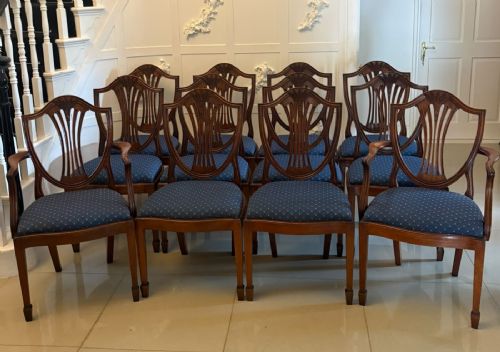
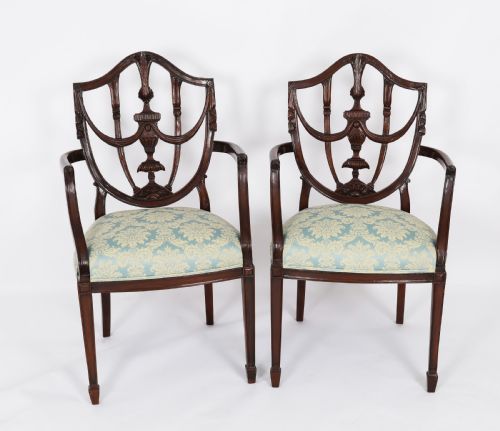
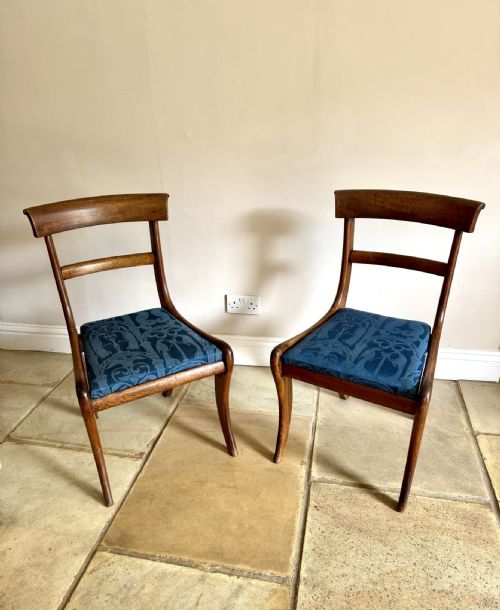
Blue upholstered side chairs encompass seating forms spanning the Georgian, Victorian, and Edwardian periods, constructed primarily as mahogany or oak dining and hall chairs. Buyers seeking blue upholstered side chairs encounter variations in wood frames, ranging from rosewood rosewood rosewood Victorian rosewood to satinwood and walnut.
The selections include specific revival styles such as Georgian Revival and Federal Revival, alongside standard Victorian and Edwardian examples. Many pieces incorporate blue needlepoint seats, coastal stripe fabric, or modern geometric upholstery applied to older frames.
How they were made
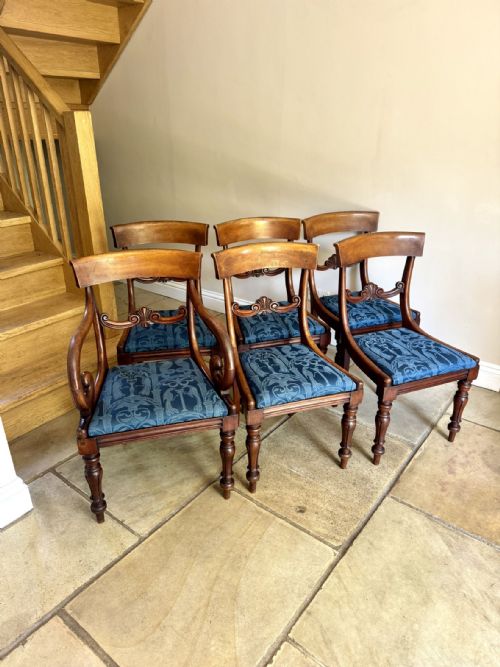
Frames are constructed from dense hardwoods like mahogany, oak, walnut, and rosewood, frequently shaped with carved details or turned front legs fitted with castors. Joinery techniques reflect the period of manufacture, utilising traditional framing methods for stability.
Upholstery materials range from historic textile applications to contemporary fabric coverings. Brass elements sometimes accent the wooden frames or support mechanisms.
Certain Victorian bedroom chairs hide small brass castors beneath turned front legs, ready to roll across the rug at a moment's notice.
What varies in quality
Quality depends upon the crispness of the timber carving and the architectural integrity of the frame. Denser hardwoods and finer grain patterns separate standard examples from superior pieces.
The execution of the upholstery work and the historical sympathy of the fabric choice influence the overall standard of the chair.
Gillows·Howard and Sons
The Blue Upholstered Side Chairs Glossary
- Side chair
- A chair without arms, traditionally used for dining or occasional seating. These pieces fit easily against a wall when not in use.
- Balloon back
- A rounded, curved wooden backrest popular on Victorian dining chairs. This shape offers ergonomic support while displaying the grain of the mahogany or walnut.
- Shield back
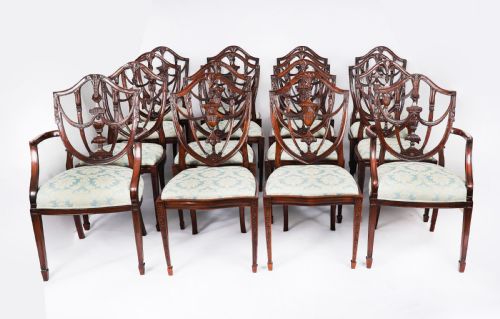
- A chair back shaped like a formal heraldic shield, frequently associated with Hepplewhite designs. This style was favoured during the Georgian period and later revived.
- Needlepoint
- A form of counted thread embroidery worked on canvas, often seen on Victorian seat pads. It provides a durable and decorative surface for chairs.
Blue Upholstered Side Chairs: Frequently Asked Questions
How do I date these chairs?
Dating relies on identifying timber types, construction methods, and stylistic cues such as turned legs or carved backs. Victorian pieces often display darker woods and heavier frames, whilst Georgian examples show lighter proportions.
Secondary indicators include the presence of original castors, stretcher arrangements, and the type of secondary wood used in the frame construction.
Are these chairs suitable for daily dining?
Most antique side chairs function well for everyday use provided the frame joints remain tight and secure. Mahogany and oak constructions offer sufficient strength for regular seating.
Care should be taken with antique upholstery fabrics during heavy daily use, and periodic checking of the frame stability is recommended.
How do I match different chair styles?
Mixing periods requires attention to timber tone, height proportions, and overall formality rather than strict adherence to a single decade. Oak and mahogany pieces from adjacent centuries often complement one another.
Unified fabric choices, such as consistent blue tones, help anchor disparate chair designs within the same room scheme.