


Blue Transferware Tray
A blue transferware tray brings a depth of cobalt pigment and pictorial scenes to the table, spanning pearlware, earthenware, and ironstone.
Blue Transferware Tray
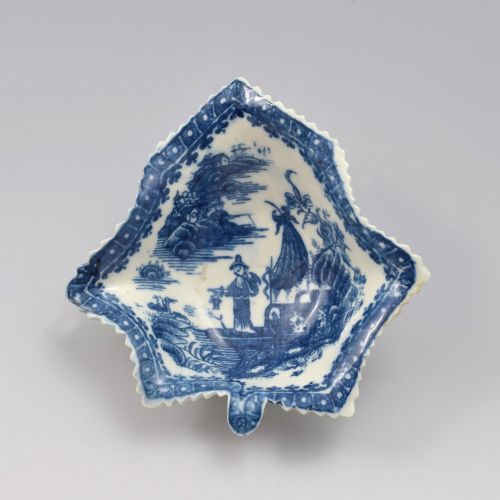
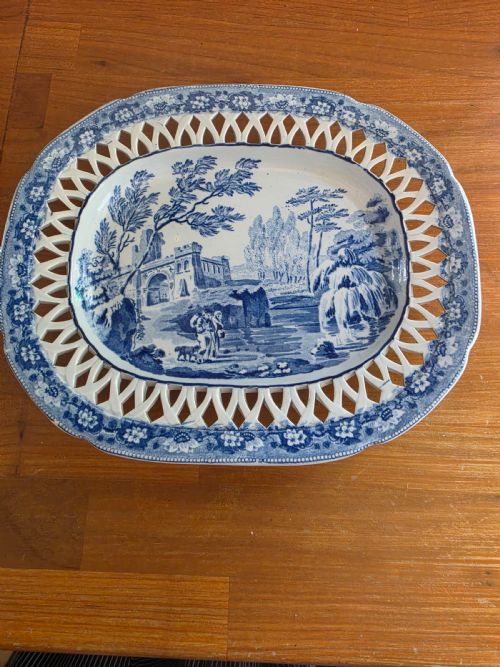
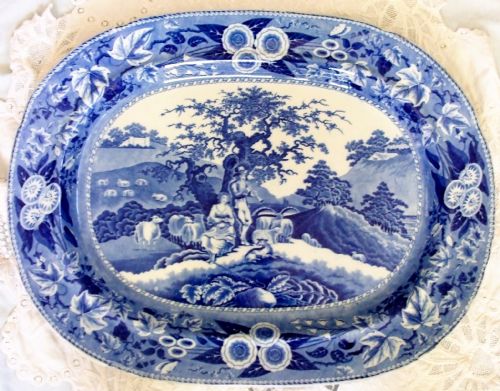
A blue transferware tray encompasses serving platters, meat dishes, pickle dishes, and spoon trays decorated with printed cobalt designs. These pieces emerge predominantly from the eighteenth and nineteenth centuries, including Georgian and Victorian periods.
The version most commonly encountered on this page is the large meat platter or serving dish, often bearing named topographical, botanical, or Chinoiserie patterns transferred onto a white ceramic ground.
Originating largely from English potteries, these items served utilitarian functions in domestic dining before becoming decorative collector pieces today.
Materials and production methods
Potters shaped earthenware, pearlware, ironstone, and porcelain into platters and trays before applying designs using engraved copper plates and tissue paper. Cobalt pigment transferred the pattern onto the biscuit ceramic body prior to glazing and firing.
Transparent lead or salt glazes sealed the porous earthenware and pearlware bodies, creating the glossy protective sheen characteristic of these serving dishes.
Object forms range from large meat platters and cheese dishes to small spoon trays and advertising scale plates.
Assessing quality in transfer printing
The clarity and registration of the cobalt print determine the visual success of a piece, separating sharp, crisp transfers from blurred or smudged applications. Early pearlware bodies and fine porcelain display a finer texture than later commercial ironstone.
Completeness of form matters greatly, particularly for pierced trays, bread stands, and items with delicate handles or reservoir channels where edge chips and hairline cracks alter the integrity of the piece.
DAVENPORT·Minton·Spode·Copeland & Garrett·DON POTTERY·John Rogers & Son·J. & R. Clews·MASON’S·Thomas Lakin·ELKIN KNIGHT & BRIDGWOOD
The Blue Transferware Tray Glossary
- Transferware
- Pottery decorated by printing a design from an engraved copper plate onto tissue paper and then transferring it onto the ceramic surface before glazing.
- Pearlware
- A refined earthenware developed in the late eighteenth century featuring a subtle bluish glaze that pooled in recesses to accentuate the whiteness of the body.
- Ironstone
- A dense, durable type of heavy earthenware patented in the nineteenth century designed to resist chipping during heavy domestic use.
- Chinoiserie
- A European artistic style reflecting Chinese motifs, commonly featuring pavilions, bridges, and figures seen on many nineteenth-century trays.
- Pickle dish
- A small, often leaf-shaped serving dish used on the dining table for pickles, relishes, or small condiments.
Blue Transferware Tray: Frequently Asked Questions
What were blue transferware trays used for?
These ceramic trays and platters served joints of meat, vegetables, bread, and condiments during formal and everyday domestic dining in the Georgian and Victorian eras.
Larger platters often included draining wells and reservoirs to catch meat juices during carving at the table.
How do I date a blue transferware tray?
Dating relies on ceramic body composition, such as early pearlware versus later ironstone, alongside maker marks and stylistic clues within the printed patterns.
Georgian examples tend to show lighter earthenware bodies, whereas Victorian commercial pieces often appear heavier and thicker.
Can I use these antique platters for serving food?
Many collectors prefer to display these pieces on walls or dresser stands rather than subjecting them to modern cutlery and dishwasher heat.
While structurally sound, older glazes can carry crazing lines that absorb food oils and moisture over time.
What is the difference between earthenware and ironstone?
Earthenware forms the lighter, more porous body typical of eighteenth-century pearlware and early nineteenth-century serving dishes.
Ironstone, introduced later in the nineteenth century, provides a much heavier, vitreous, and robust ceramic standard.
Why are some patterns named in listings?
Potters assigned specific pattern titles, such as Bridge of Lucano or Buffalo, to market their wares and identify the copper engravings used by the transfer printers.
Named views often reflected contemporary romantic interests in Italian ruins, exotic landscapes, or classical architecture.