



Early 19th Century Platter
These early 19th century platters and serving dishes span sturdy treen and transfer-printed earthenware, offering both utility and decorative presence.
Early 19th Century Platter
Buyers encountering this search phrase often seek large serving dishes for dining tables or decorative chargers to display on walls and dressers. The examples available reflect domestic utility as well as decorative arts, crossing formal ceramic traditions with rustic folk art and vernacular woodwork.
Materials and Construction
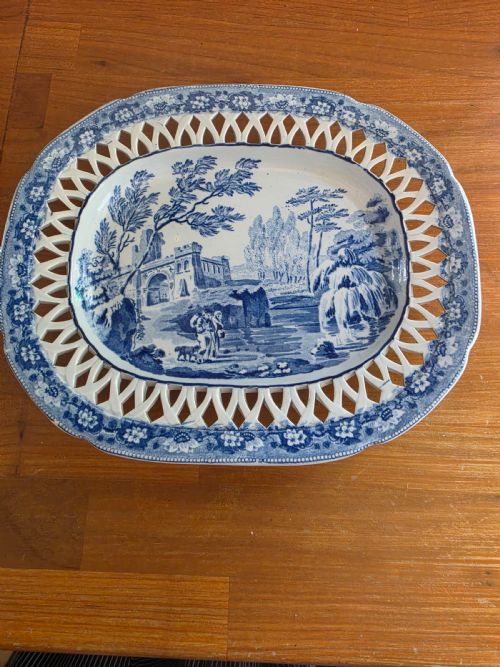
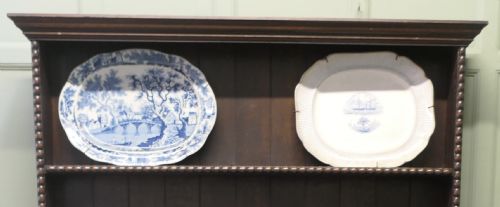
Potters and manufacturers utilised earthenware, pearlware, and porcelain, often decorating the surfaces with blue and white transfer prints, enamel painting, and gilt highlights. Ceramic pieces typically underwent high-temperature kiln firing to fix the glaze and cobalt blue transfer patterns.
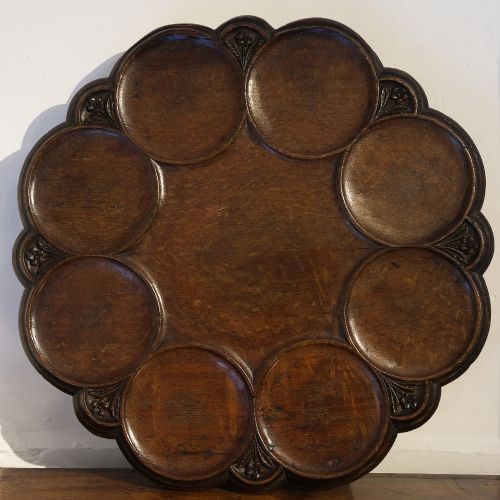
Woodworkers carved regional timbers such as oak, sycamore, and birch to create treen platters and dairy bowls, while papier-mâché trays relied on layered paper and lacquer finished with hand-painted landscapes or floral motifs.
Early 19th Century Platter Retail Price Guide 2026
Typical asking prices for early 19th century platter among the pieces listed under this phrase on Sellingantiques today, from the lower quarter to the upper quarter. They describe what is for sale here now, not the wider market.
Geographic origins range from Staffordshire pottery works to Welsh dairy farms and Continental workshops.
Assessing Quality and Execution
Quality in these pieces rests upon the crispness of the transfer print, the delicacy of hand-painted enamel and gold leaf details, and the stability of the timber or papier-mâché substrate. Superior ceramic platters show deep, clear cobalt definition without blurring, whilst finer trays exhibit smooth lacquer surfaces and accomplished pictorial artistry.
The integrity of the material also dictates distinction, separating robust utility items from highly finished parlour pieces. Well-turned wooden items display balanced proportions and thoughtful grain selection, whereas mass-produced ceramics rely on refined clay bodies and consistent glazing.
Davenport·Coalport·Chamberlain’s Worcester·Clay·Jennens & Bettridge·Riley's
The Early 19th Century Platter Glossary
- Transfer print
- A method of applying intricate designs to ceramics by engraving a copper plate, pulling the image on tissue, and transferring it onto the biscuit ware before glazing. This technique allowed factories to produce complex patterns efficiently.
- Pearlware
- A refined earthenware developed in the late 18th century featuring a slightly bluish glaze that pooled in recesses, designed to mimic Chinese export porcelain. It forms the body of many blue and white meat plates from this period.
- Treen
- Small handmade wooden household objects and utensils carved from native hardwoods. These pieces range from functional dairy bowls to decorative platters and lazy susans.
- Papier-mâché
- A composite material made from paper pulp or sheets of paper mixed with glue and resin, pressed into moulds, and dried until rigid. It was heavily utilised for lightweight, durable trays finished with black lacquer and painted scenes.
- Charger
- A large decorative plate or platter used primarily for display on sideboards or dining tables rather than for direct serving. They often feature elaborate transfer-printed scenes or botanical motifs.
Early 19th Century Platter: Frequently Asked Questions
How were early 19th century platters used?
These pieces served multiple functions in the domestic household, ranging from carving joints of meat at the dining table to carrying porcelain tea services and displaying fruit.
Larger earthenware chargers and decorated papier-mâché trays also functioned as permanent decorative elements, propped on sideboards or hung on dining room walls.
Can I use an antique platter for serving food?
Ceramic and wooden platters from the early 19th century can generally accommodate dry foods, though crazed earthenware glazes absorb liquids and oils over time.
Papier-mâché and lacquered trays require gentle treatment and are better suited for display or dry presentation rather than direct contact with moisture.
How do I clean wooden treen platters?
Treen requires minimal moisture to prevent warping, shrinking, or cracking of the timber. Wipe surfaces clean with a slightly damp cloth and dry immediately, avoiding soaking or dishwashers entirely.
What is the difference between earthenware and pearlware?
Pearlware contains a higher proportion of flint and a subtle bluish tint in the glaze to mask the creamy colour of the underlying clay body. Standard earthenware tends to have a warmer, yellower tone beneath the glaze.