


Blue Transfer Print Ceramic
Blue transfer print ceramic wares bring pictorial depth and rich domestic scenes directly to the table.
Blue Transfer Print Ceramic
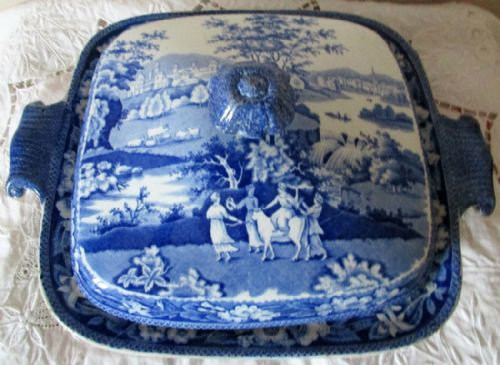
When you examine blue transfer print ceramic items, you are looking at utilitarian and decorative vessels decorated using a copperplate engraving method. The forms span practical dining items such as meat platters, vegetable tureens, serving dishes, footbaths, and mugs.
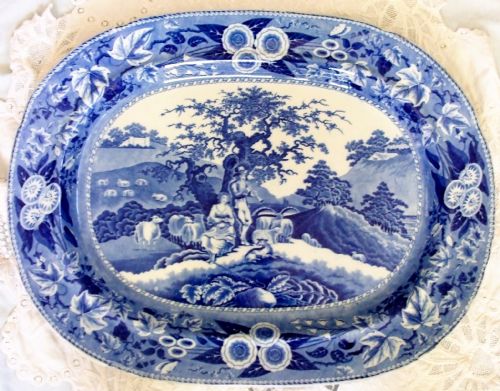
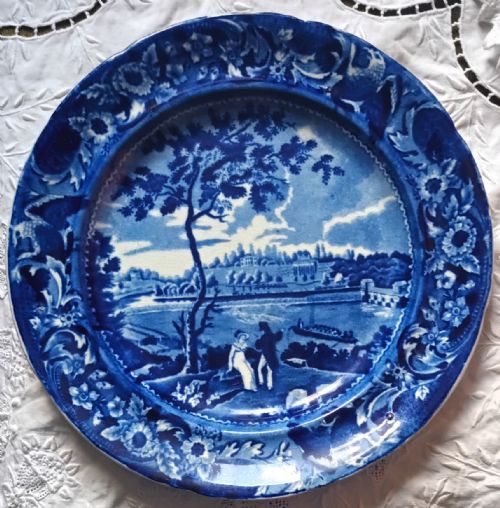
The pieces on this page originate predominantly from the nineteenth and eighteenth centuries, reflecting Georgian, Regency, and Victorian periods. You will regularly encounter decorative plates and large serving platters bearing topographical views, pastoral subjects, and Chinoiserie patterns.
How they were made
Potters produced these objects using earthenware, pearlware, and soft-paste porcelain, which provided a smooth white surface suited to monochrome decoration. Cobalt pigment and cobalt glaze supplied the deep blue colour.
Craftsmen engraved the design onto a copper plate, applied cobalt pigment, and transferred the impression onto tissue paper. They then pressed this paper onto the fired ceramic body before applying a lead glaze and firing the piece again.
Listings feature earthenware, pearlware, and soft-paste porcelain decorated with cobalt pigment under lead glaze across Georgian, Regency, and Victorian periods.
What varies in quality
The depth and clarity of the cobalt transfer determine the visual success of the piece, separating crisp, detailed impressions from blurred or smudged prints. Skill in engraving the original copper plate directly dictates the fidelity of architectural and landscape details.
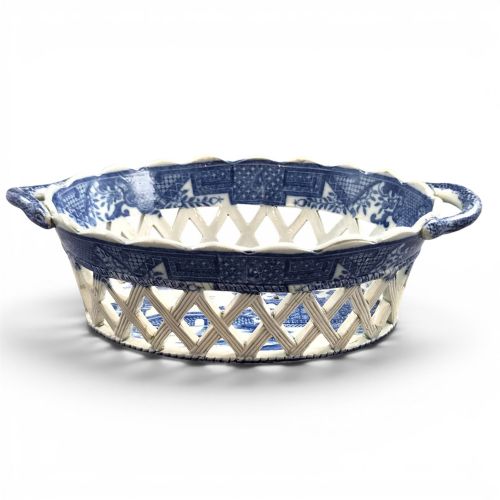
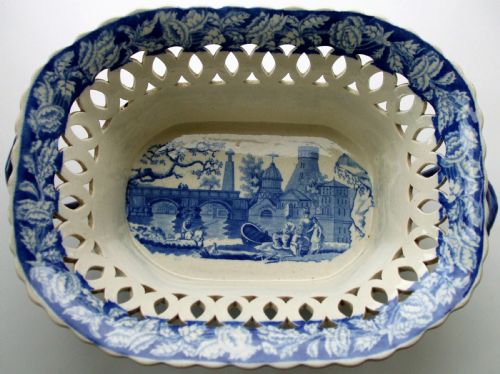
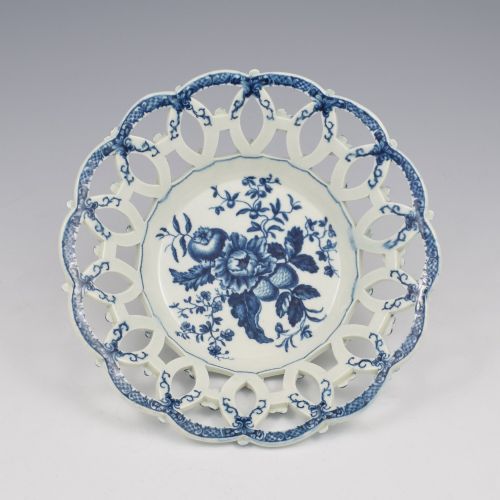
The elegance of the ceramic body and the complexity of the object form, such as pierced reticulated basket rims or moulded handles, distinguish standard tablewares from exceptional production pieces.
Spode·J. & R. Clews·J. & R. Riley·Stubbs·Mintons·Copeland·Heathcote·Thomas Lakin·Brameld & Co.·Mason·Ridgways·Rogers
The Blue Transfer Print Ceramic Glossary
- Transferware
- Pottery decorated by transferring a printed design from an engraved copper plate onto the ceramic surface using tissue paper. This innovation allowed factories to produce intricate patterns rapidly and consistently.
- Pearlware
- A refined earthenware developed in the late eighteenth century featuring a subtle bluish glaze that pooled in recesses to mimic Chinese export porcelain. It served as a primary ground for early blue and white printing.
- Chinoiserie
- A European artistic style reflecting Chinese motifs and imaginary oriental landscapes. It frequently appears on eighteenth and nineteenth-century ceramic plates and tureens.
- Tureen
- A deep covered serving vessel used for soup, vegetables, or sauces. These table pieces often include matching ladles, stands, and decorative handles.
Blue Transfer Print Ceramic: Frequently Asked Questions
What is blue transfer print ceramic?
It is pottery or porcelain decorated by printing a design from a copperplate onto the ceramic body using cobalt blue pigment. This technique emerged to meet a growing demand for affordable yet highly decorated tableware.
Workers applied the printed paper onto the biscuit fired clay before glazing and firing the piece a second time to seal the pigment.
How do I care for antique transferware?
Wash these pieces gently by hand using warm water and mild soap. Avoid dishwashers, harsh scrubbers, and soaking, as old glazes can develop crazing over time.
Store them securely on stable surfaces, utilising padded dividers between stacked plates to protect the rims and glazed surfaces.
When were these ceramic pieces made?
The examples on this page span the eighteenth and nineteenth centuries, covering the Georgian, Regency, and Victorian periods. Most pieces date from the height of the transfer printing industry between 1780 and 1850.
Potteries in Staffordshire and other English regions produced vast quantities of these patterned wares for domestic dining and export.
How are different patterns identified?
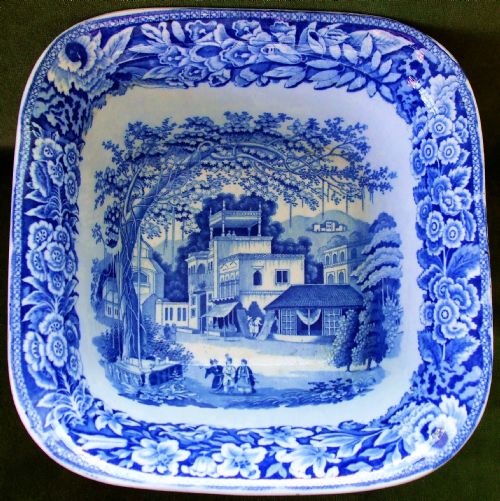
Makers often named their patterns after topographical views, literary scenes, or imaginary landscapes, sometimes printing the title on the base. Collectors examine the central pictorial subject alongside the border motifs, which often feature distinct floral or geometric scrolls unique to specific potteries.
Reference books cataloguing historical marks and patterns help connect unmarked or named pieces to their original makers.