



Blue Sky Watercolour Landscape
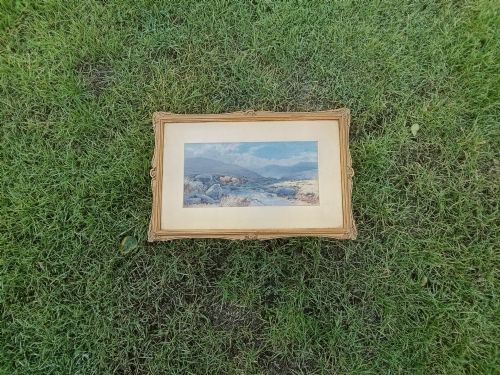
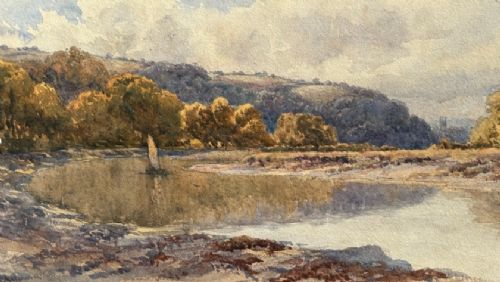
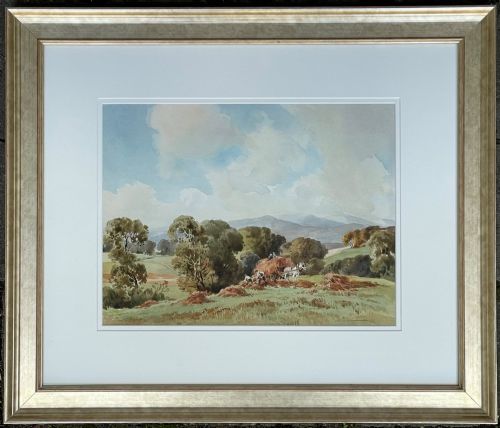
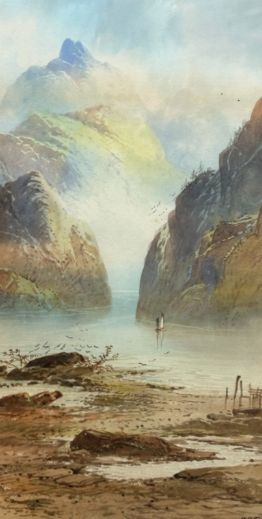
A blue sky watercolour landscape captures atmospheric light across open vistas, offering buyers a traditional view shaped by British and European artists.
Blue Sky Watercolour Landscape
A blue sky watercolour landscape presents painted scenes of coastlines, rivers, and countryside where the upper register opens into expansive washes of sky. These works bridge traditional British topographical art and continental views from the nineteenth and early twentieth centuries.
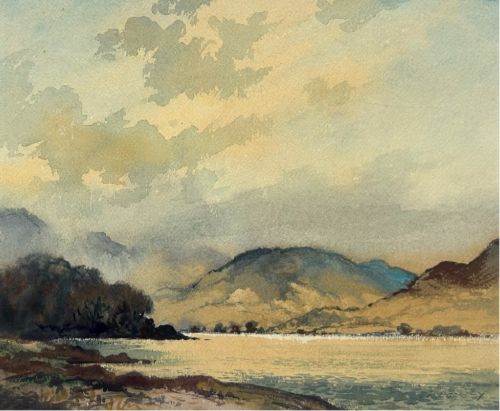
The pieces on this page span the Victorian era, the Edwardian period, and mid-twentieth-century examples, capturing subjects from Scottish lochs and Yorkshire harbours to Italian lakes and Middle Eastern vistas. Works frequently display the hand of named regional artists working in watercolour pigment on paper, often preserved beneath glass within period frames.
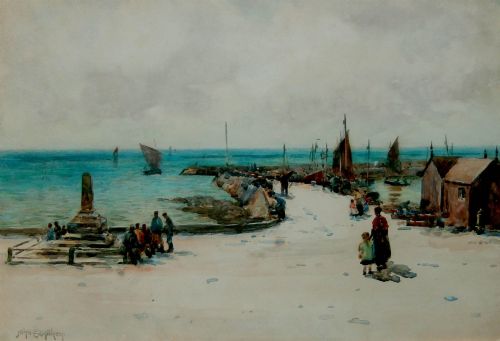
Collectors encounter framed paintings depicting rural harvests, coastal shipping, and quiet inland waterways, where the dominance of the sky sets the diurnal or atmospheric mood. The handling ranges from precise Victorian detail to the broader washes associated with British Impressionism and the Staithes Group.
How they were made
Artists applied watercolour pigment and occasional gouache onto sheets of paper or board, utilising the white ground of the paper to let light shine through thin washes. This technique demanded secure control, as the translucent nature of water-soluble pigments allowed little room for alteration once laid down.
Works are commonly supported by card mounts and protected by wood frames behind glass, safeguarding the delicate water-soluble media from atmospheric moisture and surface damage. Many pieces incorporate preparatory pencil underdrawing beneath the fluid paint layers to map out architectural elements, shipping rigging, or distant topography.
Blue Sky Watercolour Landscape Retail Price Guide 2026
Typical asking prices for blue sky watercolour landscape among the pieces listed under this phrase on Sellingantiques today, from the lower quarter to the upper quarter. They describe what is for sale here now, not the wider market.
Listings feature works executed on paper and board across the nineteenth century, the Edwardian era, and the mid-twentieth century.
What varies in quality
Quality rests in the sureness of the brushwork and the artist's ability to capture transient light, particularly in the handling of cloud formations and open atmospheric expanses. Stronger examples display confident control over wet-in-wet washes, creating luminous skies that anchor the composition.
The preservation of the paper support and the vibrancy of the original pigment also separate fine works from faded or chemically altered examples. Superior pieces retain their original tonal contrast, supported by period framing that complements the palette of the scene.
William Henry Earp·Percy Lancaster·Robert Leslie Howey·Thomas William Morley·Richard Henry Wright·Henry Barlow Carter·William Frederick Settle·Philip Richard Morris·Cornelius Pearson·Charles William Adderton·Sir Thomas Newenham Dean·Henry John Kinnaird·James William Booth·Thomas Bush Hardy·James Orrock·John Syer·George Hamilton Constantine·William Joseph Boyes·James Thomas Watts·Nora Cundell·A. G. Hayward·R.P. Noble·Bernard Walter Evans·Will Anderson·Basil Bradley
The Blue Sky Watercolour Landscape Glossary
- Watercolour
- A paint consisting of pigment suspended in a water-soluble vehicle, applied to paper to create translucent colour washes.
- Gouache
- An opaque watercolour paint mixed with a binding agent, used by artists to add solid highlights and dense opaque passages.
- Card mount
- A thick paperboard frame placed around a painting inside the glazing to separate the delicate pigment surface from the glass.
- Staithes Group
- A regional association of northern British artists influenced by Impressionism, noted for plein-air coastal watercolours.
Blue Sky Watercolour Landscape: Frequently Asked Questions
How should I hang a watercolour landscape?
Watercolours are sensitive to bright natural light and benefit from placement away from direct sun exposure to prevent the pigments from fading over time.
Ensure the room maintains stable humidity levels to protect both the paper support and the historic wood frame.
What subjects appear in these paintings?
The works depict a wide range of topographies including British rivers, Welsh valleys, Yorkshire coasts, and continental scenes from Venice to the Middle East.
Maritime views featuring shipping, fishing boats, and coastal harbours also recur frequently alongside pastoral countryside scenes.
How do I identify the period of a painting?
Dates can often be inferred from the artist's working lifespan, stylistic markers such as Victorian detail or Edwardian impressionism, and framing materials.
Signatures, inscriptions on the reverse, and historic labels from exhibitions provide additional documentation for dating.
Are these works signed by the artists?
Many examples bear the original signature or monogram of the painter, frequently placed in the lower corners of the sheet.
Some pieces also include contemporary inscriptions detailing the specific geographic location, such as Loch Leven or the Grand Canal in Venice.