

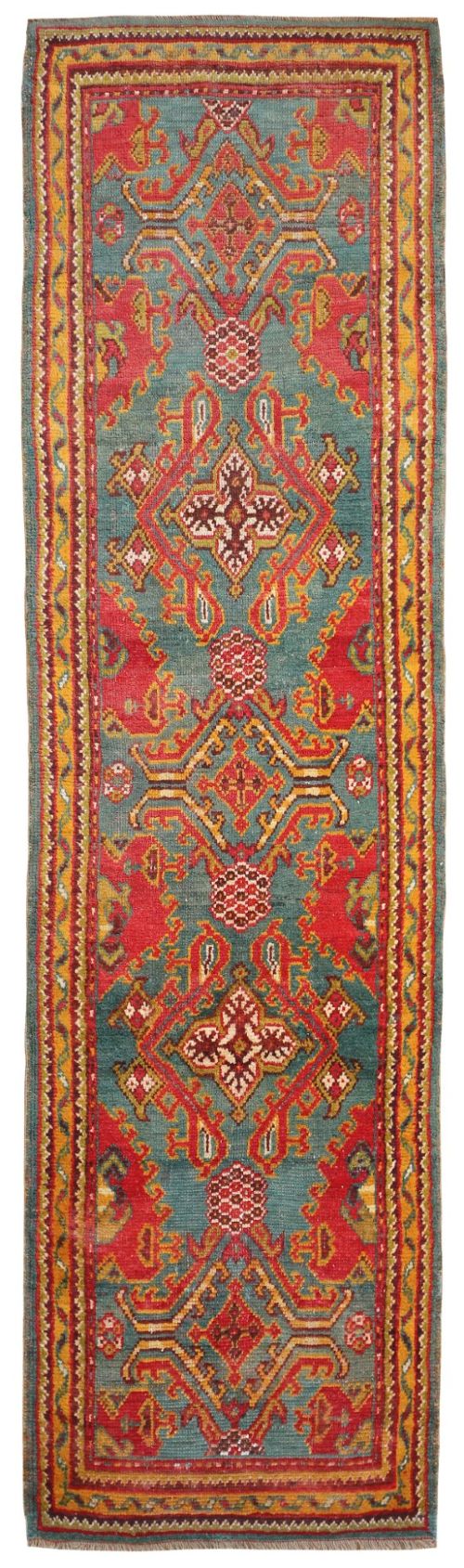
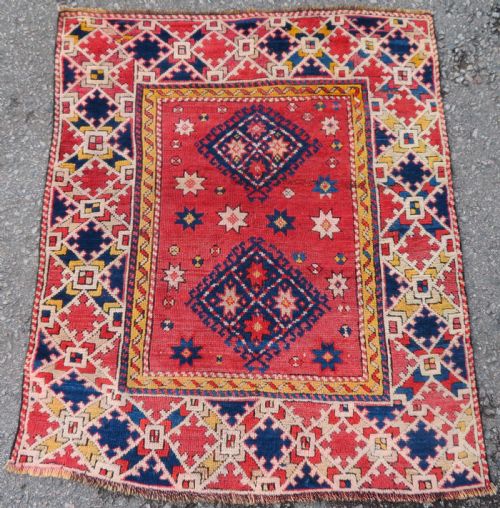

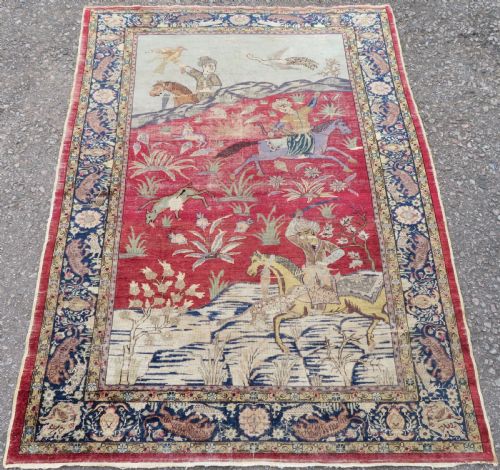


Blue Red Turkish Rug
These woven floor coverings bring distinct blue red turkish rug palettes into interiors, pairing deep madder dyes with indigo tones across village and town workshops.
Blue Red Turkish Rug
A blue red turkish rug represents centuries of weaving traditions originating from Anatolian regions, encompassing village outputs and larger town manufactories. Collectors searching this phrase encounter formats ranging from square area pieces to elongated runners and dedicated prayer designs.
The pieces listed here span distinct periods, extending from eighteenth-century examples through nineteenth-century village outputs to early twentieth-century formats. Regional attributions such as Ushak, Bergama, Ladik, and Konya appear frequently across the inventory.
Forms vary from medallion-centred carpets to directional prayer formats and runner configurations suited for hallways. These textiles serve both functional flooring roles and decorative wall displays within period or contemporary settings.
Materials and construction methods
Weavers utilised natural sheep wool, hand-spun wool, and occasional applications of angora wool or silk for pile construction, typically paired with cotton or wool foundations. These organic fibres accept traditional dyestuffs, resulting in the characteristic deep red and blue tones seen across the inventory.
Production techniques involve knotting pile wool onto warp and weft threads, alongside flatwoven kilim methods utilised for specific regional formats. Individual workshops employed localized geometric and floral motifs passed down through generations of weavers.
Some nineteenth-century runners stretch over fourteen feet in length, proving that historic hallways demanded serious cushioning.
Distinctions in quality and execution
Quality separates along the precision of knot density, the saturation and depth of natural dyes, and the integrity of the foundation. Finer knotting allows intricate medallion details and crisp geometric boundaries to emerge clearly across the surface.
Condition and originality dictate desirability among collectors, with intact borders and minimal pile loss commanding greater interest. Early examples retain subtle variations in colour tone resulting from batch-dyed wool.
Tuduc
The Blue Red Turkish Rug Glossary
- Prayer rug
- A textile featuring a specific mihrab or arch design indicating the direction of prayer, often associated with regions like Ladik, Konya, and Kirsehir. These pieces were traditionally utilised for personal devotion.
- Runner
- An elongated narrow carpet format designed specifically for hallways, corridors, or alongside beds. The listings include numerous nineteenth and twentieth-century examples in this configuration.
- Medallion
- A central ornamental motif dominating the field of the rug, frequently seen in Ushak and traditional Anatolian designs. This focal element anchors the surrounding geometric or floral patterns.
- Kilim
- A flatwoven textile produced without a pile, utilising warp and weft interlacing techniques. Examples from regions like Sarkoy and Bergama demonstrate this distinct structure.
- Pile
- The upright yarn surface of the carpet formed by individual knots tied to the foundation. Variations in pile height reflect the age and wear history of each textile.
Blue Red Turkish Rug: Frequently Asked Questions
How do I date an antique rug?
Dating relies on structural analysis, including wool consistency, foundation materials, and the chemical composition of natural dyes. Stylistic indicators such as specific medallion layouts or regional border designs also help narrow down the period of production.
Comparing knot counts and weave tightness against documented regional examples provides further clarity. Experts examine the overall wear patterns and selvedge construction to confirm historical origin.
Where were these textiles woven?
Production centres span various Anatolian towns and villages, including Ushak, Bergama, Ladik, Kula, and Konya. Each location developed distinct chromatic preferences and structural techniques.
Village weavers often prioritized bold geometric tribal patterns, while larger town workshops produced refined medallion carpets for export and domestic use.
How should I care for wool floor coverings?
Regular gentle vacuuming without a rotating brush prevents dust accumulation within the wool pile. Professional cleaning by specialists experienced in antique textiles ensures natural dyes remain stable.
Keeping the textile away from direct, prolonged sunlight prevents fading of the indigo blues and madder reds. Utilising a quality underlay reduces friction and wear against hard flooring.
What defines a prayer design?
A prayer design incorporates an arched mihrab motif at one end, which symbolises the prayer niche directed towards Mecca. These formats often feature columns or hanging lamp motifs within the field.
Such pieces served specific devotional purposes in households before entering the collector market as decorative antiques.