



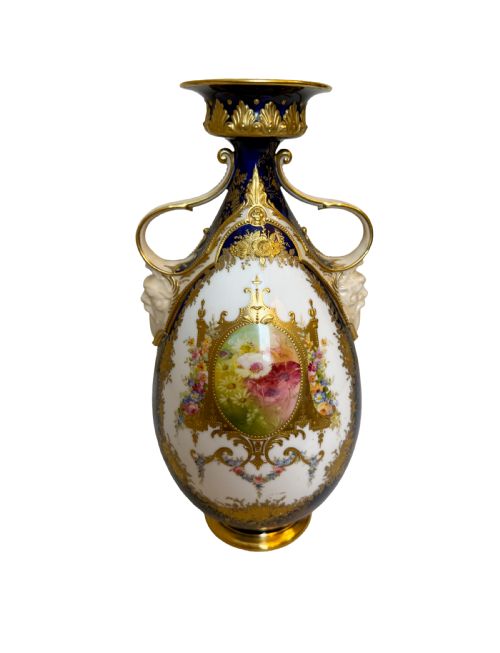
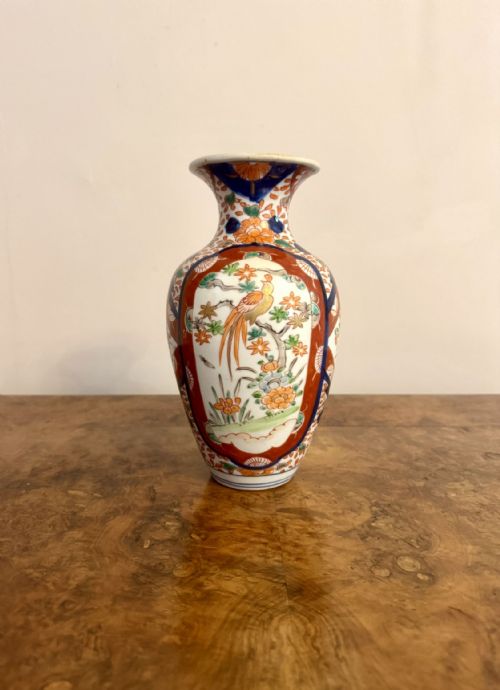
Blue Porcelain Floral Vase
These pieces bring together centuries of ceramic artistry, offering a blue porcelain floral vase that turns any room into a gallery.
Blue Porcelain Floral Vase
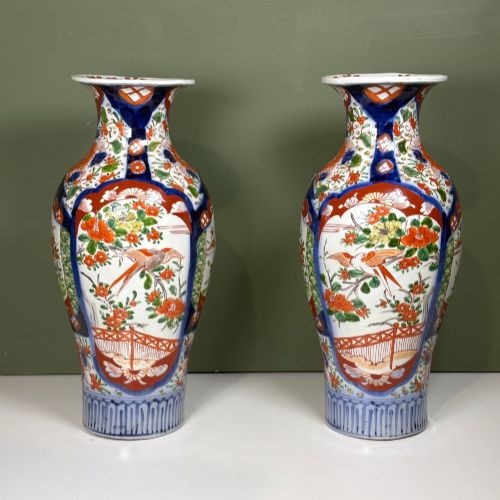
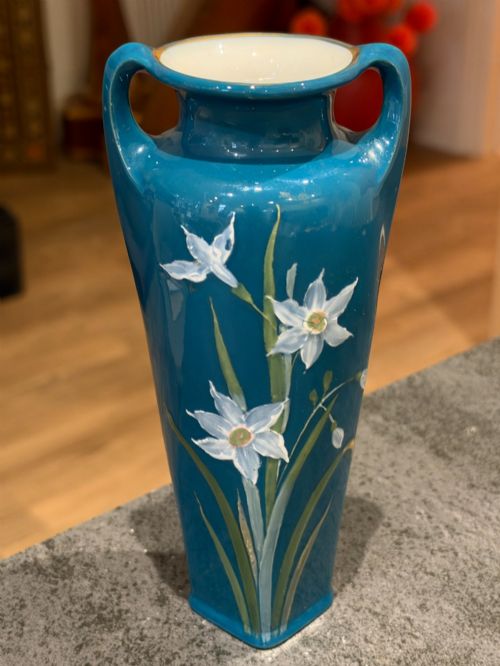
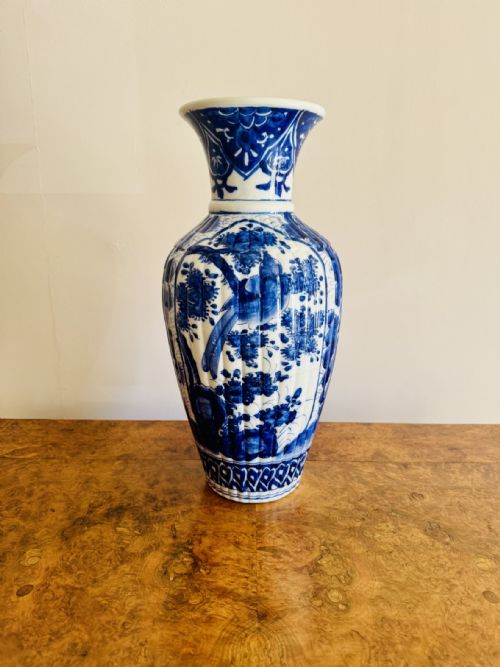
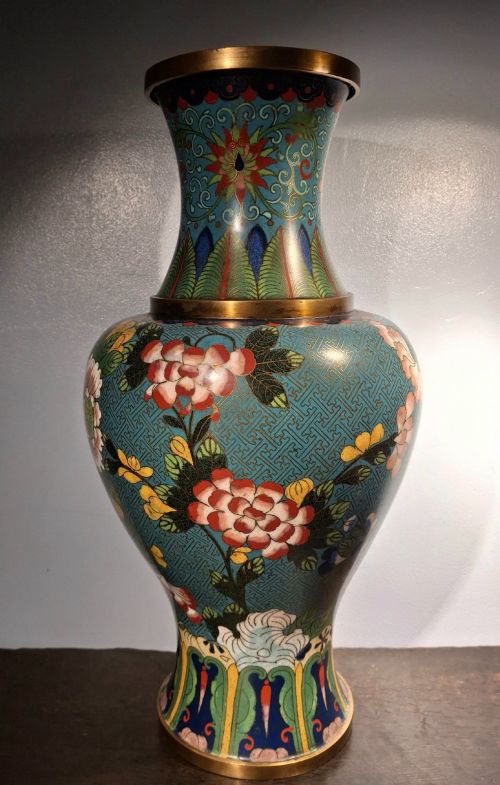
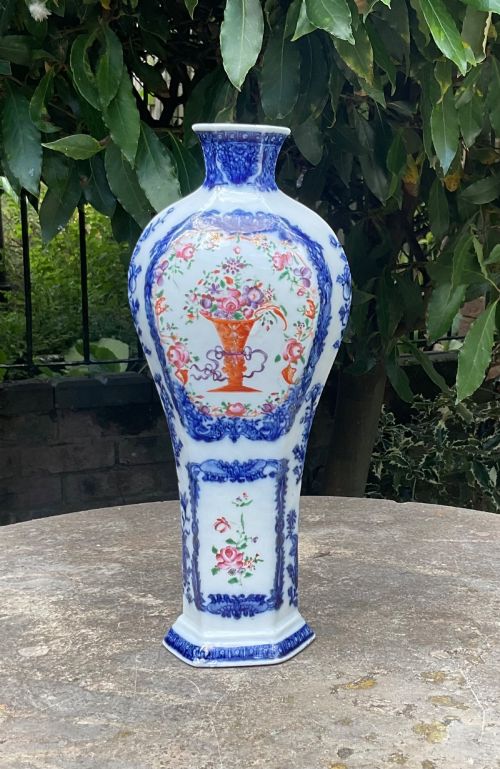
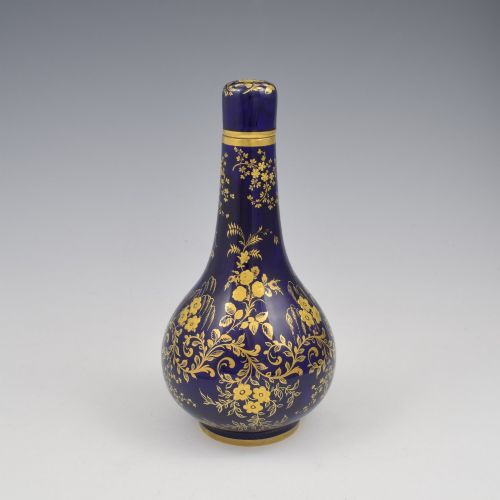
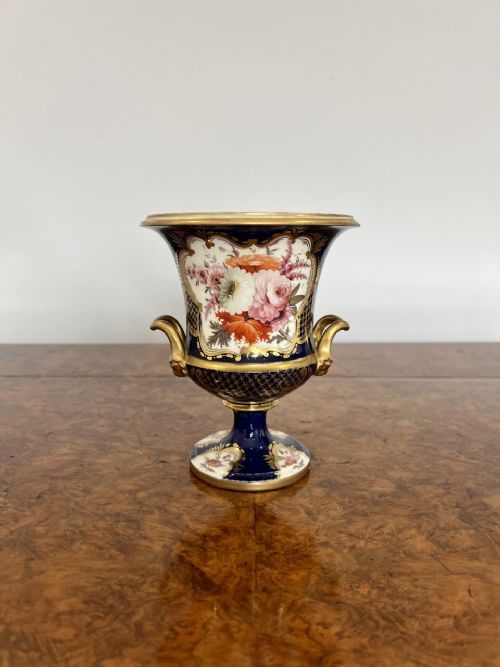
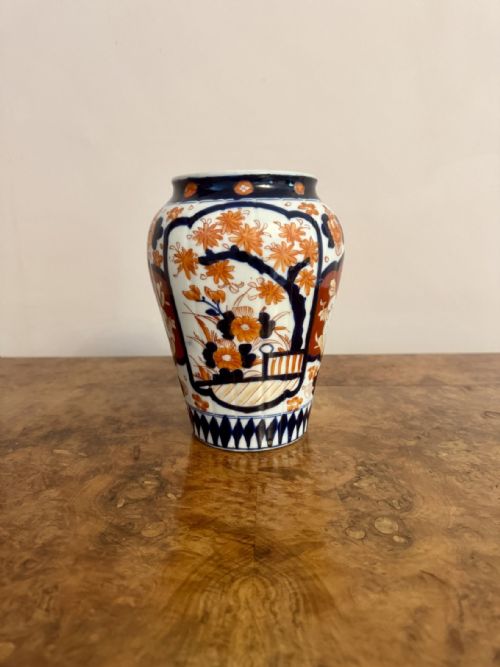
A blue porcelain floral vase combines traditional ceramic manufacturing with botanical decoration, appearing across styles from Japanese Imari and Chinese Famille Rose to English Victorian and Edwardian productions. When searching for a blue porcelain floral vase, collectors encounter diverse forms including ginger jars, campagna urns, bottle vases, and large floor standing vessels spanning the eighteenth, nineteenth, and early twentieth centuries.
The most common examples on this page are nineteenth-century Japanese Imari pieces alongside English factory wares from makers like Spode, Royal Crown Derby, and Doulton. These objects range from miniature scent bottles to substantial pairs and garnitures intended for display on mantelpieces and cabinets.
How they were made
Makers shaped ceramic clay and porcelain bodies before applying underglaze blue and enamel colours by hand. Many pieces received secondary applications of gold leaf, gilt, or gilding to highlight moulded details and painted floral motifs.
Firing techniques varied from European kiln methods to Arita kilns in Japan, where pieces achieved distinct glaze finishes. Potters frequently integrated bronze trim, metal mounts, or fitted covers to complete the works.
Blue Porcelain Floral Vase Retail Price Guide 2026
Typical asking prices for blue porcelain floral vase among the pieces listed under this phrase on Sellingantiques today, from the lower quarter to the upper quarter. They describe what is for sale here now, not the wider market.
Listings feature porcelain, earthenware, and ceramic materials decorated with glaze, enamel, and gold leaf across the nineteenth and twentieth centuries.
What varies in quality
Quality rests upon the precision of the hand-painted brushwork and the clarity of the cobalt blue underglaze. Finer examples display meticulous detail in floral and bird motifs without blurring or pooling in the glaze.
The sophistication of the ceramic body and the richness of any applied gilding separate ordinary factory production from exceptional cabinet pieces. Preservation of original gilt bronze mounts and matching garniture sets also elevates the stature of a group.
Royal Crown Derby·Royal Doulton·Samuel Alcock·Crown Staffordshire
The Blue Porcelain Floral Vase Glossary
- Imari
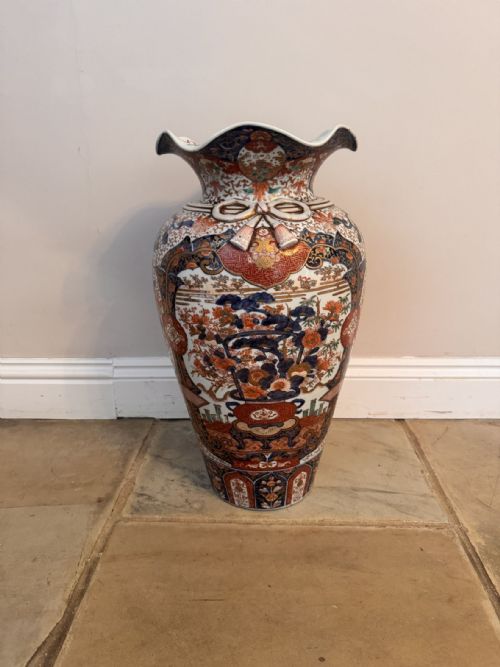
- A style of Japanese porcelain decorated in underglaze blue, iron red, and gold. This technique originated in Arita and gained immense popularity across European markets.
- Garniture
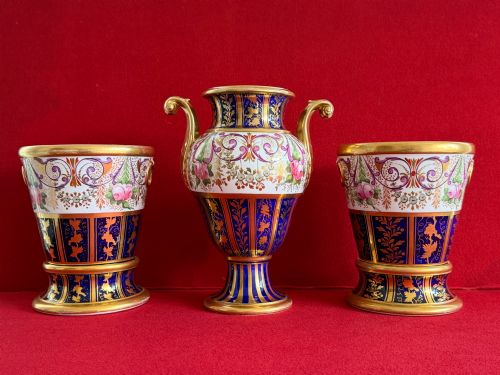
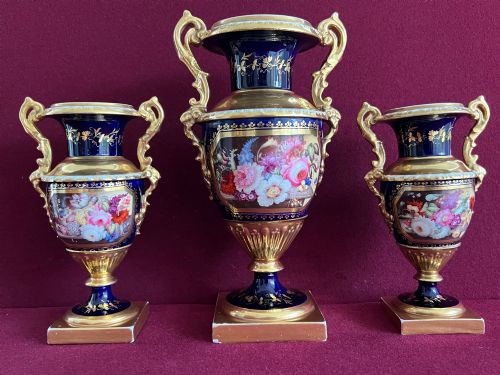
- A set of three or more ornamental vases designed to be displayed together on a mantelpiece or sideboard. These matched sets often feature a central tall vase flanked by smaller companion vessels.
- Famille Rose
- A palette of Chinese ceramic enamels dominated by opaque pink or rose colours. Introduced in the eighteenth century, this style rendered intricate floral and figurative scenes.
- Campagna
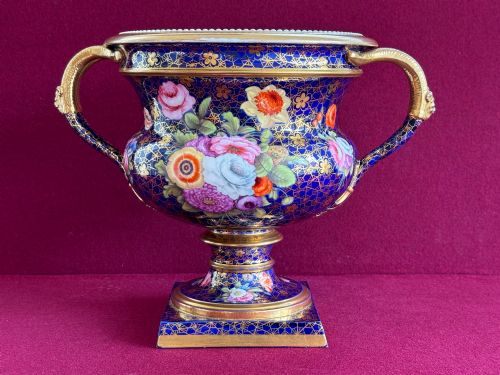
- An urn shape inspired by classical antiquity featuring a deep bowl on a pedestal base with flared handles. English and continental potteries adopted this classical silhouette during the nineteenth century.
- Underglaze
- A method of decorating pottery before applying a transparent glaze and firing at high temperatures. This process seals the blue pigment permanently beneath the glossy surface.
Blue Porcelain Floral Vase: Frequently Asked Questions
How do I date an antique vase?
Dating relies upon examining the ceramic body style, base marks, and painting technique. Comparing the specific blue pigment and glaze characteristics helps place the piece within periods like the nineteenth century.
Changes in factory stamps and decorative styles across the Victorian and Edwardian eras also provide reliable chronological markers for identification.
What is an Imari vase?
An Imari vase is a Japanese porcelain vessel decorated in a distinctive palette of cobalt blue, iron red, and gold. These pieces were exported to Europe in large quantities and heavily influenced domestic porcelain designs.
They are easily recognised by their dense, brocade-like patterns featuring floral and natural motifs.
How were garnitures displayed?
Garnitures were traditionally arranged symmetrically along mantelpieces, sideboards, or large furniture tops in formal rooms. The central larger vase anchored the arrangement while matching side vases balanced the composition.
This decorative method created a cohesive focal point within nineteenth-century domestic interiors.
Can I use these vases for water?
Most antique porcelain and earthenware vases are intended for decorative display rather than daily floral use. Hairline fractures, historical repairs, and delicate gold leaf or enamel work can be compromised by moisture.
Using a small glass insert inside the vessel protects the antique interior if fresh stems are necessary.