

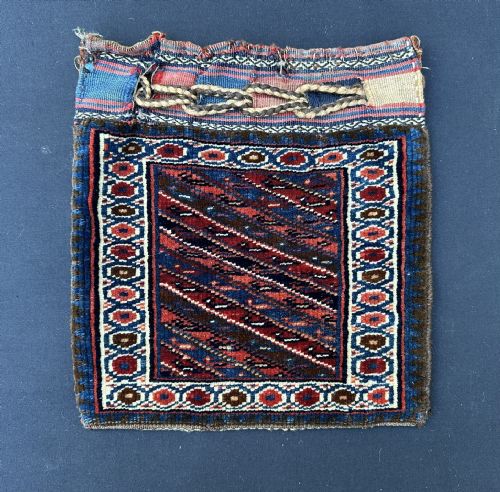
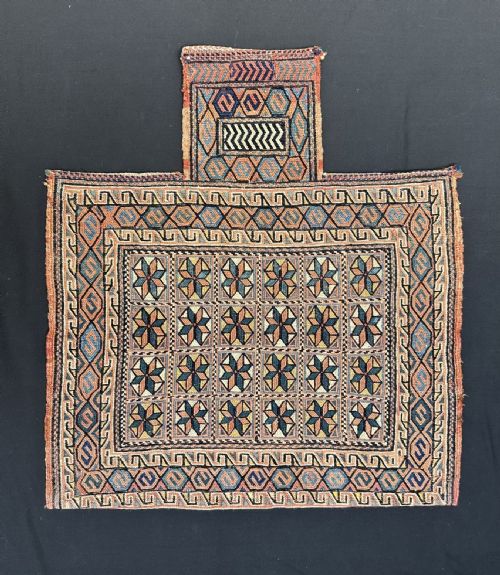
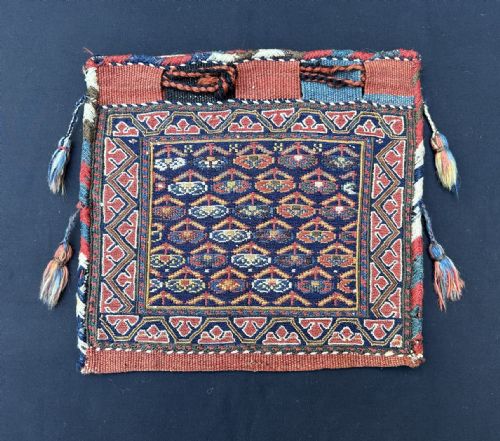
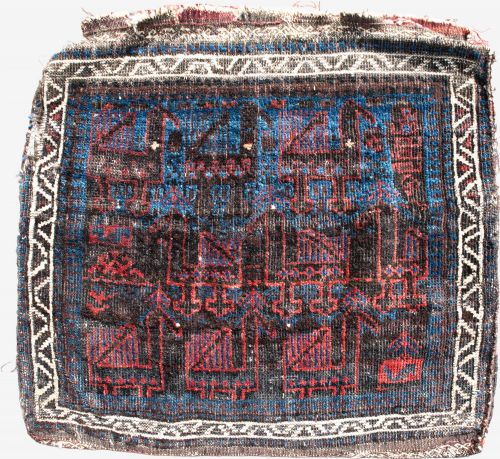
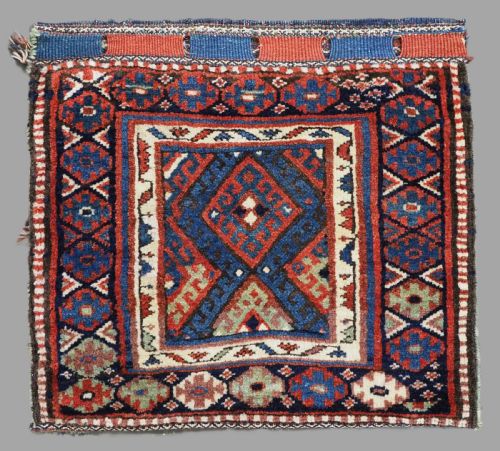


Blue Persian Wool Bag
A blue persian wool bag represents the nomadic weaving traditions of Persian tribal groups, offering collectors patterned textile art from the nineteenth and early twentieth centuries.
Blue Persian Wool Bag
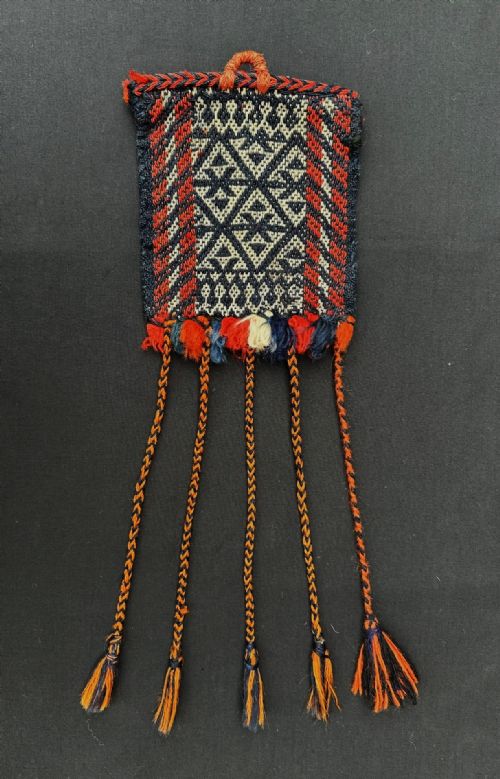
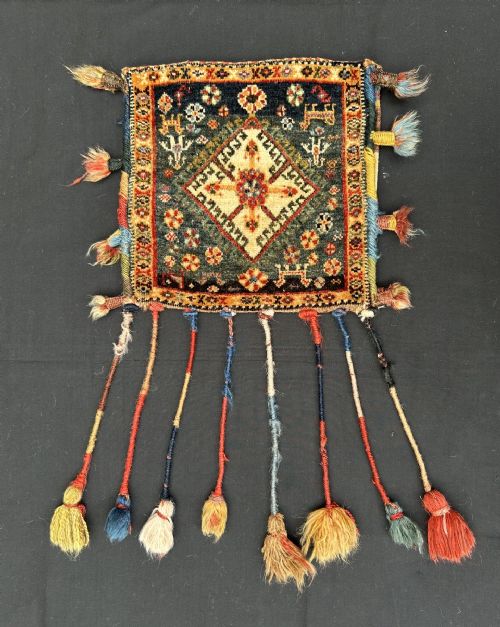
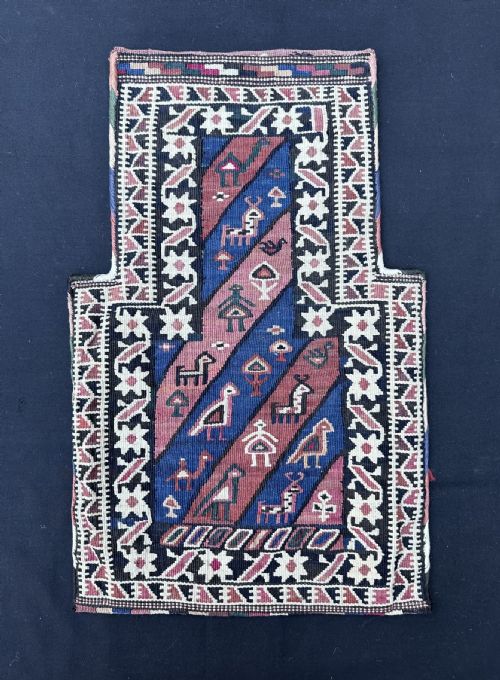
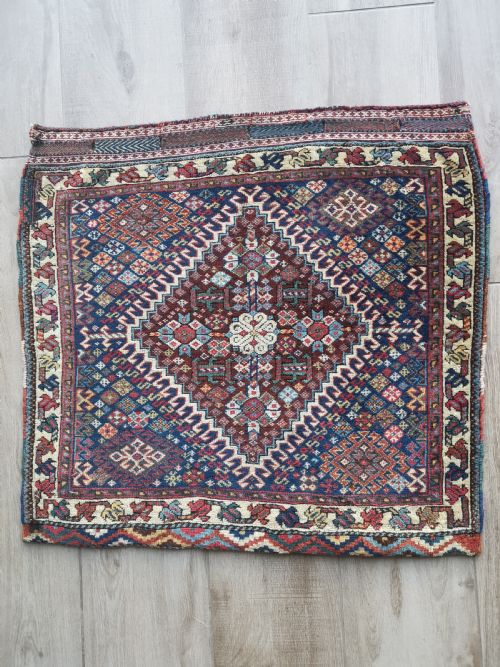
A blue persian wool bag covers utilitarian items woven by nomadic and village tribes across Persia, including saddlebags, salt bags, vanity bags, and grain sacks. These items function as portable storage for tribal households, utilising durable flatweave or pile-woven structures designed for daily pack animal transport.
Pieces on this page span from the mid-nineteenth century through the early twentieth century, originating from tribal groups such as the Qashqai, Afshar, Shahsavan, Kurdish, and Bakhtiari weavers. Surviving examples often appear as complete saddlebags with plain weave backs or as isolated bag faces preserved for their decorative qualities.
How they were made
Weavers constructed these bags using hand-spun wool and occasionally goat hair for added durability in structural areas. Natural and vegetable dyes provided the palette, producing rich tones of blue alongside complementary hues.
Techniques range from hand-knotted pile to intricate Soumak work and flatweave kilim construction. These methods allowed nomadic makers to create dense, geometric patterns and pictorial motifs like birds and dragons.
Materials documented across the inventory include hand-spun wool, cotton, goat hair, and natural vegetable dyes.
What varies in quality
Quality rests in the handling of the wool and the clarity of the natural dyes, which determine the luminosity of the surface. Lustrous, well-conditioned wool retains depth of colour and resilience across generations of handling.
The precision of the weaving technique and the complexity of the tribal iconography distinguish finer examples. Crisp execution in Soumak work or finely knotted pile elevates the status of a piece within its tribal grouping.
The Blue Persian Wool Bag Glossary
- Khorjin
- A traditional double saddlebag used for transport by nomadic tribes. These pieces typically feature two pouches joined by a central web.
- Soumak
- A flatweave technique utilising warp-wrapping methods that create a durable textured surface. This technique allows for sharp diagonal pattern lines.
- Bag Face
- The decorative front panel of a tribal storage bag that survives independently after the plain weave back deteriorates. These panels are often mounted as small rugs.
- Tacheh
- A specific type of large tribal wheat or grain sack woven in flatweave or sumac structures. They originate predominantly from western Persian nomadic groups.
- Boteh
- A traditional almond-shaped or paisley motif representing a floral spray or cypress tree. It appears frequently in tribal textile designs.
Blue Persian Wool Bag: Frequently Asked Questions
What is a tribal bag face?
A bag face is the decorative front panel of a nomadic storage bag, separated from its plain utility back over time. These panels functioned originally as containers for salt, vanity items, or personal possessions.
Collectors frequently frame or display these panels as small textile artworks to appreciate the tribal iconography and knotting technique without the bulk of the original storage pouch.
How do I care for wool textiles?
Protect antique wool textiles by keeping them out of direct sunlight to prevent natural dye fading. Gentle vacuuming with a screen attachment removes dust without damaging the hand-spun fibres.
Avoid hanging heavy bags by their edges, as this stresses the antique foundation threads. Professional textile conservation cleaning should be used sparingly.
How are tribal groups identified?
Tribal attribution relies on specific structural characteristics, regional colour palettes, and distinct geometric or pictorial motifs. Weavers from regions like Fars, Kerman, and Luristan utilised signature design layouts passed down through generations.
Comparing border bands, structural materials such as goat hair usage, and secondary colours helps link a piece to groups like the Qashqai or Afshar.
What is the difference between pile and flatweave?
Pile weaving involves knotting individual strands of wool onto a warp foundation and trimming them to create a plush, textured surface. This method provides warmth and cushion for transport.
Flatweaving, including kilim and Soumak structures, omits the knotted pile entirely. The pattern emerges from interlacing the coloured wool warp and weft threads directly.