



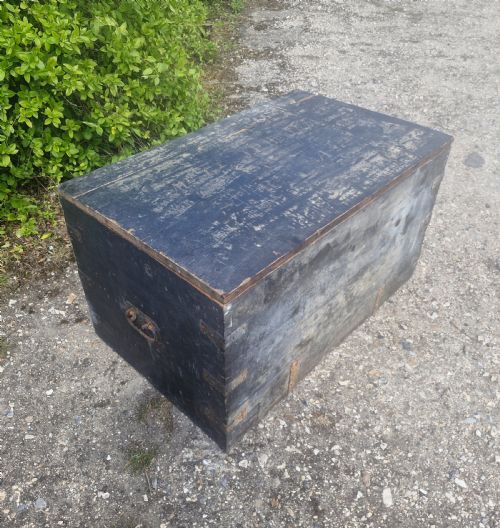


Blue Painted Wooden Box
A blue painted wooden box brings utility and folk art tradition into a room, spanning rural storage chests to maritime dioramas.
Blue Painted Wooden Box
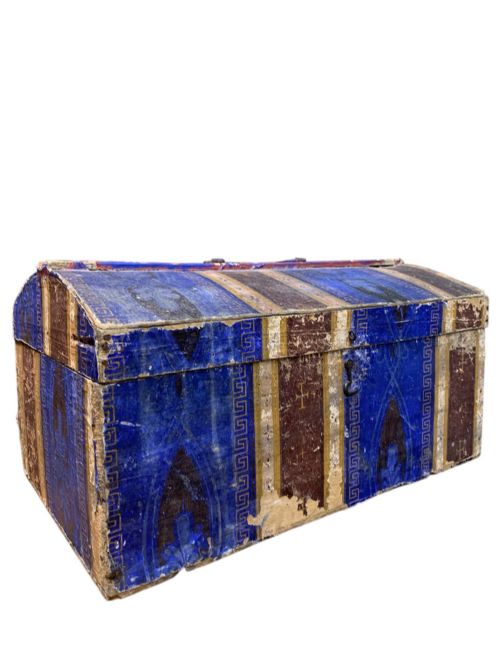
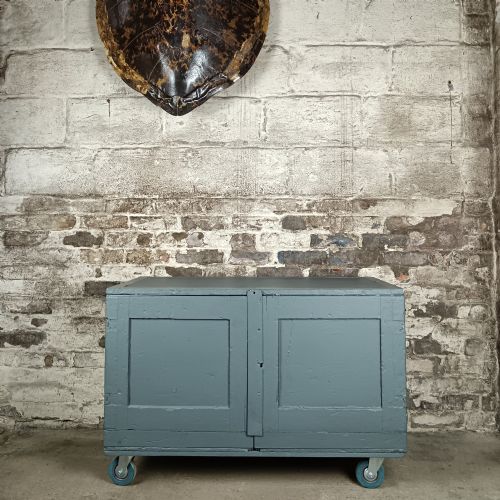
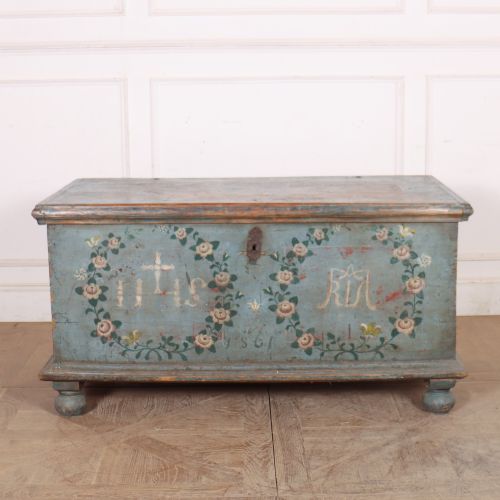
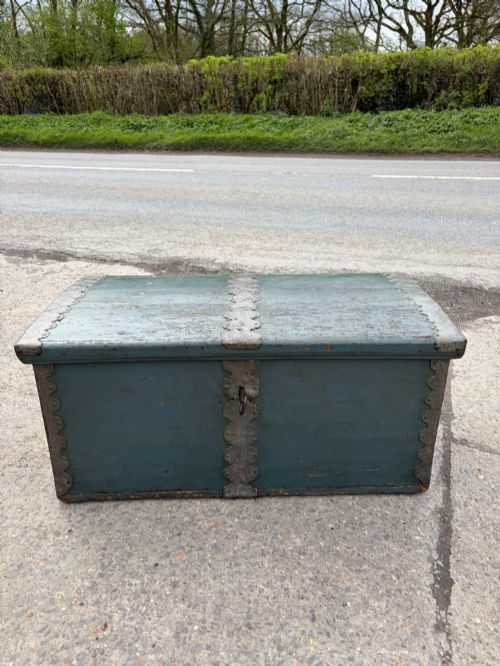
When buyers search for a blue painted wooden box, they encounter a diverse range of utilitarian and decorative containers shaped by regional folk traditions. These pieces include Scandinavian marriage chests, dome top coffers, pine storage boxes, and rustic maritime trunks.
The selections span the eighteenth, nineteenth, and early twentieth centuries, drawing heavily on Scandinavian country styles, folk art, and military campaign designs. Common forms encompass blanket boxes, log boxes, apothecary storage, and wall-mounted tramp art boxes.
Originating from places such as Sweden, Hungary, Norway, and England, these containers served practical purposes in domestic life, agriculture, and travel. Their surviving blue paint surfaces reflect historical regional decoration and long utility.
How they were made
Construction relies primarily on pine and oak timbers, formed into dovetailed, pinned, or planked boxes often reinforced with wrought iron or brass hardware. Makers utilised local woods suited to the function of the trunk or coffer.
Surfaces were prepared and finished with traditional paint, sometimes applied over gesso or plaster, incorporating hand-painted decorative motifs characteristic of folk art and regional taste. Metal bindings and hinges provided structural strength for heavy transport and daily storage.
Blue Painted Wooden Box Retail Price Guide 2026
Typical asking prices for blue painted wooden box among the pieces listed under this phrase on Sellingantiques today, from the lower quarter to the upper quarter. They describe what is for sale here now, not the wider market.
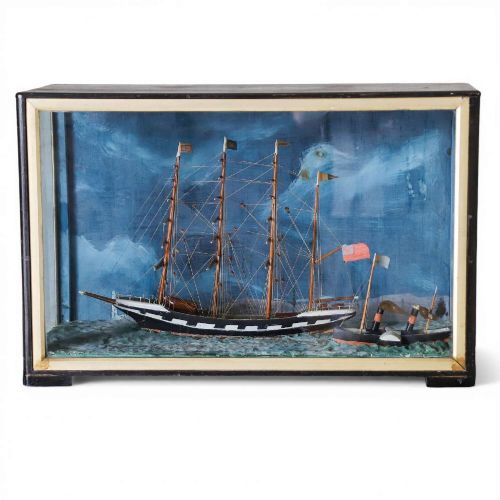
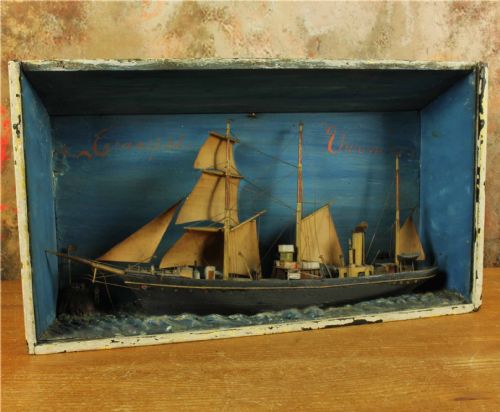
Some boxes transported four-masted sailing ships trapped safely inside glass dioramas.
What varies in quality
Quality rests in the survival of original paint surfaces and the integrity of the underlying woodwork rather than sheer decorative elaboration. Pieces retaining their initial pigment without extensive overpainting command greater interest among collectors of folk art.
Construction details such as hand-forged iron hinges, tight dovetail joints, and original metal bindings distinguish standard utilitarian containers from finer regional workshop pieces. The clarity and execution of hand-painted decoration further separate basic storage items from exceptional folk art examples.
The Blue Painted Wooden Box Glossary
- Coffer
- A heavy wooden chest traditionally used for storing valuables, documents, or textiles. These sturdy containers often feature hinged lids and iron reinforcement.
- Dome top
- A rounded lid construction designed to shed water and increase internal capacity. This form appears frequently on nineteenth-century travel trunks and storage chests.
- Tramp art
- A style of woodwork created by carving chip-carvings from scrap wooden boxes, often using pocket knives. Wall-mounted boxes in this manner show geometric layered patterns.
- Mule chest
- A traditional storage chest featuring one or more drawers beneath the main internal compartment. They bridge the design gap between simple coffers and modern drawer chests.
- Tine
- A traditional Scandinavian wooden container, often oval and made from bent wood with overlapping seams secured by wooden pegs or roots. These served historical food storage functions.
Blue Painted Wooden Box: Frequently Asked Questions
What were these boxes used for?
These containers served varied domestic and travel functions, ranging from storing household textiles and winter logs to transporting military equipment.
Larger coffers held marriage dowries and family valuables, while smaller boxes accommodated spices, jewellery, or maritime memorabilia.
How do I care for original paint?
Protect antique painted surfaces from direct sunlight and sudden humidity shifts to prevent flaking or timber movement.
Clean surfaces gently with a dry, soft cloth and avoid modern chemical solvents or abrasive cleaning agents.
Are these pieces dated accurately?
Dates rely on construction techniques, material wear, and stylistic markers recorded in the regional folk art tradition.
Nineteenth-century items often show hand-wrought ironwork and regional paint formulas typical of Scandinavian and European workshops.
What is folk art decoration?
Folk art decoration encompasses hand-painted motifs, floral patterns, and regional ornamentation applied by local craftspeople rather than formal academic artists.
These designs often reflect cultural traditions, marriage celebrations, or maritime life specific to the origin of the piece.