






Blue Orange Ceramic Bowl
A blue orange ceramic bowl brings together rich ironstone, porcelain and earthenware spanning the eighteenth century to the twentieth.
Blue Orange Ceramic Bowl
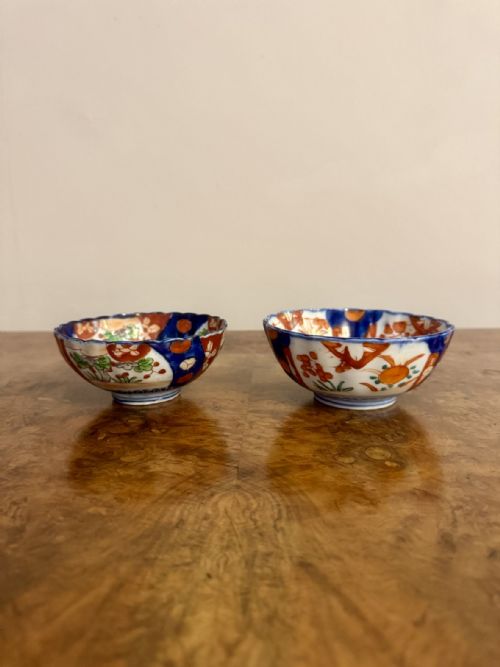
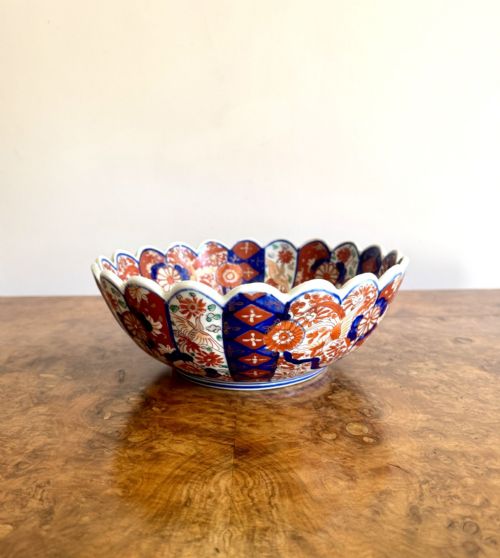
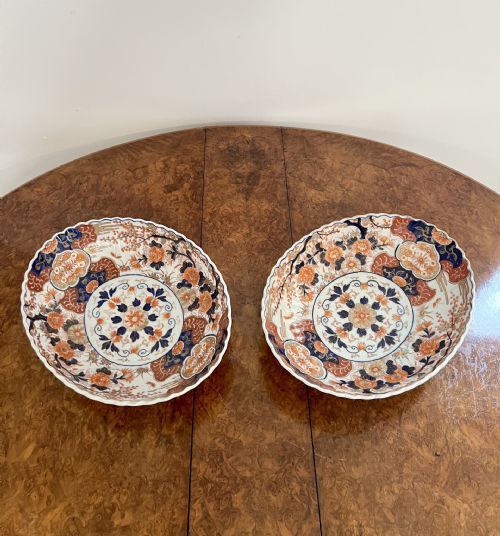
A blue orange ceramic bowl encompasses a diverse selection of decorative vessels, jardinières, comports, and footed bowls found within this search phrase. The most common examples meeting this description are Japanese Imari wares from the Meiji and Edo periods, alongside English ironstone and bone china pieces.
The selection extends from large eighteenth-century Japanese Arita Imari jardinières down to twentieth-century lustre bowls and Victorian earthenware basins. Buyers encounter various forms including scalloped edge dishes, boat-shaped dishes, and footed comports designed for display or service.
Origins range across traditional Japanese kilns and English potteries utilising Georgian and Victorian patterns. These vessels vary from miniature pieces to substantial centrepieces and tea services incorporating bowls.
How they were made
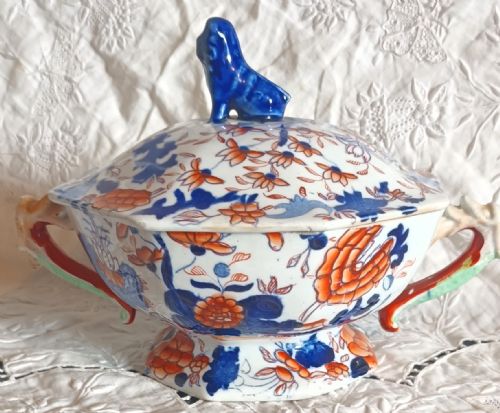
Makers utilised durable ceramic bodies including porcelain, ironstone, bone china, and earthenware, often finished with applied glaze and enamel. Many pieces incorporate rich gilding, gold leaf, and hand-painted motifs executed in distinctive cobalt blue and rust orange palettes.
Techniques combine traditional oriental potting methods with English transfer-printing and hand-finishing seen on ironstone and lustre wares. Firing processes allowed complex ironstone compositions and intricate enamel applications to achieve lasting structural and visual stability.
Current listings feature pieces spanning the 1700s to the 1920s, incorporating porcelain, ironstone, and earthenware materials.
What varies in quality
Quality rests upon the precision of the hand-painted detailing, the crispness of the moulded ceramic form, and the vibrancy of the glaze and gold leaf application. Finer examples display superior control over the cobalt blue and orange pigments across complex Imari or lustre surfaces.
The sophistication of the potting, particularly on large jardinières and scalloped edge bowls, distinguishes masterwork production from standard domestic utility ware. Preservation of the original enamel and gilding further elevates the standing of an individual piece.
Daisy Makeig Jones Wedgwood·Mason s Ironstone·Royal Crown Derby
The Blue Orange Ceramic Bowl Glossary
- Imari
- A style of Japanese porcelain decorated in underglaze blue and overglaze orange, iron red, and gold. It originated in Arita and became immensely popular for export.
- Ironstone
- A type of durable earthenware patented in England in the early nineteenth century. It provides a robust body suitable for heavy domestic and decorative use.
- Comport
- A footed dish or bowl raised on a pedestal, traditionally used for serving fruit or sweets at formal dining tables.
- Lustre
- A ceramic glaze containing metallic elements that produce an iridescent sheen when fired. It was utilised notably by factories such as Wedgwood in the early twentieth century.
- Jardinière
- A large ornamental pot or bowl designed to hold plants or flowers. These items often feature heavy ceramic walls and prominent decorative panels.
Blue Orange Ceramic Bowl: Frequently Asked Questions
How do I date a Japanese Imari bowl?
Dating relies on assessing the weight of the porcelain body, the depth of the cobalt blue, and the hue of the orange enamel alongside any associated period markers like the Meiji or Edo eras.
Earlier pieces often exhibit subtle variations in glaze texture and hand-painting that differ from mass-produced twentieth-century counterparts.
What is Gaudy Welsh pottery?
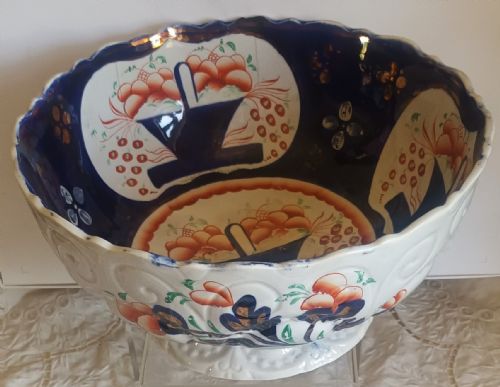
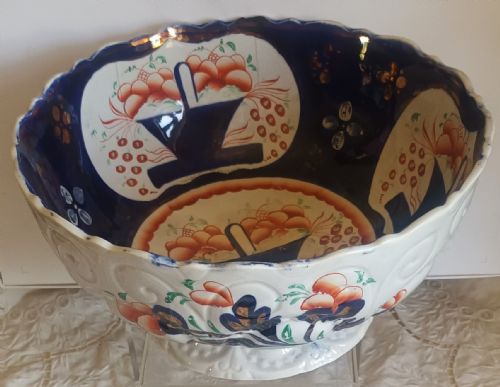
Gaudy Welsh refers to a colourful style of earthenware featuring vibrant cobalt blue, orange, and copper lustre decoration, often found on nineteenth-century footed bowls and basins.
Potters produced these domestic items primarily for everyday utility, employing striking patterns such as the basket of flowers motif.
How were ironstone comports used?
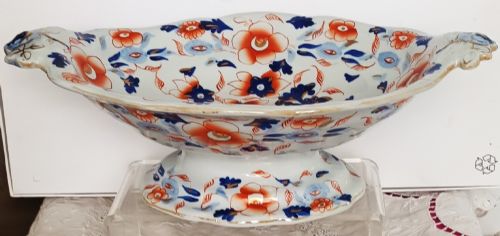
Georgian and Victorian households utilised ironstone comports as elevated serving dishes for fruit, sweetmeats, or centrepiece decoration during formal meals.
Their robust ironstone bodies ensured durability while allowing intricate Japan patterns to decorate the dining room.
What distinguishes Wedgwood lustre ware?
Wedgwood lustre ware, developed notably during the early twentieth century, combines mottled orange and other rich glazes with oriental-inspired motifs and gold leaf detailing.
These decorative miniature bowls and octagonal vessels focus heavily on vibrant colour combinations rather than utilitarian dining use.